

Trying to figure out the perfect places to get Instagram photos in Hawaii? Keep scrolling down to learn about some of the best Hawaii waterfalls that look incredible!
This list the best Hawaii waterfalls was written by Marcie Cheung (a Hawaii travel expert) and contains affiliate links which means if you purchase something from one of my affiliate links, I may earn a small commission that goes back into maintaining this blog.
I was seven the first time my grandma took me to a waterfall on Kauai. I remember standing there thinking it was the most magical place I’d ever seen.
I still think that. And after more than 40 trips to Hawaii, I’ve personally hiked or kayaked to several of the waterfalls below, on Kauai, Maui, and the Big Island in particular.
For the ones I haven’t gotten to yet myself, I did the same digging I’d want a friend to do before recommending something, checking current prices, access rules, and reviews from people I trust.
I’ll tell you clearly which is which as we go.
Quick Take: Best Hawaii Waterfalls for 2026
- Best for an easy swim: Waimea Falls, Oahu. Paved path, real swimming, $26 admission.
- Best payoff for the effort: Waimoku Falls on the Pipiwai Trail, Maui. Book your Road to Hana rental car here so you’re not stuck without wheels.
- Best full adventure: Uluwehi (Secret) Falls, Kauai. Kayak, hike, and swim, with a DIY option if you’re on a budget.
- Skip unless you’re already ziplining: Umauma Falls, Big Island.
- Don’t even try: Hiking to the base of Wailua Falls, Kauai. It’s illegal and it has killed people.
Here’s the full breakdown, island by island.
Oahu Waterfalls
Manoa Falls
Manoa Falls is still the easiest waterfall hike near Waikiki. It’s also still free.
You’ll pay $7 to park at the Paradise Park lot right at the trailhead. If you’re comfortable finding street parking on Waakaua Street, you can walk in and skip that fee.
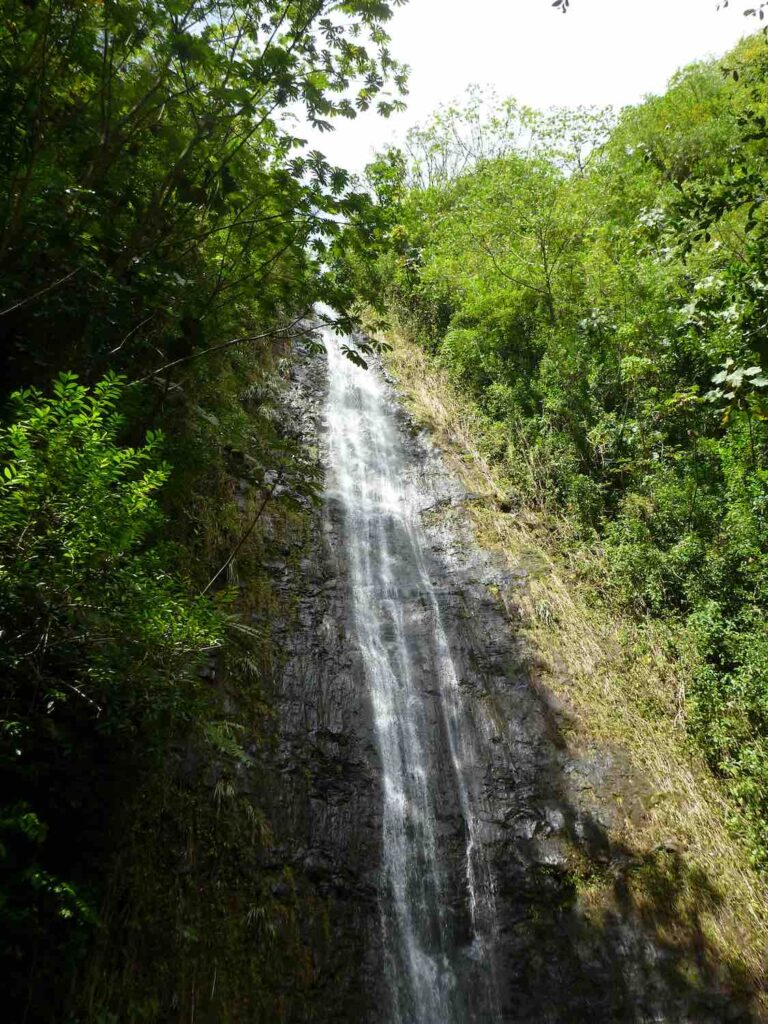
The trail runs under a mile each way through rainforest so dense it’s stood in for Jurassic Park more than once. Real shoes are worth it here. Flip-flops on this trail are a common mistake, and not a small one once the ground gets muddy.
One update worth knowing: swimming in the pool below the falls isn’t allowed anymore, and there’s a barrier up to discourage it. Between landslide risk and leptospirosis in the water, that’s not a rule worth testing.
This is the waterfall I’d point people to for a free morning in town when they don’t want to drive far.
Lulumahu Falls
A lot of blogs recommend this hike without mentioning something pretty important. It sits on state watershed land, and you technically need a permit to hike there legally.
The permit is cheap, just $2.50 through the state’s online portal. Skipping that step means hiking without authorization through an active hunting area, which is worth knowing before you go, not after.
The trail winds through bamboo forest near the Pali Highway and gets more physical as you climb, with some rock scrambling near the end.
The dirt parking area has a real reputation for break-ins, so don’t leave anything visible in your car, not even a phone charger.
If you’re up for a seriously jungly hike and don’t mind grabbing that permit ahead of time, this one delivers. If the permit step feels like a hassle, Manoa Falls will get you a similar experience with a lot less planning.
Waimea Falls
I haven’t made it to Waimea Valley on my last few trips, but it’s high on my list.
Everything I’ve read from repeat visitors and other Hawaii travel writers points to the same conclusion: this is the most accessible waterfall experience on Oahu’s North Shore.
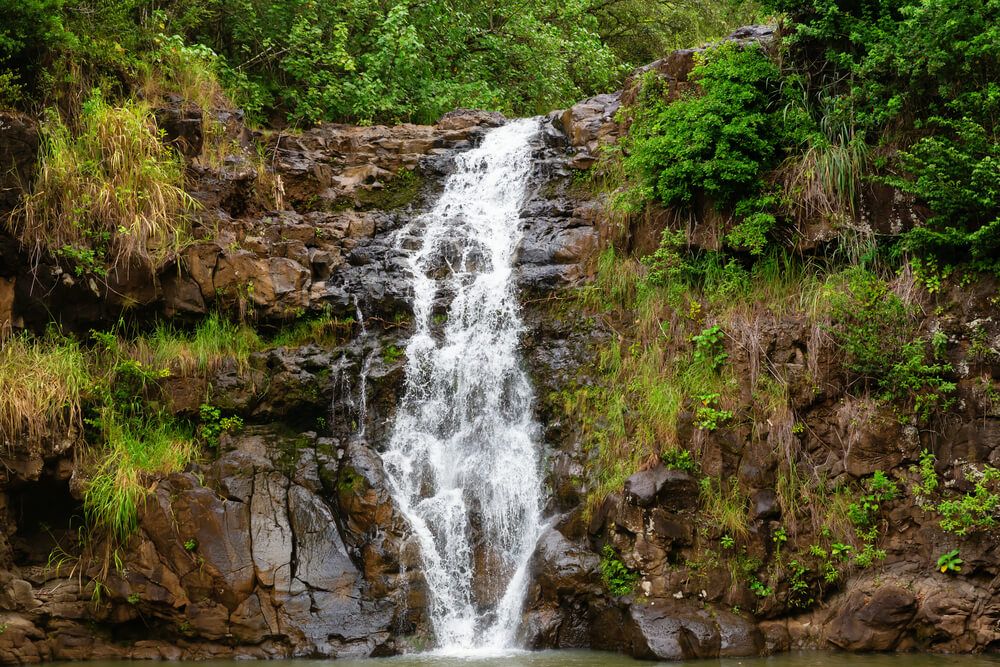
It’s also one of the only spots on this list where swimming is actually the point.
The walk in is a paved, mostly flat three-quarters of a mile through a botanical garden dotted with cultural sites, so it works for pretty much any age or fitness level.
As of 2026, admission runs $26 for adults and $18 for kids ages 4 to 12, with discounts for Hawaii residents, seniors, and military. There’s a shuttle for $10 one-way if you’d rather skip the walk.
Whether swimming is allowed on any given day depends on conditions and a lifeguard’s call. Life vests are required, and reef-safe sunscreen is worth packing too, since it’s an enclosed pool.
Waimea Valley also hosts Toa Luau in the evenings, and one ticket covers valley admission the same day or the next.
As a 20-plus-year hula dancer, this is one I’m genuinely looking forward to reviewing firsthand, and I’ll update this section with my own take once I have.
Kauai Waterfalls
Wailua Falls
Wailua Falls is the waterfall you’ve probably already seen without realizing it. It opens the credits of the old TV show Fantasy Island, and it’s a quick roadside stop just north of Lihue.
I’ve visited these falls dozens of times over the years and it’s where I always recommend people stop when they want to see a Kauai waterfall.
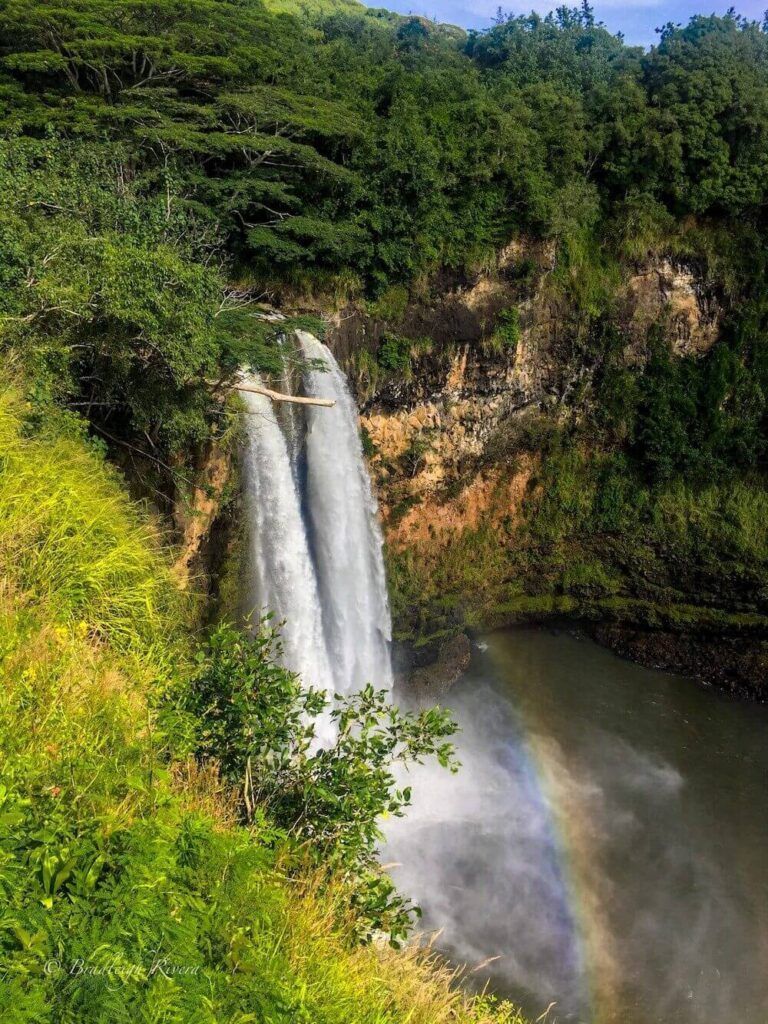
I need to be straightforward about this one. The trail down to the base is officially closed, illegal to hike, and genuinely dangerous. I hiked down decades ago and it was scary then, so I really urge you to just enjoy from the overlook.
People have died attempting it, most recently in 2022, and the signs posted by the county aren’t there for decoration. Stick to the overlook.
As of February 2026, this stop falls under Wailua River State Park’s new fee system. Non-residents pay $5 per person and $10 per vehicle, credit card only.
The upside is your receipt works as a same-day pass, so it also covers Opaekaa Falls and the Wailua Marina.
Opaekaa Falls
Compare this one to Wailua Falls, and you’ll see why I recommend pairing the two. Opaekaa is a short drive up Kuamoo Road, and it’s one of the simplest waterfall views on the island since there’s zero hiking involved.
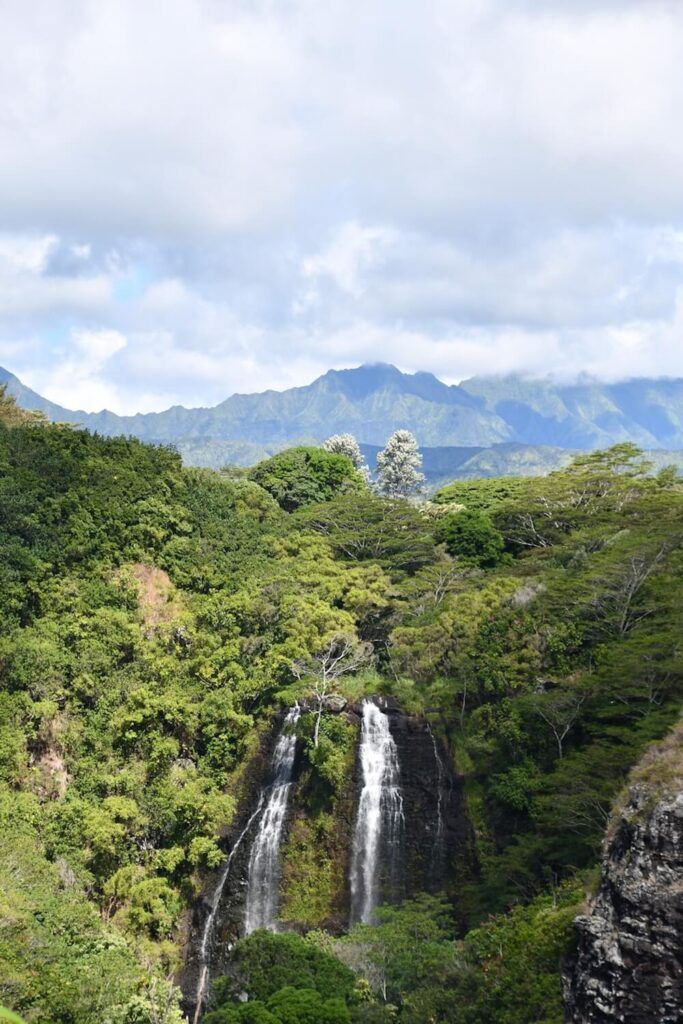
It now falls under that same Wailua River State Park fee I just mentioned. If you already paid at Wailua Falls the same day, you won’t pay again here.
Cross the road from the parking lot for a bonus view of the Wailua River Valley. If you’ve got extra time, the Wailua Heritage Trail across the street offers a lower angle on both the river and the falls, and it’s usually far less crowded than the main overlook.
Uluwehi Falls (Secret Falls)
This has never really been much of a secret, but it’s still one of the best half-days you can spend on Kauai. I went when I was a kid and I still remember how awesome it was.
You paddle a kayak roughly 45 minutes up the calm Wailua River, then hike about 20 minutes through rainforest to reach the falls, where swimming and lunch are both very much encouraged.
If you want a guide, and I’d recommend one your first time, Viator and Get Your Guide both list solid outfitters.
A guide handles a tricky river crossing partway through and shares history you’d otherwise miss.
If you’re comfortable navigating on your own or you’re trying to keep costs down, several outfitters near the Wailua Marina also rent kayaks without a guide, and you follow the same route yourself.
It’s a good middle option if a full guided tour doesn’t fit your budget.
New for 2026, the Wailua Marina launch point now falls under that same state park fee, so budget $5 per person and $10 per vehicle on top of whatever your kayak rental or tour already costs.
Bring water shoes with actual grip, since the trail gets muddy fast, and pack reef-safe sunscreen since you’ll be swimming.
This is one of my favorite things to do on Kauai, full stop.
Maui Waterfalls
Waimoku Falls (Pipiwai Trail)
This one consistently tops other travelers’ and locals’ lists as the best waterfall hike in the state, and based on the research I’ve done, I understand why.
The Pipiwai Trail sits inside Haleakala National Park’s Kipahulu District. It winds through a genuinely surreal bamboo forest before ending at a 400-foot waterfall dropping into a rocky pool you can look at but not swim in.
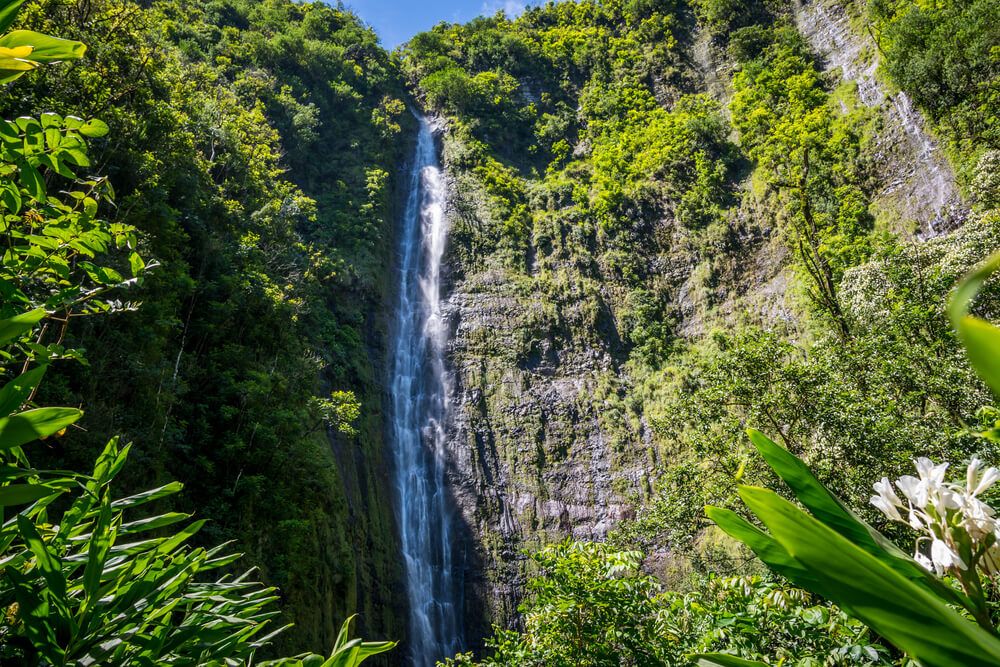
It’s about four miles round trip. That takes real effort, especially near the start where the ground turns slick. Sturdy shoes with actual tread are worth it here.
Entrance to the park runs $30 per vehicle. That pass is valid for three days and covers both the Kipahulu District and the summit, which matters if you’re also planning a sunrise or stargazing visit while you’re on Maui.
This sits along the Road to Hana, so plan for a full day if you’re stopping here on the drive.
This is the one Maui waterfall I’d tell you not to skip, even secondhand, and it’s on my list for my next trip to the island.
Pua’a Ka’a Falls
Another Road to Hana stop, and one of the easiest, since there’s no real hike involved. You park across the road and walk over to view the falls, with picnic shelters and restrooms right there.
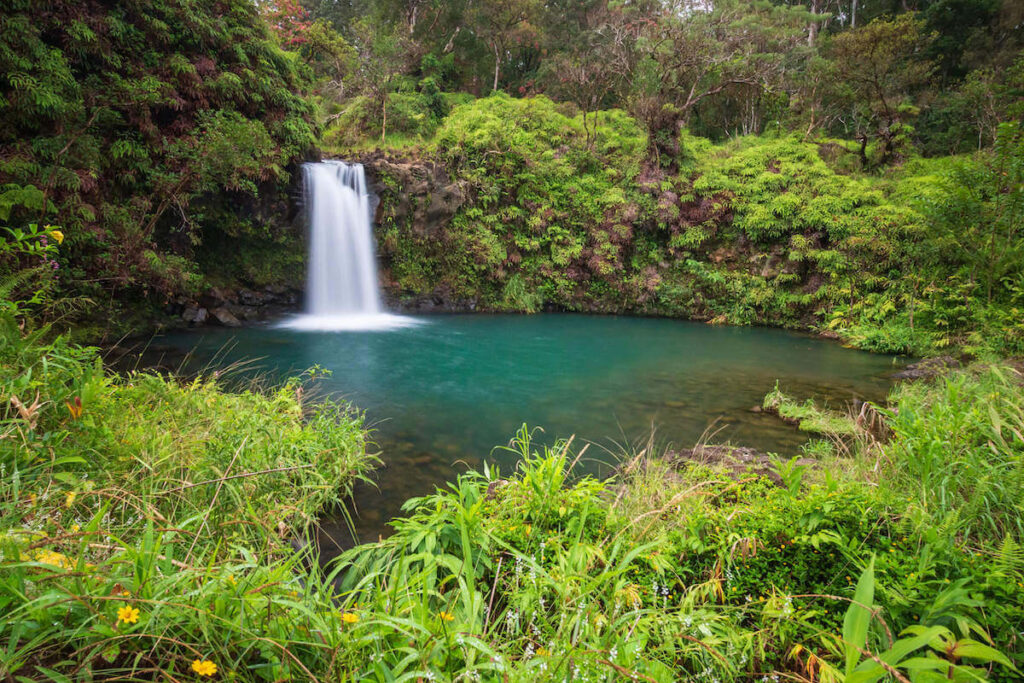
This is the spot I point people to if they want a swimmable waterfall without the longer trek out to Twin Falls.
It’s a good stretch-your-legs stop if you’re already doing the full drive, though I wouldn’t build a special trip around it on its own.
Big Island Waterfalls
Akaka Falls
Akaka Falls State Park is home to the tallest single-drop waterfall on the Big Island at 442 feet, reached by an easy, paved 0.4-mile loop through bamboo groves and wild orchids.
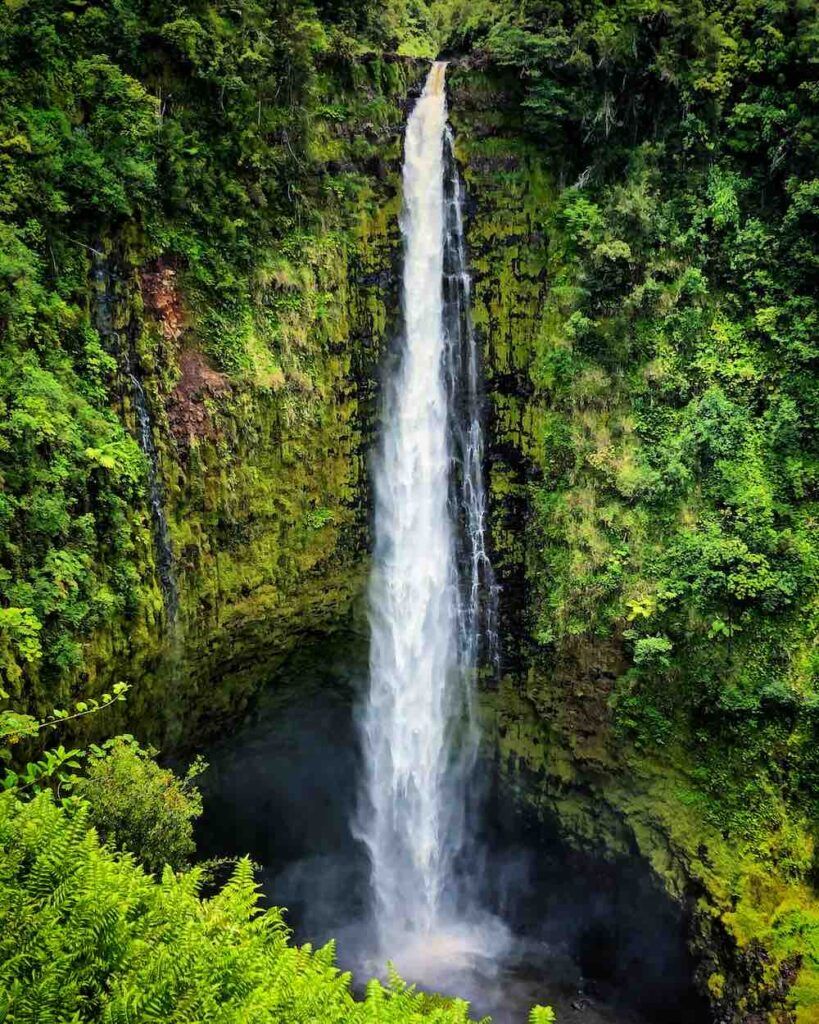
A second, smaller waterfall called Kahuna Falls sits on the same loop, though trees partly block the view of it.
Non-residents pay $5 per person and $10 per vehicle here, credit card only. Hawaii residents get in free with valid ID.
One thing worth clearing up, since people ask me constantly: there’s no ziplining at Akaka Falls itself. It’s a state park, so it can’t be commercially developed that way.
The zipline tours near this coast that fly over waterfalls are run by a separate operator nearby, not this park.
This is my favorite waterfall hike on the entire Big Island.
Rainbow Falls
Rainbow Falls sits just a couple of miles from downtown Hilo, which makes it one of the most convenient waterfalls in the state to reach.
Go in the morning, ideally between 7 and 9 a.m. on a clear day, and you’ll likely catch the rainbow in the mist that gives the falls their name.
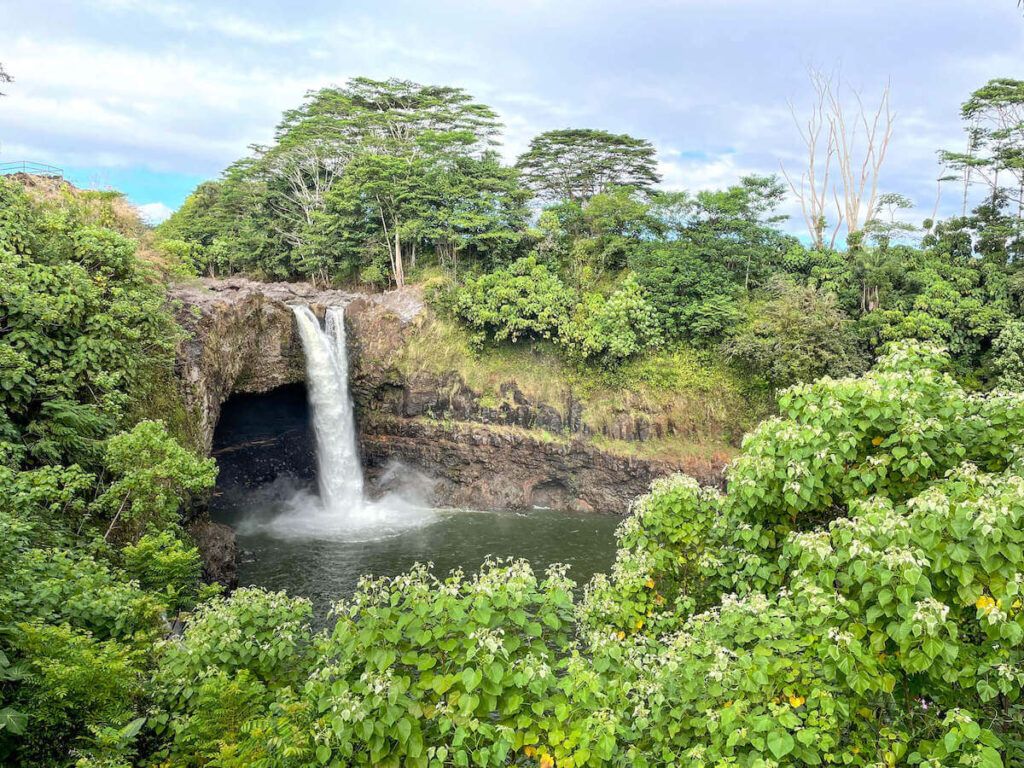
Here’s an actual new development for 2026. As of January, this stop now charges an entry fee too. Non-residents pay $5 per person and $10 per vehicle, paid on-site by card, and that fee also covers Boiling Pots a short drive upstream in the same park.
Swimming isn’t allowed here, and the Wailuku River has a well-earned reputation for flash floods, so please don’t be tempted.
This one’s still worth the stop if you’re already in Hilo, but it’s no longer the free five-minute detour it used to be.
Umauma Falls
Here’s something most visitors don’t realize until they’re already driving up to Umauma Falls: you can’t just walk in and view it for free anymore.
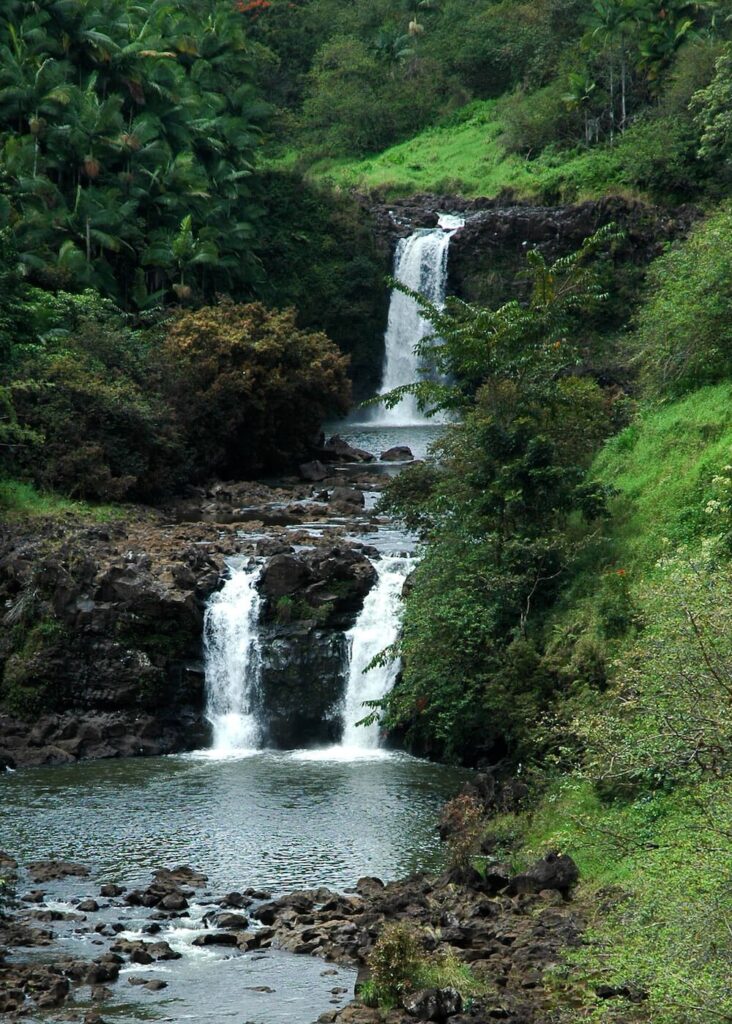
Close-up access now runs through the Umauma Experience zipline course, where you’ll actually zip directly over the falls and several others along the Hamakua Coast.
If you’re not zipping, you can still access the gardens and waterfall viewpoint for a $10 observer fee, or free if you’re with two or more paying zippers.
I’d skip this one unless ziplining is already on your Big Island wish list. The cost for a quick standalone look just isn’t worth it on its own.
Frequently Asked Questions
Do you need a permit to hike Lulumahu Falls?
Yes. It’s a $2.50 permit through the state’s online portal, since the trail crosses watershed land in an active hunting area.
Is it safe to hike to the bottom of Wailua Falls?
No. The trail is officially closed and considered illegal, and it has resulted in fatalities, including one in 2022. Stick to the overlook.
Can you swim in Hawaii’s waterfalls?
Some, yes. Waimea Falls on Oahu and Uluwehi Falls on Kauai both allow swimming when conditions permit. Others, including Manoa Falls, Wailua Falls, Opaekaa Falls, Waimoku Falls, and Rainbow Falls, don’t allow it at all, usually due to landslide risk or dangerous currents.
Do Hawaii waterfalls cost money to visit now?
Many do, and that’s changed a lot in just the past year. Wailua Falls, Opaekaa Falls, Akaka Falls, and Rainbow Falls all now charge non-resident entry and parking fees, typically around $5 per person plus $10 per vehicle. Hawaii residents generally enter free with valid ID. Rules shift often, so confirm current fees on the official park page before you go.
Which island has the best waterfalls?
Maui edges it out for me personally, mostly because Waimoku Falls delivers such a dramatic payoff for a moderate hike. Kauai has the highest number of waterfalls overall, many reachable only by helicopter or boat. If you’re still working out how to choose a Hawaii island for your trip, waterfall access is honestly one of the more overlooked factors in that decision.
So Which One Should You Actually Plan For?
If you’re narrowing this down to just one or two stops, here’s my honest take.
Want an easy walk and a real swim? Waimea Falls on Oahu.
Want the single most rewarding hike in the islands, based on what I’ve seen and heard from other Hawaii travelers? Waimoku Falls on Maui.
Want to turn an afternoon into a full adventure with a kayak, a hike, and a swim? Uluwehi Falls on Kauai is hard to top, and I can say that one firsthand.
Fitting the right waterfall into a realistic itinerary, instead of trying to squeeze in every single one, is exactly the kind of practical Hawaii travel advice I help with in my one-on-one Hawaii travel consultations.
I also talk through picks like these most weeks on my podcast, Hawaii Travel Made Easy, if you’d rather listen on your drive to work than read another blog post.
For more help building a full Hawaii trip planning guide around stops like these, take a look at my island-specific guides for Oahu, Maui, Kauai, and the Big Island, or my island-hopping guide if you’re trying to fit in more than one.
Whichever waterfalls make your list, lock in your rental car early through Discount Hawaii Car Rental, since several of these stops are a real drive from wherever you’re staying.
And if you want a photographer to capture the moment instead of relying on someone’s shaky phone shot, Flytographer will save you $20 on a session at a spot like Waimea Falls or Rainbow Falls.
Hawaii’s waterfalls aren’t going anywhere, but the rules around visiting them keep shifting faster than they used to.
Do a little homework before you go, and you’ll spend your trip actually enjoying the falls instead of arguing with a parking kiosk.
 | About the author: Marcie Cheung is a Hawaii travel expert who has visited Hawaii more than 40 times. She is the founder of Hawaii Travel Spot and host of Hawaii Travel Made Easy. She plans Hawaii vacations for couples, honeymooners, families, and other travelers. |
