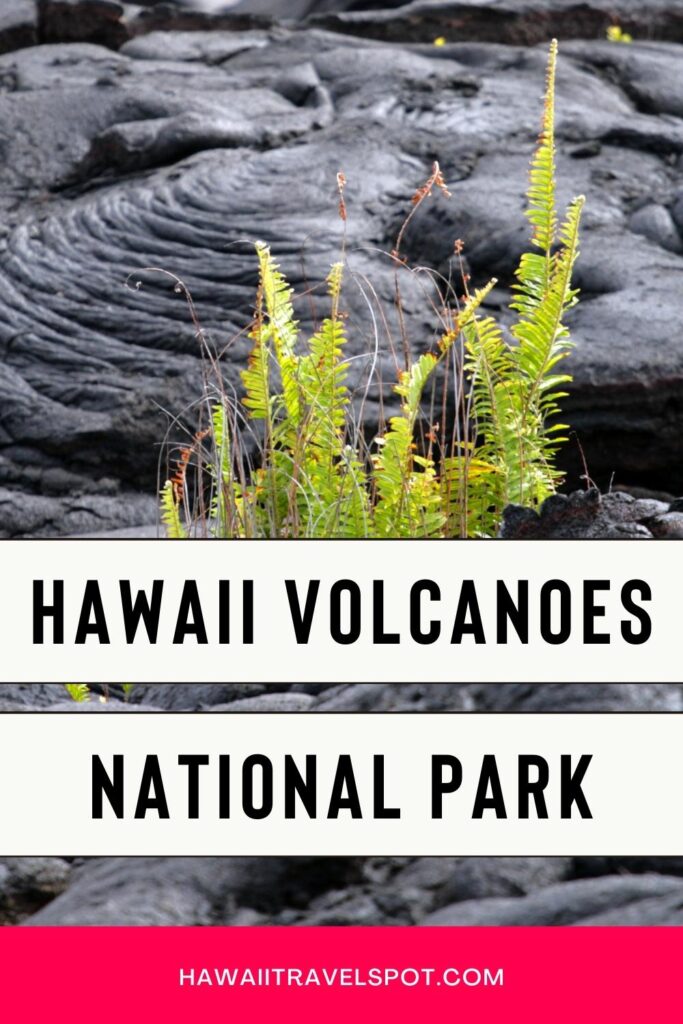

Are you planning a trip to the Big Island and want to see a volcano? Check out some of the best things to do at Hawaii Volcanoes National Park!
This list of things to do at Hawaii Volcanoes National Park was written by Marcie Cheung (a Hawaii travel expert) and contains affiliate links which means if you purchase something from one of my affiliate links, I may earn a small commission that goes back into maintaining this blog.
I still remember checking into Volcano House for the first time and walking straight to the back lanai before I’d even unpacked, just to see the crater.
That view never gets old, no matter how many times I go back.
And I’ve gone back a lot.
Between my own visits and a guided excursion I did with Friends of Hawaiʻi Volcanoes, that’s on-the-ground Hawaii travel experience talking when I tell you this isn’t a one-size-fits-all stop.
Some people build an entire Big Island trip around it. Others do two hours and move on. Both can be the right call, depending on what you’re after.
Here’s the twist for anyone planning a 2026 trip: Kīlauea is in the middle of an active episodic eruption right now, with lava fountains showing up every week or two at the summit.
That changes a few things about how you should plan this visit, so let’s get into it.
Quick verdict: Hawaii Volcanoes National Park is worth a half day at minimum, and a full day if you like hiking or want a shot at seeing lava. Entrance is $30 per vehicle for seven days. Book a small-group tour if you’d rather not navigate the road closures and parking chaos yourself, and if you want to sleep inside the park, check rates at Volcano House on Booking since it’s the only hotel on the property and books up fast during eruption episodes.
Is Kilauea Erupting Right Now?
Short answer: on and off, yes. Kīlauea has been going through a pattern of episodic fountaining at its summit in Halemaʻumaʻu crater since late 2024, and as of this writing, the volcano is in one of its pause periods with the next episode forecast for the coming days.
Each episode tends to last anywhere from a few hours to about a day, with lava fountains that have reached several hundred feet in the air.
None of this means you’re walking up to a wall of flowing lava. The eruption is confined to the caldera, and the area right around the vents has been closed to the public since 2007 for safety.
What you’re watching, when an episode is active, is a distant but striking fountain show from designated overlooks a safe distance away.
Because the schedule is unpredictable, I’d check the USGS Hawaiian Volcano Observatory updates the morning of your visit, not weeks in advance.
Conditions change fast here, and that’s part of what makes this such a different kind of national park experience.
One more thing worth knowing if you’re prone to breathing issues or traveling with someone who is pregnant: volcanic gas emissions stay elevated even during pause periods, and tephra (small volcanic glass and rock fragments) tends to build up on trails and roads after each episode.
The park recommends closed-toe shoes, eye protection, and a dust mask if you’re visiting during or right after an active episode, and checking the park’s air quality alert before you go.
What You’re Paying to Get In
The entrance fee is $30 per vehicle, $25 per motorcycle, or $15 if you’re walking or biking in, and it covers seven consecutive days.
That’s a solid deal if you’re spending more than one day on this side of the island.
If you’re a U.S. citizen or resident, there are also several fee-free days scattered through 2026, including August 25 (the park service’s 110th birthday), September 17, October 27, and November 11.
A new rule as of this year restricts fee-free days to U.S. citizens and residents only, so if you’re visiting from abroad, budget for the standard fee regardless of the date.
If national parks are a regular part of your travel life, the $80 America the Beautiful annual pass pays for itself after just a few visits to fee-charging parks.
Getting There and Where to Stay
Most people base themselves in Kona or Hilo and treat the park as a day trip.
From Kona, plan on about two hours each way, which makes an early start worth it if you want real time in the park instead of spending your whole day in the car.
If you’d rather not deal with the drive at all, staying at Volcano House puts you inside the park itself, and waking up a short walk from the caldera is an experience on its own.
It’s the only lodging inside the park boundaries, with the rest of the options clustered a few minutes away in Volcano Village.
Compare rates for both on Booking before you book, since Volcano House sells out quickly whenever an eruption episode is active.
Renting a car is close to essential here since the park’s best stops are spread along two long roads. I’ve had good luck with Discount Hawaii Car Rental for consistently lower rates than what shows up on the big booking sites.
Things to Do in Hawaii Volcanoes National Park
Start at the Visitor Area (With a Caveat)
Heads up before you go: the park is in the middle of a two-year construction project to repair buildings and infrastructure damaged by past volcanic activity at the summit, so expect some closures and detours around the main visitor area.
It’s still worth a stop for current conditions, ranger-led activity schedules, and a look at what’s open that day, but don’t count on it looking the way it does in older photos or blog posts.
Watch the Lava (When There’s Lava to Watch)
If an eruption episode happens to line up with your visit, this is the main event. Designated overlooks along Crater Rim Drive give you a distant but clear view of the fountaining, and the park updates its recommended viewing spots as conditions shift.
If you’re visiting during a pause, you’ll still get striking views of the steaming caldera itself, which is worth seeing on its own merits.
Drive Chain of Craters Road
This one is a personal favorite of mine. It’s a 19-mile drive down from the summit to the coast, dropping nearly 4,000 feet in elevation and ending at the Hōlei Sea Arch.

Give yourself at least half a day if you want to stop at the pullouts along the way, including the Puʻu Loa petroglyph field, where you can see thousands of images carved into the lava rock by Native Hawaiians centuries ago.
One important note: there’s no food, water, or gas anywhere on this road or at the end of it. Fill your tank and your water bottles before you head down.
Walk Through Nāhuku (Formerly Thurston Lava Tube)
Walking through a 500-year-old lava tube is one of those things that sounds intense and turns out to be an easy, family-friendly walk that takes maybe half an hour.

As of this writing, the trail is running one-way while the park replaces the entrance bridge, so you’ll approach from the eastern end near the Kīlauea Iki overlook rather than the main rainforest path.
The small parking lot fills up fast, so aim for early morning or late afternoon.
Hike Kīlauea Iki Trail
If you want more of a workout, this is the hike I’d point you to.
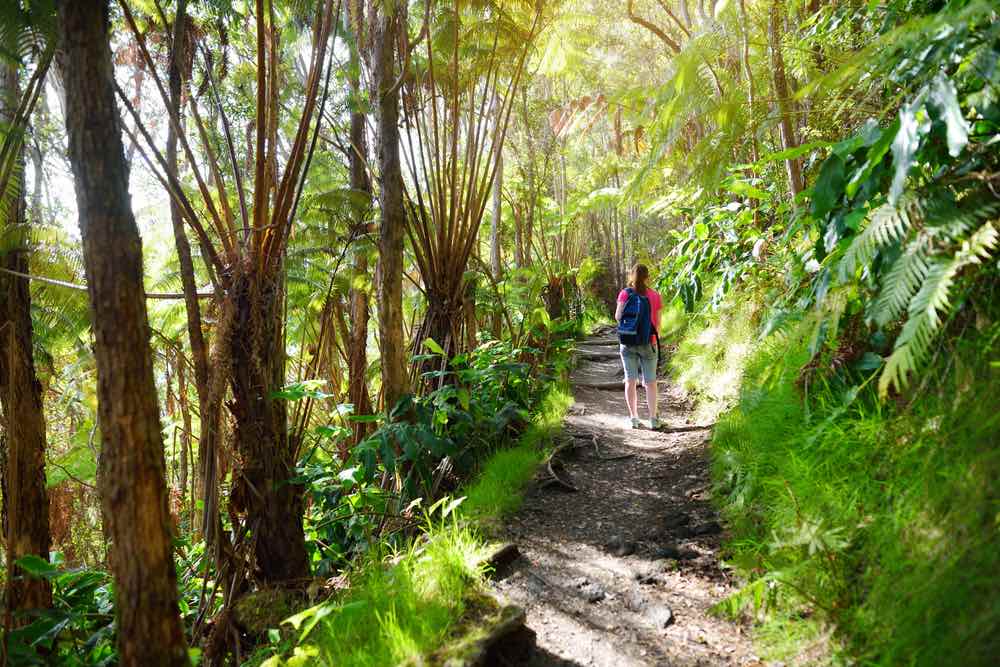
It’s roughly four miles round trip and takes about two to three hours, dropping you down through rainforest onto the floor of a crater that was a churning lava lake back in 1959.
Standing down there and looking up at where you started is a humbling moment.
Take the Easy Route on Devastation Trail
For anyone traveling with young kids, older relatives, or just short on time, Devastation Trail is a flat, paved, one-mile round trip through the aftermath of that same 1959 eruption.
It’s an easy way to see dramatic volcanic terrain without committing to a full hike.
See the Sulphur Banks
The short walk to Haʻakulamanu, or the Sulphur Banks, takes you past ground that’s actively venting volcanic gas.

It smells about how you’d expect, so this is a quick stop rather than a lingering one, but the informational signage does a nice job explaining what’s happening beneath your feet.
Camp or Stargaze
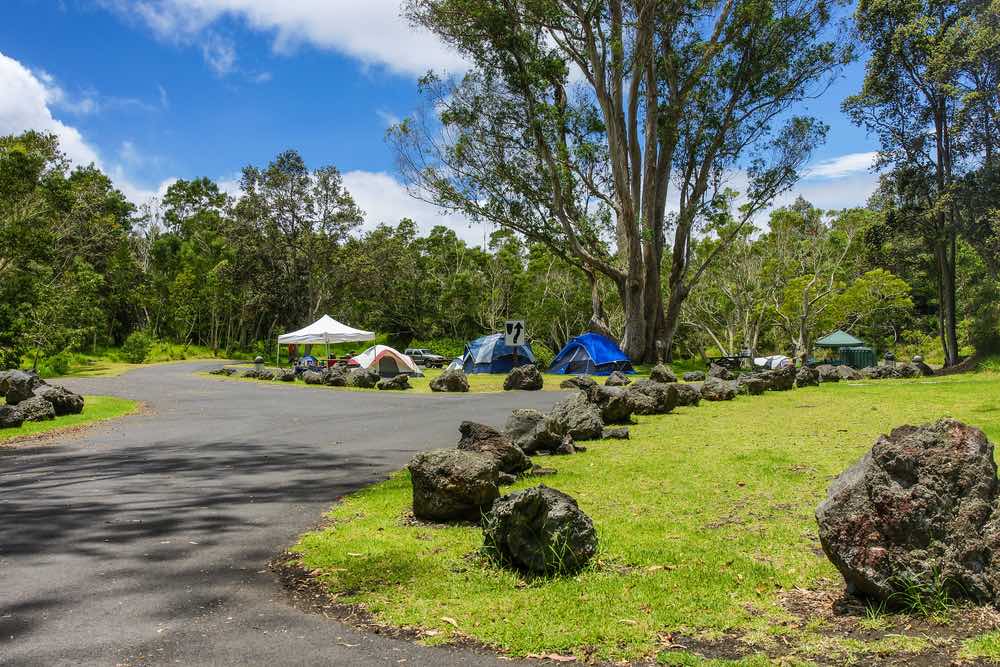
Two campgrounds inside the park let you spend the night surrounded by rainforest, and if you’re there after dark, the stargazing is some of the best you’ll find on the island thanks to minimal light pollution.
Bring layers. The summit sits over 4,000 feet up, and it gets cold enough after sunset that most people underestimate it.
Should You Book a Tour Instead of Driving Yourself?
If the idea of navigating road closures, shifting eruption schedules, and limited parking sounds like a headache, a guided tour solves most of that for you.
A geologist-led small-group tour from Kona will typically fold in stops at a coffee farm and a black sand beach along with the park itself, so you get the fuller Big Island picture instead of just the crater.
Browse current Big Island volcano tours on Viator or check availability on GetYourGuide to compare a few options side by side.
For couples wanting an even more intimate experience, a helicopter tour over the summit gives you an aerial angle on the eruption zone that you simply can’t get from the ground.
Who This Park Is Best For
Setting realistic Hawaii travel expectations matters here. This isn’t a park where you check a box and move on, and it isn’t a park that demands a full day from everyone either. It really depends on what kind of traveler you are.
Good fit: Hikers, photographers, anyone who wants to say they’ve seen an active volcano up close, and travelers who like a little unpredictability in their itinerary.
Not a great fit: Anyone with serious mobility limitations who can’t handle uneven terrain, or families with very young kids who won’t tolerate a long drive and a lot of standing around at overlooks.
Frequently Asked Questions
Is Hawaii Volcanoes National Park worth visiting in 2026?
Yes. Between the ongoing eruption activity, the drive down Chain of Craters Road, and the lava tube walk, there’s enough here to fill a full day even without a fountaining episode happening while you’re there.
How much time do you need at Hawaii Volcanoes National Park?
Budget a half day for the highlights, or a full day if you want to hike, drive the full length of Chain of Craters Road, and catch a ranger program.
Is Kilauea erupting right now?
It depends on the day. Kīlauea has been erupting episodically since late 2024, with active fountaining lasting hours at a time followed by pauses of days to weeks. Check the USGS Hawaiian Volcano Observatory site the morning of your visit for the current status.
Do you need a reservation to enter the park?
No timed-entry reservation is required to drive in, just payment of the standard entrance fee or a valid park pass. That said, parking lots at popular stops routinely fill by mid-morning.
Is it safe to visit during an eruption?
Yes, as long as you stay on marked trails and designated overlooks. The hazardous zone immediately around the vents has been closed to the public since 2007. The main things to watch for are vog and tephra, which the park actively monitors and posts alerts about.
Planning the Rest of Your Big Island Trip
If Hawaii Volcanoes National Park is one stop on a bigger Big Island itinerary, my Big Island travel guide works as a full Hawaii trip planning guide for where to base yourself and how to structure your days.
And if you’re trying to decide whether to split time between the Big Island and another island, my island-hopping guide walks through how that logistics plays out in real life.
I get into a lot of this in more depth on my podcast, Hawaii Travel Made Easy, with episodes covering both first-time Hawaii visitor advice and repeat Hawaii traveler tips for building a Big Island itinerary that doesn’t leave you exhausted by day three.
And if you’d rather skip the planning altogether and just hand me your dates, I offer one-on-one Hawaii travel consultations where I’ll build out a full itinerary around what you care about seeing, not a generic checklist.
Whatever kind of trip you’re building, this park rewards people who show up with a plan and a little flexibility.
Check the eruption status the morning of, bring layers, and give yourself more time than you think you’ll need. Kīlauea has been putting on this show for over a hundred years, and it’s not slowing down anytime soon.
 | About the author: Marcie Cheung is a Hawaii travel expert who has visited Hawaii more than 40 times. She is the founder of Hawaii Travel Spot and host of Hawaii Travel Made Easy. She plans Hawaii vacations for couples, honeymooners, families, and other travelers. |