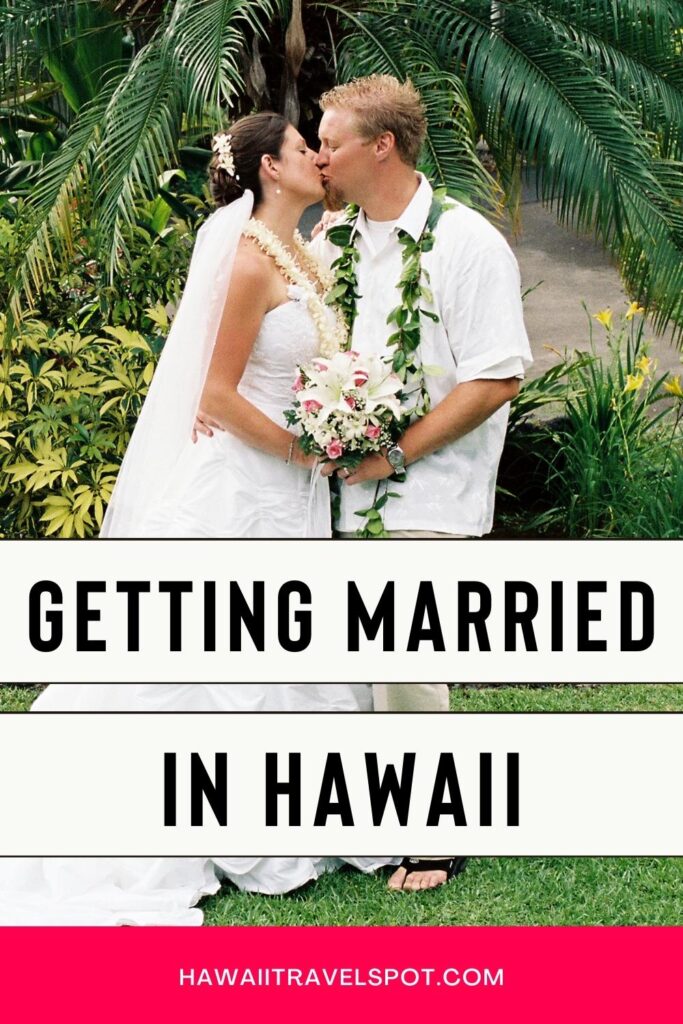
Are you thinking about eloping in Hawaii or planning a Hawaii destination wedding? Keep scrolling to find out everything you need to know about getting married in Hawaii.
This guide to getting married in Hawaii was written by Marcie Cheung (a Hawaii travel expert) and contains affiliate links which means if you purchase something from one of my affiliate links, I may earn a small commission that goes back into maintaining this blog.
Planning a Hawaii wedding sounds dreamy until you start Googling and realize you have no idea where to begin.
I’ve been to multiple destination weddings across the islands. My mom officiates weddings on Kauai.
And after 40+ trips to Hawaii as a certified Hawaii destination specialist, I’ve seen what works and what turns into a disaster.
This isn’t going to be one of those posts that makes everything sound perfect and easy.
Hawaii weddings are beautiful, but they come with real challenges.
Like the time I attended a beach wedding where none of us could hear the vows over the waves crashing.
Or when a couple put their wedding cake in direct sun at an outdoor venue and we all scrambled to shade it while frosting melted down the sides.
I’m going to tell you exactly what you need to know, what vendors to book, how the marriage license actually works, and which mistakes to avoid based on what I’ve seen go wrong firsthand.
Why Get Married in Hawaii? (The Real Reasons)
Yes, it’s beautiful. Obviously. But that’s not why smart couples choose Hawaii for their wedding.
Here’s what actually makes it worth it:
You combine your wedding and honeymoon in one trip. That alone saves thousands compared to paying for two separate events and two separate vacations.
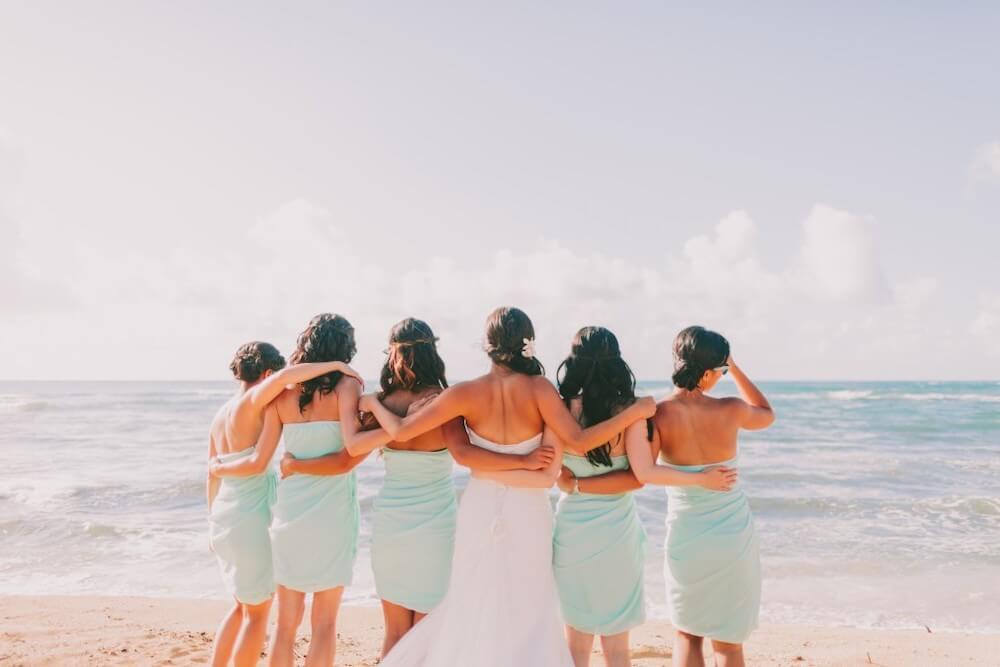
Smaller guest list is socially acceptable.
When you get married in Hawaii, nobody expects you to invite all 150 people on your potential guest list.
You can keep it to 15-20 people without offending anyone, because “it’s a destination wedding.”
Better wedding-to-cost ratio. A Hawaii destination wedding with 20 people often costs less than a traditional mainland wedding with 100+ guests.
You skip the $10,000 reception hall, the expensive catering for a massive group, and all those costs that balloon with large weddings.
The infrastructure exists. You’re not trying to coordinate vendors on some remote island with two hotels.
Hawaii has real wedding vendors, experienced officiants, professional photographers who know how to shoot in bright sun and changing conditions.
The Marriage License Process (What Actually Happens)
Let’s start with the legal stuff because you can’t get married without this part.
Hawaii lets you apply online for your marriage license up to a year in advance through the Department of Health website. You fill out the application, pay $60, and get a receipt.
Once you’re actually in Hawaii, you schedule an appointment with a licensed marriage license agent.
Both of you show up with your printed receipt and government ID. They verify everything, you pay them $5, and you walk out with your license about 30 minutes later.
No waiting period. You can get married the same day you get your license if you want.
Here’s what my mom tells couples as an officiant: Don’t wait until the last minute to get your license.
Build in buffer time.
If there’s an issue with your application or the agent’s schedule is full, you need time to fix it. Get your license at least 2-3 days before your ceremony.
After you’re married, the license gets filed with the state. Your official copy arrives by mail in about three weeks.
You can pay $10 more for expedited processing if you need it faster for name changes or other paperwork.
One more thing: both people have to be there in person to get the license. I’ve seen couples try to have one person handle it alone. Doesn’t work.
Which Island Should You Actually Choose?
Every island works for weddings, but they’re all different. I’ve been to ceremonies on all four major islands, and here’s what I actually think about each one.
Kauai: Best for Small, Intimate Weddings
This is where my mom officiates, so I’ve been to more Kauai weddings than anywhere else.
Kauai is the most romantic island if you want quiet and intimate. Less developed, fewer people, greener scenery.
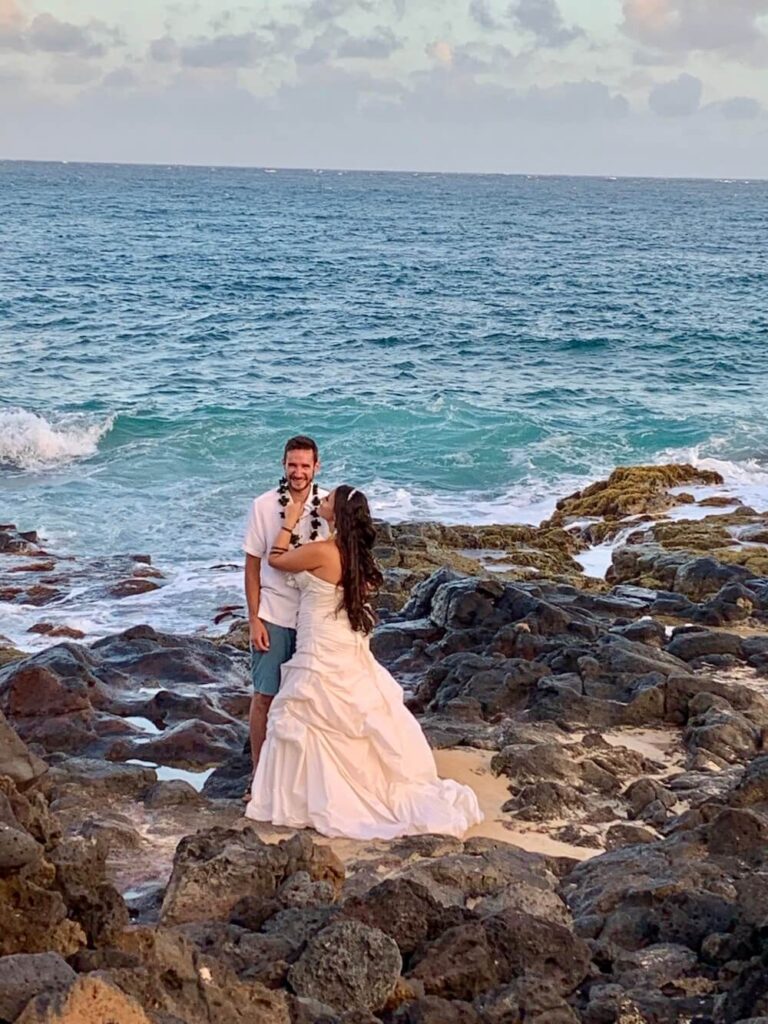
The beaches are less crowded, which matters when you’re trying to have a ceremony without random tourists in the background.
But here’s the trade-off: fewer vendor options. You have good photographers and florists and planners, but not 50 to choose from like Oahu. Book early.
Also, wind is a real issue on Kauai beaches. I’m talking serious wind. That wedding where we couldn’t hear the officiant? The wind was part of the problem along with the waves.
My mom now tells all her beach couples to either use a microphone or choose a more protected spot on the beach.
Choose Kauai if: You’re having 25 people or less, you want lush tropical scenery, and you’re okay with fewer hotel options.
Oahu: Best for Bigger Weddings or Easier Logistics
Most vendor options, most hotel choices, easiest airport access. If you have 30+ guests flying in from the mainland, Oahu makes their lives easier with direct flights and more accommodation options at different price points.
The downside is crowds. Popular beaches have tourists. Waikiki is busy. If you want that secluded tropical wedding, Oahu isn’t it unless you book a private venue.
Choose Oahu if: You have a bigger guest list, you want the most vendor options, or your guests want easy access to activities and restaurants beyond just the wedding.
Maui: The Middle Ground That Does Everything Well
Maui is popular for weddings because it’s the Goldilocks option. Not as developed as Oahu, not as remote as Kauai. Good vendor selection, beautiful beaches, plenty of hotels.
The west side has the best sunset views. The Road to Hana offers incredible photo opportunities if you want dramatic scenery beyond just beach shots.
I was at a wedding at Kualoa Ranch on Oahu (not Maui, but similar venue style), and that’s where the cake melting disaster happened. The venue was gorgeous but they set up the dessert table in direct sun in the afternoon. In Hawaii. In summer.
The three-tier white cake started sliding and we all had to jump in and create shade while trying to salvage what we could.
Learn from this: afternoon outdoor receptions in full sun create problems. Morning ceremonies or venues with shade make life easier.
Choose Maui if: You want classic Hawaii wedding vibes, good beaches, and a balance of romance and infrastructure.
Big Island: Most Dramatic Scenery
Black sand beaches, active volcanoes, the most diverse landscapes. If you want wedding photos that look completely different from typical beach ceremonies, the Big Island delivers.
But it’s also the biggest island with the longest drive times between locations. And fewer direct flights from the mainland, which makes it slightly harder for guests.
Choose the Big Island if: You want dramatic, unique scenery and don’t mind longer drives. Or you’re keeping it really small with just a few people.
When to Get Married in Hawaii (Actual Best Months)
Wedding season is March through August and the December holidays. These months have peak pricing, booked-up vendors, and crowded beaches.
The months that actually make sense: Late April through early June, and September through mid-December.
My mom’s busiest months on Kauai are May and October. Not peak tourist season, but couples have figured out these months offer better value with excellent weather.
You’ll save money on hotels and flights, have better vendor availability, and get beaches to yourselves more often. Weather is still great during these shoulder season months.
Avoid if possible: Spring Break (mid-March through early April) and Christmas/New Year’s. Prices double, everything books up, and beaches are packed.
How Much a Hawaii Wedding Actually Costs
This is where people are usually surprised. Done right, a Hawaii wedding costs less than a traditional mainland wedding.
Bare minimum for just the two of you:
- Marriage license: $65
- Officiant: $300-500 (my mom charges $400 for a basic ceremony)
- Photography: $1,500-2,500
- Simple flowers/leis: $200-300
- Flights and hotel for one week: $3,000-5,000 Total: $5,065-$8,365
Small wedding with 20 guests:
- Everything above
- Venue: $0-2,000 (many beaches are free with permits)
- Reception dinner: $2,000-5,000 depending on restaurant
- Extra flowers and decor: $500-1,000 Total: $7,565-$16,365
Compare that to the average U.S. wedding cost of $30,000+ and you’re saving a lot.
The trick is keeping the guest list small. Every additional person adds costs for dinner, sometimes venue fees, extra flowers and decorations.
If you’re trying to figure out how to make this work within your budget, I do personalized consultations specifically for Hawaii weddings and honeymoons where we go through your priorities and find the best options for what you actually want.
The Biggest Mistakes Couples Make (From Someone Who’s Watched Them Happen)
Not Planning for Sound
I’ve been to two beach weddings where we couldn’t hear the ceremony. One was that Kauai wedding I mentioned with the waves and wind.
The other was at a beach on Maui where the couple decided they didn’t need a microphone for their 30-person wedding.
Beach weddings are loud. Waves crash, wind blows, and if anyone is standing more than 10 feet from the officiant, they won’t hear the vows.
Solution: Use a microphone. Small portable PA systems work fine. Many officiants bring them. My mom always brings hers now after too many ceremonies where guests missed everything.
Afternoon Ceremonies in Full Sun
That melting cake at Kualoa Ranch taught everyone a lesson. Hawaii sun is intense, especially in summer afternoons.
Afternoon ceremonies mean harsh lighting for photos, hot and uncomfortable guests, and anything heat-sensitive (cake, chocolate, butter-based foods) melting.
Better approach: Morning ceremonies between 8-10 AM. Softer light, cooler temperatures, guests are more comfortable, and you avoid afternoon trade winds that pick up on most islands.
Underestimating How Long Everything Takes
Hawaii operates on island time. Vendors run a little late. Traffic happens. Nothing moves as fast as you’re used to on the mainland.
Build in buffer time for everything. If your ceremony starts at 4 PM, don’t schedule hair and makeup for 2 PM. Start at noon. Give yourself extra time.
Not Having a Backup Plan for Weather
Even during dry season, Hawaii gets random rain showers. I’ve seen couples scramble because they had a beach ceremony planned with zero backup option and it started raining 30 minutes before.
Have a rain plan. Many venues offer covered pavilions. If you’re set on the beach, choose one with nearby shelter you can move to quickly.
Booking Vendors Too Late
Good Hawaii wedding photographers book 12-18 months in advance. Popular officiants (like my mom) fill up 8-12 months ahead for peak season dates. Venues book early too.
Couples wait until 4-6 months before their date and find their options are limited. Book the important stuff early.
I cover more of these timing and planning mistakes in my podcast episode on Hawaii Wedding and Honeymoon Mistakes.
Hawaiian Wedding Traditions (What to Actually Include)
You don’t have to do a traditional Hawaiian ceremony. But even incorporating one or two elements adds meaning and makes it feel more connected to the place.
Lei Exchange
The most common tradition. Instead of (or in addition to) exchanging rings, you exchange leis during the ceremony.
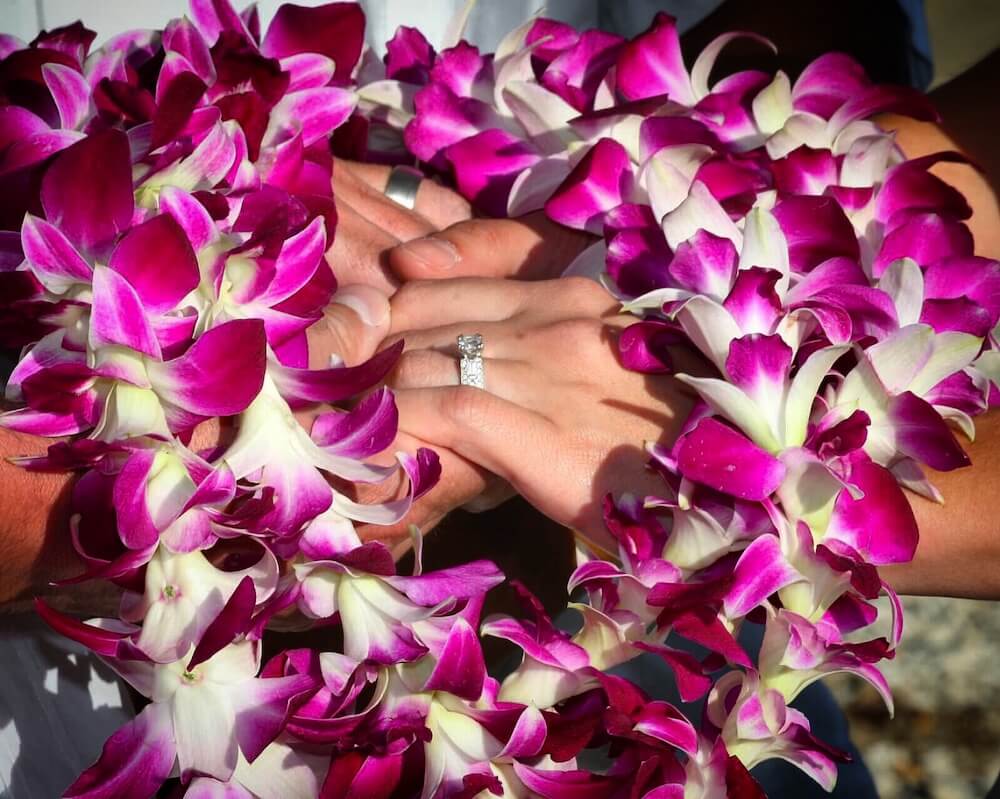
Brides typically wear a haku lei (the flower crown style). Grooms wear a maile lei (the open green garland) around their neck. Then you exchange them with each other.
My mom includes this in almost every ceremony she performs. It’s simple, it photographs beautifully, and it’s meaningful.
Blowing the Pū (Conch Shell)
The officiant blows a conch shell at key moments to call the elements as witnesses. It’s dramatic. Makes great photos. And it signals to everyone that something important is happening.
Not all officiants do this. Ask if it’s something they offer.
Sand Ceremony
Each person pours sand from their own container into one shared vessel. The mixed sand can’t be separated, representing your permanent union.
This works especially well for beach ceremonies where the symbolism connects directly to the location.
Oli Aloha (Hawaiian Chant)
A traditional Hawaiian welcome chant. Usually performed by the officiant if they’re Hawaiian or by a cultural practitioner you hire specifically for this.
It’s beautiful, but it adds to your budget if you’re hiring someone specifically to perform it.
My mom’s advice: if it’s important to you, plan for it. But don’t feel like you have to include everything just because it’s “Hawaiian.”
Finding Wedding Vendors Who Are Actually Good
This is harder than it should be. Online reviews don’t tell the whole story, and Hawaii has some vendors who look great online but don’t deliver.
Officiants
Your officiant matters more than you think. They set the entire tone for your ceremony.
What to look for:
- Registered with Hawaii’s Department of Health (this is required by law, but not everyone does it)
- Has performed ceremonies on your specific island
- Offers some level of customization (not just a template ceremony they read at every wedding)
- Responds to emails promptly (communication issues before the wedding mean bigger problems on the wedding day)
My mom gets booked early because she customizes every ceremony and actually talks to couples beforehand to understand what they want.
A lot of officiants don’t do that. They show up, read a standard ceremony, and leave.
Ask to see a sample ceremony before you book. Make sure their style matches what you want.
Photographers
Hawaii wedding photography requires specific skills. Bright midday sun, changing light conditions, outdoor settings, wind, and often beach locations all present challenges.
Don’t just look at Instagram highlights. Ask to see full wedding galleries so you can see how they handle the entire day, not just the three perfect shots they post online.
What to look for:
- Extensive Hawaii wedding portfolio
- Shoots during golden hour (early morning or late afternoon) when lighting is better
- Includes digital files in their packages (some charge extra for images, which is annoying)
- Knows your venue and can suggest good photo locations
- Has backup equipment (equipment fails, especially in Hawaii’s humidity and salt air)
Budget at least $1,500-2,500 for quality wedding photography. You can find cheaper, but quality drops off significantly under $1,500.
Florists
Tropical flowers are gorgeous but expensive and fragile in Hawaii’s heat.
Things my mom has seen go wrong with flowers:
- Bouquets wilting within an hour because they were assembled too early
- Flowers dying in hot cars before the ceremony
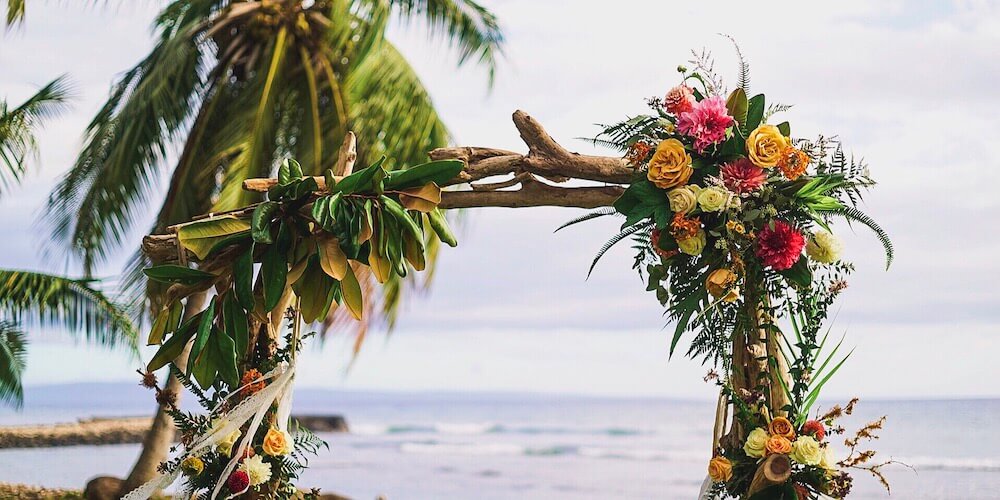
- Arch decorations falling apart in wind
- Couples ordering mainland flowers that don’t hold up in Hawaii conditions
Work with florists who understand Hawaii conditions. White orchids and plumerias hold up better than roses in the heat. And make sure delivery timing accounts for setup needs without flowers sitting in heat for hours.
Wedding Planners
For big weddings (30+ people) or if you’re not comfortable coordinating everything remotely, a planner is worth it.
A good Hawaii wedding planner costs $2,000-5,000 but usually saves you more than that by preventing mistakes and having vendor connections that get you better pricing.
For smaller weddings or if budget is tight, you can coordinate yourself.
Or book a consultation with me where we map out your timeline, recommend specific vendors for your island and budget, and create a realistic plan you can execute yourself.
Best Wedding Venues by Island (Real Recommendations)
I’m only including venues I’ve actually been to or my mom has worked at. No random internet research here.
Kauai
Waimea Plantation Cottages – Old Hawaii charm with oceanfront lawn space under massive banyan trees. My mom does ceremonies here regularly. The historic cottages work for guest accommodations, and the setting photographs beautifully.
Hanalei Bay – The beach itself, not a resort. You need a permit for beach weddings, but the backdrop of the mountains and bay is unmatched on Kauai. Morning ceremonies work best before tourists and wind pick up.
Private vacation rentals along the North Shore – Several large homes rent for weddings with oceanview lawns. Works well for intimate weddings where you want the whole property for yourselves and guests.
Oahu
Haiku Gardens – Lush tropical gardens with Ko’olau Mountain views. Has a covered pavilion for backup, which saved one wedding I attended when unexpected rain rolled through.
Turtle Bay Resort – Five miles of private beach on the North Shore. Less crowded than Waikiki beaches, better sunset views, and professional wedding coordination team.
Kualoa Ranch – Dramatic mountain and ocean views (this is where the cake melting incident happened). Beautiful venue, but make sure you have shade for food and guests during afternoon events.
Maui
Olowalu Plantation House – Right on the beach with frequent sea turtle sightings. More laid-back than resort venues but professionally managed. Good for couples who want beach without big resort vibes.
Hui No’eau Visual Arts Center – Mediterranean-style plantation manor with West Maui Mountain views. The grounds are immaculate and it photographs like a Tuscany villa but in Hawaii.
Big Island
Kahua Ranch – Rolling green hills, ocean views, rustic barn. One of the most unique venues in Hawaii. Handles everything from intimate ceremonies to full receptions.
Mauna Kea Beach Hotel – Classic luxury Hawaii. The crescent beach and manicured grounds are picture-perfect, and their wedding team handles all the logistics.
Beach Wedding Permits (The Annoying But Necessary Part)
Public beach weddings in Hawaii require permits. This process is not fun, and rules vary by island and specific beach.
General requirements:
- Apply 2-3 weeks before your ceremony minimum
- Pay $50-100 for the permit depending on island
- Most beaches limit ceremonies to 25 people
- No chairs, arches, or structures without special permits (and those are much harder to get and more expensive)
- Some beaches don’t allow wedding ceremonies at all
My mom’s advice: if you’re set on a specific beach, research permit requirements early. Some of Kauai’s most beautiful beaches have strict no-wedding rules or only allow ceremonies during certain hours.
Easiest solution: Book a resort or private venue that handles all permits. Or hire a wedding planner who knows the permit process for your chosen beach.
Morning ceremonies are easier to permit than afternoon ceremonies on most beaches because they cause less disruption to regular beach users.
What to Actually Wear
Hawaii weddings are more casual than mainland ceremonies, but there’s still a range.
For Brides
Most brides in Hawaii skip the full formal ballgown. The heat, outdoor setting, and often beach location make lighter dresses more practical.
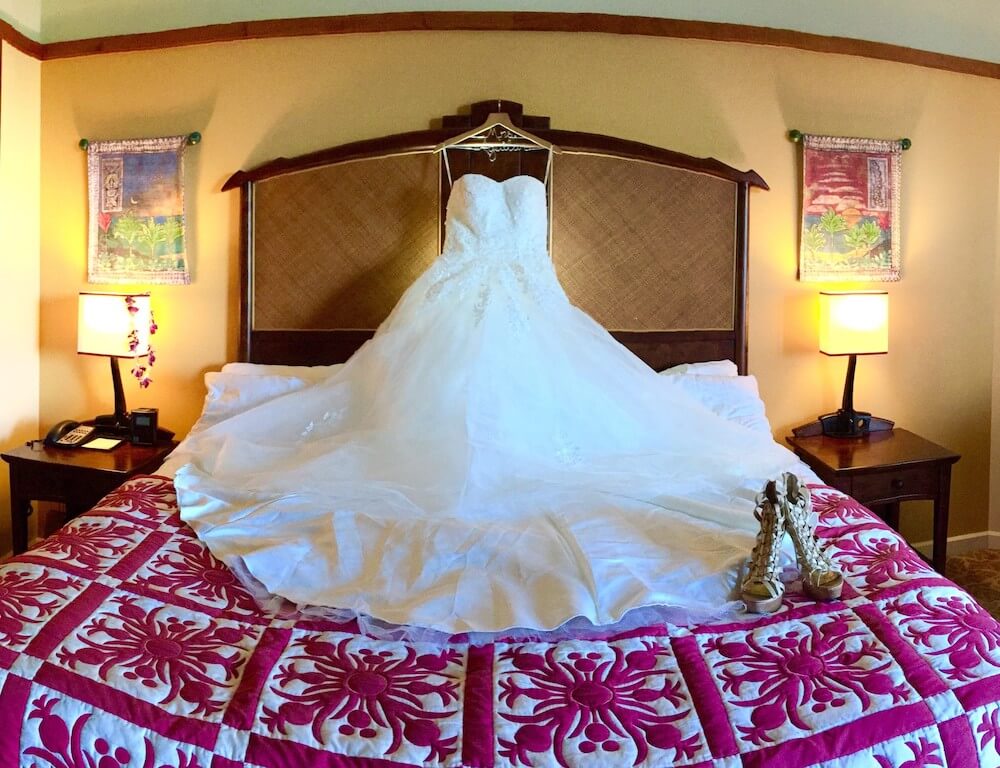
What works: flowy dresses, boho styles, tea-length, simple silhouettes in light fabrics. Many brides go barefoot on the beach or wear simple sandals.
What doesn’t work: heavy fabrics, long trains in sand, stiletto heels (you’ll sink in sand or grass).
For Grooms
Linen pants with a white button-down shirt is the standard. Light-colored suit pants with a white aloha shirt works too. Skip the jacket unless you’re doing an indoor venue.
Ties are optional. A colored sash adds a traditional Hawaiian touch if you want it.
Go barefoot on the beach or wear sandals. Nobody expects dress shoes at Hawaii beach weddings.
For Guests
Resort casual. Aloha shirts for men, sundresses for women. Light, breathable fabrics.
Tell your guests this explicitly. Mainlanders often pack too formally for Hawaii weddings and end up hot and uncomfortable. I’ve seen guests show up in full suits and heels to beach weddings because nobody told them it was casual.
Combining Your Wedding and Honeymoon (How to Actually Do It)
One of the best parts about getting married in Hawaii: you’re already there for your honeymoon.
The approach that actually works:
Arrive 2-3 days before your wedding. This gives you time to get your marriage license, handle any last-minute details, adjust to the time change, and not feel rushed.
Do the wedding mid-week. You avoid weekend crowds and most vendors charge less for weekday weddings.
Spend 4-5 days after the wedding in honeymoon mode. Either stay on the same island or hop to a different island for a change of scenery.
If you got married on Maui with guests, you might stay there for 2-3 days after, then fly to Kauai for 4-5 quieter honeymoon days.
What doesn’t work: Trying to fit the wedding, guest activities, and honeymoon into one week. That’s too rushed. Plan 10-14 days minimum if you’re combining everything.
I talk through more honeymoon planning details in my podcast episode on Top Mistakes Couples Make on a Hawaii Honeymoon, including the timing issues most couples don’t think about.
Guest Logistics (The Stuff You Have to Tell People)
Your guests need detailed information well before they book anything.
What to send them:
- Wedding date, time, and specific location (include the actual address, not just “Kauai beach”)
- Hotel recommendations at different price points
- Flight booking advice (book 3-4 months out for better prices)
- Rental car information (they need one in Hawaii, Uber/Lyft isn’t reliable outside Honolulu)
- Weather expectations and what to pack
- Suggested arrival and departure dates that give them time to adjust before the wedding
Hotel blocks: Some resorts offer group rates for weddings. These rarely save significant money, but they keep everyone in one location. For small weddings under 20 people, individual bookings usually work better.
Make it clear that guests need to rent a car. Public transportation is extremely limited in Hawaii, and expecting Uber to get them around doesn’t work outside Waikiki.
The Planning Timeline (When to Book Everything)
12-18 months before:
- Choose your island
- Book your venue (popular ones fill up this far in advance)
- Reserve your photographer
- Find your officiant
8-10 months before:
- Send save-the-dates to guests
- Look at florists
- Research hotels for yourselves and guests
4-6 months before:
- Apply for marriage license (you can do this up to a year ahead, but 4-6 months is typical)
- Finalize ceremony details with your officiant
- Book hair/makeup if you want professionals
- Send formal invitations
- Start looking at honeymoon activities
2-3 months before:
- Apply for beach permit if you need one
- Confirm all vendor details and timing
- Make dinner reservations for reception if doing a restaurant
- Order wedding clothes if you haven’t already
1 month before:
- Final confirmations with all vendors
- Create day-of timeline
- Finalize guest count
- Make backup weather plan
When you arrive in Hawaii:
- Get your marriage license within the first 2-3 days
- Meet with vendors for final details if needed
- Do a rehearsal, especially for beach ceremonies
Is a Hawaii Wedding Actually Right for You?
Not every couple should get married in Hawaii. Here’s when it makes sense and when it doesn’t.
It works if:
- You want a smaller wedding (under 50 people)
- You’re okay with some uncertainty (weather, coordinating from afar, island time)
- Your priority is the experience over having everyone you know present
- You want to combine wedding and honeymoon
- You have some flexibility in your timeline and approach
It doesn’t work if:
- You want a large traditional wedding with 100+ guests
- You need complete control over every tiny detail
- You’re not comfortable planning remotely
- Your budget is extremely tight (there are ways to do Hawaii weddings affordably, but it’s still more expensive than a courthouse wedding at home)
Next Steps for Planning Your Hawaii Wedding
If you’ve decided a Hawaii wedding is right for you:
1. Pick your island
- Big guest list or need easy logistics → Oahu
- Small, intimate, romantic → Kauai
- Want it all, most popular option → Maui
- Dramatic scenery and unique photos → Big Island
2. Set a realistic budget Include flights and accommodations for yourselves plus any help you’re giving guests. Be honest about what you can afford.
3. Book the big three early Venue, photographer, and officiant. Everything else can be figured out later, but these three book up fast.
4. Consider getting help If you want guidance on logistics, vendor recommendations, and realistic timelines for your specific situation, I offer Hawaii wedding and honeymoon consultations where we map everything out based on your island, budget, and vision.
5. Apply for your marriage license Once you’ve confirmed your date, apply through the Hawaii Department of Health website. Then schedule your appointment with a marriage license agent for after you arrive.
Getting married in Hawaii takes planning, but it’s not as overwhelming as it seems at first. With realistic expectations and the right approach, you can have a wedding that’s beautiful, meaningful, and actually less stressful than a big traditional wedding.
For more detailed island-specific planning help, check out my complete Hawaii travel guides for Oahu, Maui, Kauai, and the Big Island.
Looking for Hawaii honeymoon content? Find out the best island for your Hawaii honeymoon, where to stay on your Hawaii honeymoon, best things to do on a Kauai honeymoon, and the most romantic Oahu restaurants!
 | About the author: Marcie Cheung is a Hawaii travel expert who has visited Hawaii more than 40 times. She is the founder of Hawaii Travel Spot and host of Hawaii Travel Made Easy. She plans Hawaii vacations for couples, honeymooners, families, and other travelers. |