Heading to Oahu on your next trip and want to do some hiking? Find out the coolest Oahu waterfall hikes worth adding to your Oahu itinerary.
This list of amazing Oahu waterfall hikes was written by Marcie Cheung (a Hawaii travel expert) and contains affiliate links which means if you purchase something from one of my affiliate links, I may earn a small commission that goes back into maintaining this blog.
TL;DR: Oahu has some genuinely stunning waterfall hikes, but a few require permits, one popular trail is still closed, and swimming in freshwater pools here carries a real leptospirosis risk. Read the full guide before you go so you don’t waste a morning driving somewhere that won’t pan out.
Most people come to Oahu for the beach, and I get it.
But having visited Hawaii 40+ times, I can tell you that some of the most memorable moments I’ve had on this island have been on trails — not shorelines.
The waterfalls here are tucked into lush valleys with towering cliffs, bamboo forests, and plants you genuinely won’t see anywhere else.
That said, this isn’t a list where everything is perfect and every hike ends with a refreshing swim. Some of these trails are muddy and slippery. Some need permits.
The original Maunawili Falls trailhead has been closed for years.
And swimming in any freshwater pool in Hawaii carries a real risk of leptospirosis. That is a bacterial infection spread through animal urine that enters the water and can make you seriously ill, especially if you have any open cuts or you get it in your eyes, nose, or mouth.
Hawaii has among the highest leptospirosis rates in the country. That’s not meant to scare you off, just to make sure you’re going in with real expectations.
If you want help planning the rest of your Oahu trip beyond hiking, my Oahu travel guide covers a lot more ground.
And if you’d rather talk through your specific trip, I do offer Hawaii travel consultations — sometimes a 30-minute conversation saves you hours of research.
Now, here are the waterfalls.
Before You Go: A Few Things Worth Knowing
Bring real hiking shoes. Not sneakers — actual trail shoes with grip. Most of these trails are muddy even on sunny days, and some involve stream crossings.
Pack bug spray. The kind with DEET. Oahu’s trail mosquitoes are relentless.
Check the weather before any hike. Several of these trails become genuinely dangerous after heavy rain — streams swell fast, trails get slick, and flash floods are a real thing.
On swimming: Waimea Falls has lifeguards and is set up for it. For the others — use your judgment and know the risk. If there’s been recent rain, the leptospirosis risk is higher. Don’t go in with open cuts. Don’t submerge your head.
1. Manoa Falls
Distance: 1.6 miles round trip | Difficulty: Easy-moderate | Parking: $7 at Paradise Park lot
If I had to take someone to one waterfall on Oahu, this would probably be it. It’s only a 20-minute drive from Waikiki, the trail is well-maintained, and the payoff (a 150-foot waterfall dropping into a misty green cliff) is seriously spectacular.
I’ve stood at the base of a lot of waterfalls. This one stops you cold.
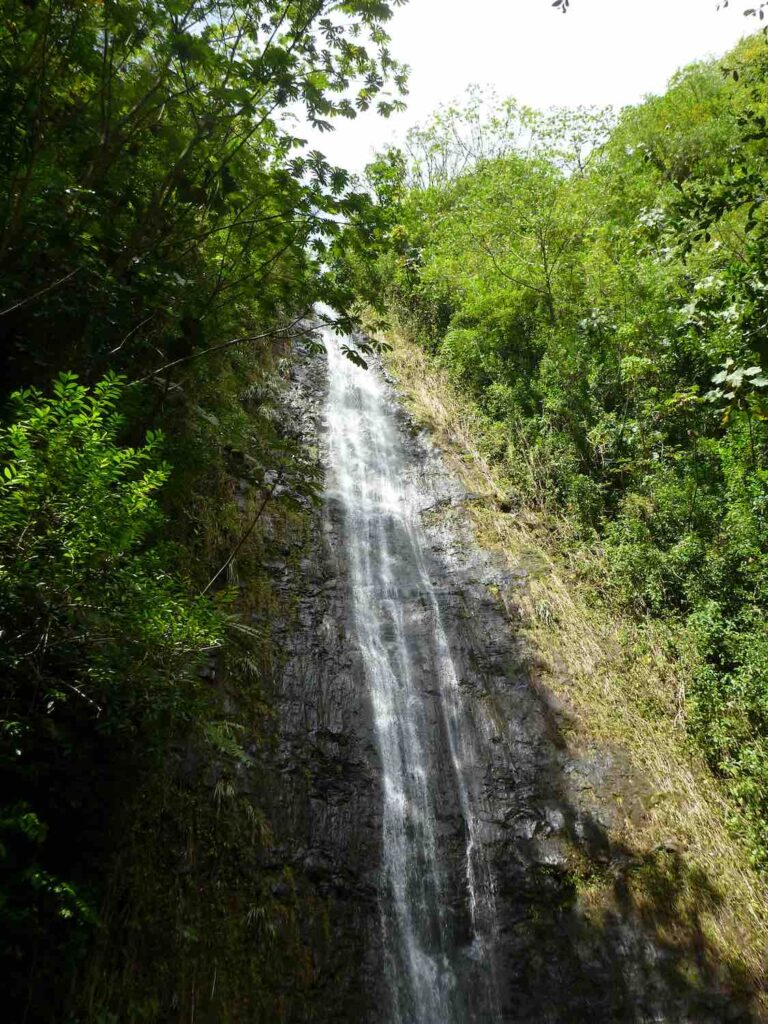
The trail got a gravel upgrade in recent years, which helps a lot with the mud situation.
It’s still a rainforest, so expect damp conditions, but it’s much more manageable than it used to be.
The path winds through eucalyptus, banyan trees, ginger, and eventually a bamboo grove (take the bamboo detour… it’s less muddy and beautiful).
A couple of things: swimming is not allowed at Manoa Falls, and I’d say that’s the right call. The pool has leptospirosis warnings posted for a reason.
Also, this is one of the most popular hikes on Oahu, so go early on weekends if you want any semblance of solitude. Weekdays are noticeably quieter.
The parking lot is open 8am to 6pm. Don’t miss this guide on doing the Manoa Falls hike with kids before you go, and check out the North Shore Oahu hikes if you’re planning a full day of hiking.
Book a Manoa Falls guided tour on Viator if you want the history and context explained along the way — worth it for first-timers.
2. Waimea Falls
Distance: 1.5 miles round trip | Difficulty: Easy | Admission: ~$26 adults / ~$16 children
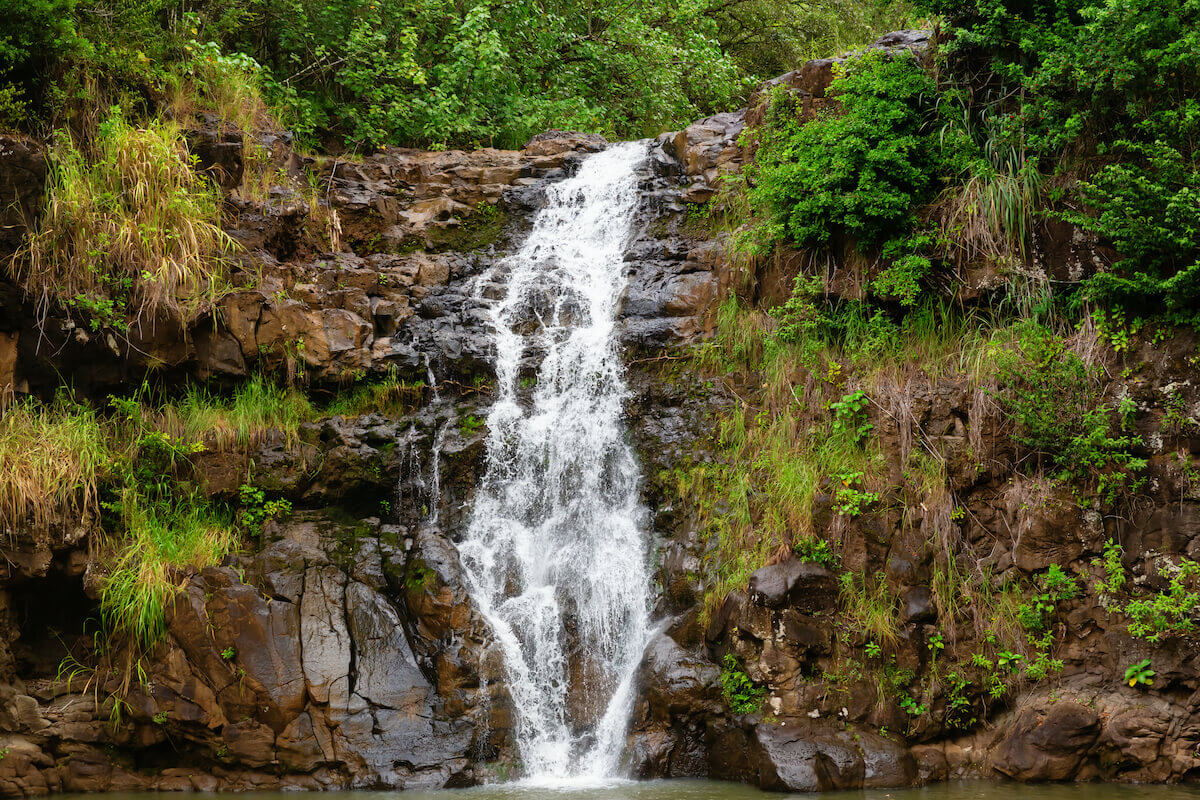
Waimea Falls is the one waterfall on this list where swimming is genuinely set up for visitors — there are lifeguards on duty and free life vests available.
The pool at the base is open for swimming, and the falls themselves are beautiful, dropping about 45 feet into a wide, clear pool.

The hike is a flat, paved path through Waimea Valley, which is a working cultural preservation site managed by a Native Hawaiian non-profit. That matters.
This isn’t just a park — it’s a sacred ancestral site with temple foundations and agricultural terraces alongside the botanical gardens. Walk slowly. Read the signs.
The downside is the cost and the crowds. Admission runs around $26 for adults (as of 2026 — confirm at waimeavalley.net before you go), and it gets busy.
I’d arrive when it opens at 9am if you want to actually enjoy it. Closed Fridays.
If you’re also doing a North Shore day, Waimea Valley makes a perfect stop. My full guide to Waimea Valley is here.
3. Maunawili Falls
Distance: ~9 miles round trip via Maunawili Demonstration Trail | Difficulty: Moderate-strenuous
Important note: The original Maunawili Falls Trail (the one that starts in the Maunawili Estates neighborhood) has been closed since 2021 for restoration, and as of mid-2026, there is no confirmed reopening date.
The trail crossing private land remains off-limits.
The falls are still accessible, but it’s a significantly longer commitment now. You can reach them via the Maunawili Demonstration Trail, which starts from the scenic overlook just past the hairpin turn on the Pali Highway.
The round trip is closer to 9 miles this way, which takes most people 4-5 hours. Long-term parking is not permitted at the overlook, so plan to be dropped off or use a rideshare.
Is it worth it? If you’re a hiker and you have the time, the trail is genuinely beautiful — views of the Ko’olau cliffs, streams, and lush jungle.
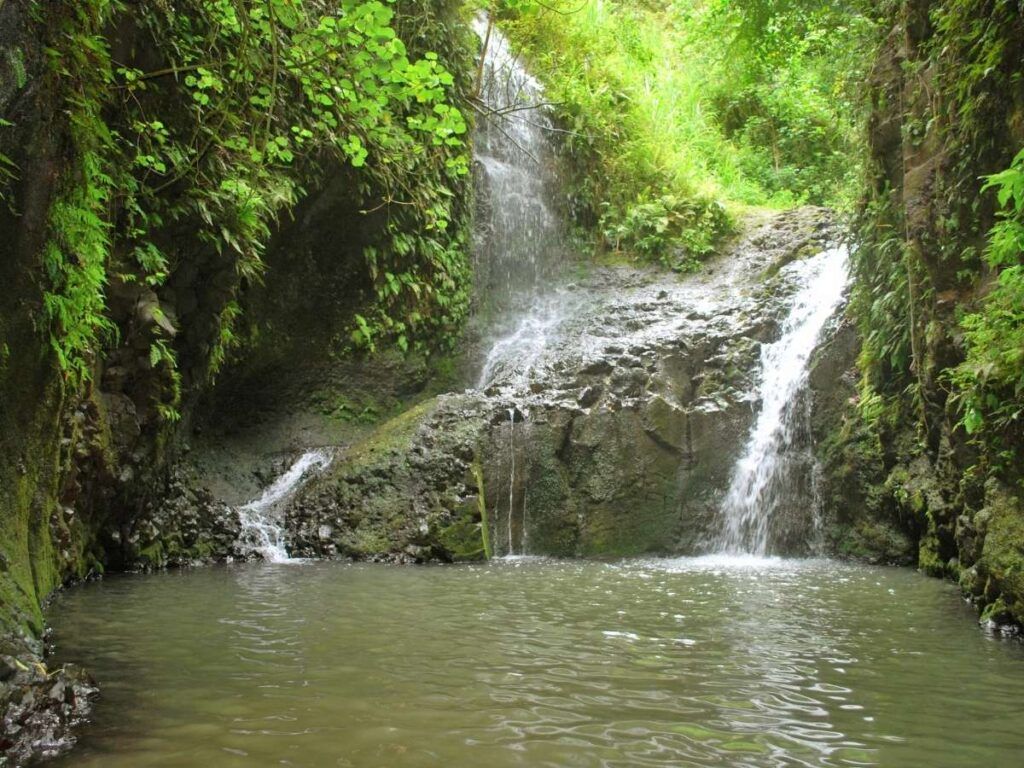
The falls themselves drop into a tiered pool surrounded by rocks and green. But go in knowing this is a half-day commitment now, not a casual morning stroll.
4. Likeke Falls
Distance: ~1 mile round trip | Difficulty: Easy | Cost: Free
Probably the most underrated waterfall on this list. The trailhead starts at the Ko’olau Golf Club, and the whole thing is free — no permits, no parking fees, no admission tickets.
It takes about 20-30 minutes to reach the falls, depending on your pace. The trail passes through jungle with mountain views, and there are trees marked with arrows in case you get turned around.
The waterfall itself is smaller than some others on this list, but the water is clear and cold, and there’s something really satisfying about finding a beautiful spot that cost absolutely nothing.
One thing to know: there are two routes, and one of them is blocked off because it’s dangerous and routes you through the Pali Lookout — a completely different starting point. Start at the Ko’olau Golf Club, not Pali.
Good fit for: anyone who wants a quick, free, low-key waterfall experience with minimal crowds.
5. Lulumahu Falls
Distance: 1.7 miles round trip | Difficulty: Moderate | Permit: $2.50 via trails.ehawaii.gov
Lulumahu requires a state permit to hike legally — $2.50 and you book it online at trails.ehawaii.gov. The state issues 100 permits per day, and they’re usually available close to your visit date. Print it and carry it with you.
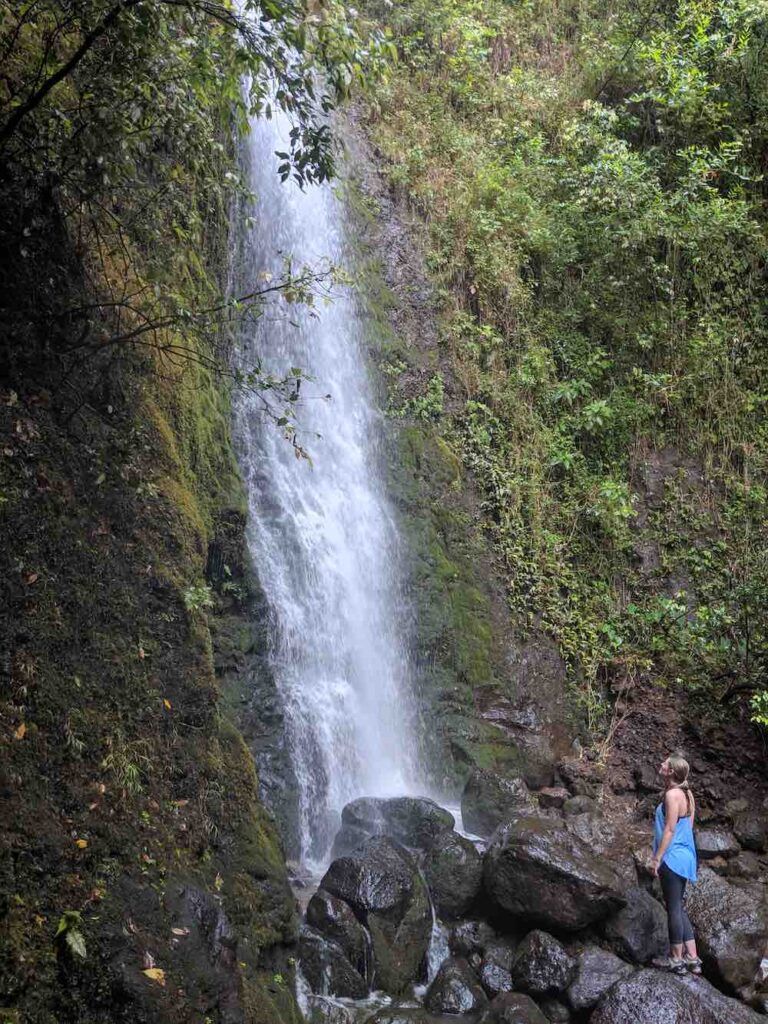
The trailhead is at the end of Nuuanu Pali Drive near Pali Highway — easy to miss.
The trail itself involves stream crossings, muddy sections, and some scrambling over boulders. It’s genuinely beautiful though: bamboo forest, dense jungle, historical ruins from King Kamehameha III’s summer home, and ancient stone steps.
You’ll follow red ribbons tied to trees to stay on track.
The falls drop from a surprising height into a relatively peaceful pool. It’s much less crowded than Manoa Falls or Waimea, which alone makes it worth the effort.
Important: The parking area off Pali Highway has a high break-in rate. Do not leave anything visible in your car. Carry valuables with you.
Skip it if: you’re not comfortable with navigation, the trail has had recent heavy rain, or you’re short on time.
6. Waimano Falls
Distance: ~3 miles round trip | Difficulty: Easy-moderate | Parking fee: Yes (bring cash or card)
One of the more family-friendly waterfall trails on Oahu. The trailhead starts near the parking area, and the path passes through vegetation that feels more tropical jungle than many other trails — guava, lilikoi, tropical flowers everywhere. Bring bug spray. Seriously.
The pool at the bottom is the highlight: mossy rocks, a three-tiered waterfall, and a rope swing. If you continue past the pool for a few minutes, you reach an overlook above the falls with a wide, open view.
The parking area has a fee, so bring money. I’ve seen people get surprised by that.
Worth it if: you’re going with kids or anyone who isn’t up for a difficult trail but still wants a real waterfall experience with a good swimming hole.
Note on swimming: Keep the leptospirosis risk in mind here as with all freshwater pools. Don’t swim with open cuts, and use caution after heavy rain.
7. Laie Falls
Distance: ~6 miles round trip | Difficulty: Moderate-strenuous | Permit: Free via Hawaii Reserves
The entrance is near the Polynesian Cultural Center and the Laie Shopping Center, which is also where you can pick up your free permit in person.
You can also get a permit by emailing hiking@hawaiireserves.com — allow a few days for the response.

Because of the permit process and the length, Laie Falls gets far fewer visitors than the more accessible trails. That’s exactly what makes it good.
The trail has bamboo groves you can walk through, strawberry plants that actually produce fruit, and a pool at the base of the falls surrounded by natural rock walls that felt genuinely enclosed and peaceful the last time I was there.
The falls are only about 15 feet tall — modest — but the pool, the ridge views, and the quiet make it a really satisfying hike.
Good fit for: experienced hikers who want solitude and don’t mind some planning ahead.
8. Koloa Gulch
Distance: ~8-10 miles round trip | Difficulty: Strenuous | Permit: Free via Hawaii Reserves
This is the hardest hike on the list, and not just in terms of distance. The trail involves constant stream crossings (bring trekking poles and shoes with grip), muddy terrain, and navigation that requires attention. Allow a full day.
You’ll need a free permit from Hawaii Reserves — email hiking@hawaiireserves.com or fill out the form at hrihelp.com. Allow at least 3 days for processing. The trail is on private land, so having your permit with you matters.
At the end: a 100-foot waterfall framed by massive rocks and dense vegetation, feeding into a shallow pool. The vegetation on the way (fruit trees, native plants, ‘ulei, akia) is some of the best I’ve seen on any Oahu trail.
Don’t hike this one right after rain. The stream crossings become genuinely dangerous when the water level rises.
Skip it if: you’re not an experienced hiker, you’re going alone, or it’s rained recently.
9. Jackass Ginger Pool (Judd Memorial Trail)
Distance: ~1 mile round trip | Difficulty: Easy | Cost: Free
After the intensity of Koloa Gulch, here’s the easy one.
The Judd Memorial Trail starts on Nuuanu Pali Drive inside a bamboo forest and takes about 20-30 minutes to reach the pool.
Along the way: monstera plants, bamboo, eucalyptus, guava, and a couple of stream crossings.
The pool here has a surprisingly fun history — Hawaiian royalty used to float on ti leaves on this same water. There are natural rock water slides smoothed by years of flow, and rope swings for jumping in.
It can get muddy, especially with kids in tow, so pack a change of clothes. This is a genuinely fun one for families.
Note on swimming: Same leptospirosis cautions apply as any freshwater pool. Be especially careful after rain.
10. Kapena Falls
Distance: 0.3 miles round trip | Difficulty: Very easy | Cost: Free
One of the shortest hikes on this list, but worth mentioning for how unusual it is.
This waterfall and trail is a sacred area for Native Hawaiians — reportedly the home of the Kaupe, a spirit of Hawaiian legend. Please be respectful while you’re here.
The waterfall is small and multi-tiered, feeding into a lagoon. Near the trail, there’s a small cage containing petroglyphs depicting men and dogs connected to the Kaupe legend — a genuinely rare thing to encounter on a trail.
Parking is tricky. The most convenient lot is between a church and a cemetery nearby. Arrive before 4pm, as the cemetery closes and access to the lot becomes complicated after that.
Good fit for: anyone who wants a quick, culturally significant stop rather than a long hike.
11. Kaipapau Falls
Distance: ~8 miles round trip | Difficulty: Strenuous | Cost: Free
This one is conditional, and I’d be honest with yourself about whether the conditions are right before you go.
The bulk of the trail involves rock hopping over a stream for four miles, with 30+ crossings.
If it’s rained recently, turn around — the stream rises significantly and this becomes risky. If it’s been a dry stretch, you might arrive at the falls and find barely a trickle. The sweet spot is a few dry days after a normal rain period.
The bunkers along the route are a genuinely interesting historical element and part of what makes this trail distinctive.
Follow the paved road until you see the trailhead, and always adjust based on what the stream level looks like as you go deeper in.
Worth it if: conditions are right and you enjoy the process of navigating a trail more than just reaching a destination.
Swimming at Oahu Waterfalls: What You Should Know
Most of the pools on this list are technically swimmable — meaning people do it. But Hawaii has some of the highest rates of leptospirosis in the country.
The bacteria lives in freshwater contaminated by animal urine and enters the body through broken skin, or through the eyes, nose, and mouth.
The state Department of Health recommends against swimming in freshwater streams and pools, especially with open cuts or sores, and especially after rain when contamination is higher.
I’ve never actually swum in a waterfall pool in Hawaii, and that’s a deliberate choice. Waimea Falls is the exception — it has lifeguards and is managed specifically for swimming.
If you decide to go in elsewhere, at minimum: no open cuts, don’t submerge your head, and avoid it entirely if there’s been heavy rain recently.

Frequently Asked Questions
Do you need permits for Oahu waterfall hikes?
Several do. Lulumahu Falls requires a $2.50 state permit booked at trails.ehawaii.gov. Laie Falls and Koloa Gulch require free permits from Hawaii Reserves (email hiking@hawaiireserves.com). Waimea Falls requires paid admission (~$26 adults). Manoa Falls just needs a $7 parking fee.
Is Maunawili Falls Trail open in 2026?
The original trail from the Maunawili Estates neighborhood remains closed with no confirmed reopening date. The falls are still accessible via the longer Maunawili Demonstration Trail from the Pali Highway overlook — about 9 miles round trip.
What should I wear hiking waterfalls on Oahu?
Trail shoes with grip, not sneakers or sandals. Most trails are muddy year-round. Light, moisture-wicking clothes are better than cotton. Bug spray is essential.
What’s the best waterfall hike for families?
Waimea Falls for ease and the swimming experience. Manoa Falls for the scenery with manageable trail conditions. Jackass Ginger Pool for something fun and short. Waimano Falls if your kids are a little older and up for more distance.
What’s the easiest Oahu waterfall hike?
Kapena Falls (0.3 miles), Jackass Ginger Pool (~1 mile), and Likeke Falls (~1 mile) are the shortest and easiest.
Which waterfall hike is most challenging?
Koloa Gulch is the hardest on this list — long, wet, and navigationally demanding. Kaipapau Falls and the new Maunawili route via the Demonstration Trail are also genuinely strenuous.
Gear Worth Packing
A few things that genuinely help on these trails:
- Waterproof trail shoes — not just water-resistant. You will get wet.
- Trekking poles — particularly for Koloa Gulch and Kaipapau Falls
- Bug spray with DEET — non-negotiable on most of these trails
- Dry bags or waterproof phone case — for the stream-crossing hikes
- Change of clothes — especially if you’re bringing kids
You can find waterproof trail shoes on Amazon and compare options before you go.
Planning Your Oahu Trip Beyond the Trails
If waterfalls are on your list but you’re still figuring out the rest of your Oahu itinerary, my Oahu travel guide covers where to stay, what areas to base yourself in, and how to structure your days.
I’ve also covered North Shore Oahu hikes separately, since the North Shore is a full day on its own.
For photos that actually capture what these places look like (not the generic stock imagery you see everywhere) Flytographer connects you with local photographers on Oahu. You can save $20 with my link.
And if you want a rental car to access most of these trailheads (and you will need one for several of them), Discount Hawaii Car Rental consistently has better rates than booking through the major agencies directly.
I also talk through Hawaii hiking logistics on my podcast, Hawaii Travel Made Easy — you can find episodes at hawaiitravelmadeeasy.buzzsprout.com.
If you’re still in the early stages of planning, a one-on-one consultation can save you a lot of back-and-forth.
I’ve helped a lot of people figure out exactly which trails fit their fitness level, their schedule, and who they’re traveling with. It’s usually faster than spending three evenings on Reddit.
Happy hiking — and watch your footing out there.
 | About the author: Marcie Cheung is a Hawaii travel expert who has visited Hawaii more than 40 times. She is the founder of Hawaii Travel Spot and host of Hawaii Travel Made Easy. She plans Hawaii vacations for couples, honeymooners, families, and other travelers. |