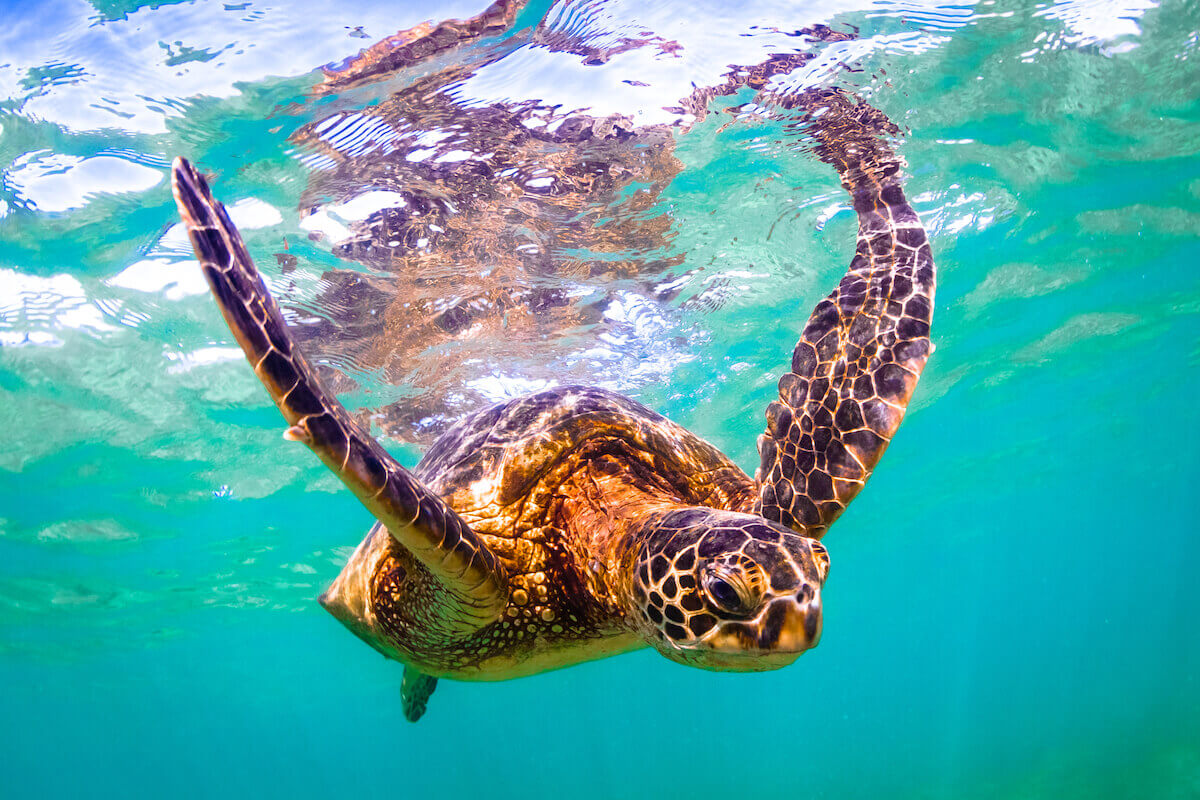
Heading to Oahu and want to see some of the incredible Hawaiian sea life? Scroll to find exactly where to see turtles on Oahu during your next trip!
This post about where to see turtles on Oahu Hawaii was written by Marcie Cheung (a Hawaii travel expert) and contains affiliate links which means if you purchase something from one of my affiliate links, I may earn a small commission that goes back into maintaining this blog.
Quick Takeaways
- Best for guaranteed sightings: Laniakea Beach (North Shore), but expect crowds and a tricky highway crossing
- Best for snorkeling with turtles: A Turtle Canyon boat tour from Waikiki, or Electric Beach if you’re an experienced swimmer
- Skip if you’re not a strong swimmer: Electric Beach has rocky entry and strong currents, it’s not a beginner or kid-friendly spot
- Best for beginners and kids: Kuilima Cove at Turtle Bay, calm water protected by a rock barrier
- Hawaiian green sea turtles are called honu, and you must legally stay at least 10 feet away, on land or in the water
- Thinking through your whole Oahu trip? My Oahu Travel Guide covers where to stay and what to prioritize, and I break down planning an Oahu trip on the podcast too
A honu, or Hawaiian green sea turtle, is one of the easiest animals in Hawaii to see without trying very hard.
I’ve spotted them on sand, in tide pools, and gliding past my mask while snorkeling on basically every one of my 40-plus trips to Oahu, and they never stop being a thrill.
But where you go matters. Some beaches are reliable but absolutely packed with people. Others are quieter and just as good, if you know where to look.
I’ll walk you through both, plus where I’d send you first if you only have time for one or two stops.
When You’re Most Likely to See Them
Oahu’s water temperature barely changes throughout the year, so honu show up in every season.
That said, I’ve noticed more turtle activity in summer, roughly June through September, when the water is calmer and they’re more willing to come up and bask.
Midday tends to work best for shore sightings, somewhere between 10 a.m. and 2 p.m., when turtles haul out to warm up in the sun.
If you’re snorkeling instead of watching from the beach, early morning or late afternoon can work better, since the water is usually less choppy and less crowded with other swimmers.
Laniakea Beach (Turtle Beach)
Laniakea is the spot most people picture when they think about Oahu turtles, and it earned that reputation.
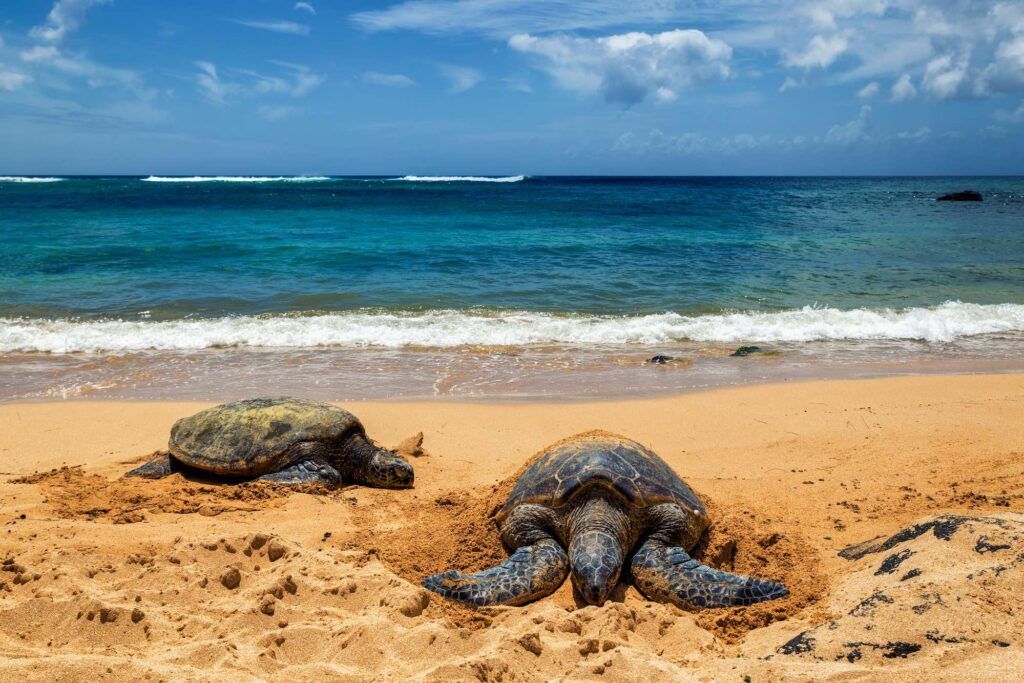
Honu come ashore here almost daily to bask on the sand, and on a good day you might count a dozen or more.
I brought my youngest son here when he was five, and he counted ten turtles lying on the sand at once.
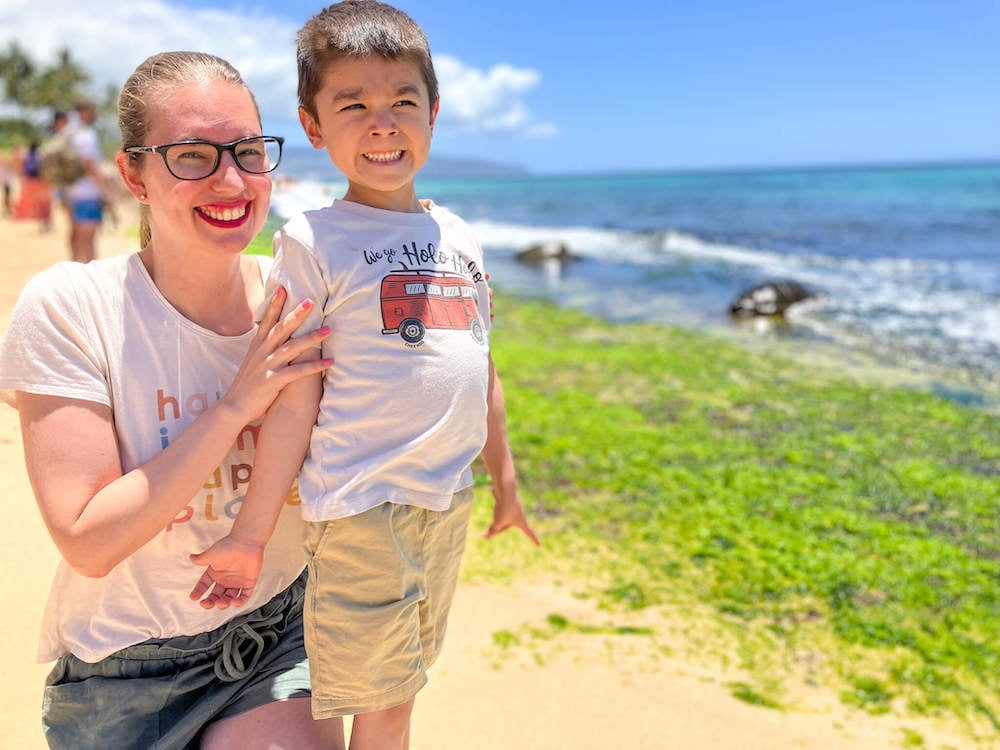
His face when he realized they were all real and not statues is still one of my favorite Hawaii memories.
You’ll usually find volunteers from Malama Na Honu on the beach who rope off resting turtles and can tell you which individual honu you’re looking at by name.
They’re there to teach, not to police, so feel free to ask questions.
Parking here used to stress me out more than almost anything else on a North Shore day.
The state finished moving the lot to the ocean side of the highway earlier this year and expanded it to somewhere around 50 spots, and it made a real difference. I no longer dread pulling in here the way I used to.
That said, don’t get too comfortable with how it works right now.
State Representative Sean Quinlan has been pushing for years to eventually cap or remove visitor parking at Laniakea entirely and replace it with a paid shuttle from a hub near Haleiwa, and funding for that hub is already secured.
Most reporting suggests an actual shuttle system is still a couple of years out, so for the time being you can still drive there and park yourself.
Just don’t assume the free, drive-up version of Laniakea will look the same on your next trip.
My take: worth it once, especially if you’ve never seen a wild sea turtle up close. Just go in knowing it’s a tourist scene, not a quiet nature walk.
Kuilima Cove
Want the calm version of a turtle encounter? Head to Kuilima Cove at Turtle Bay, also on the North Shore.
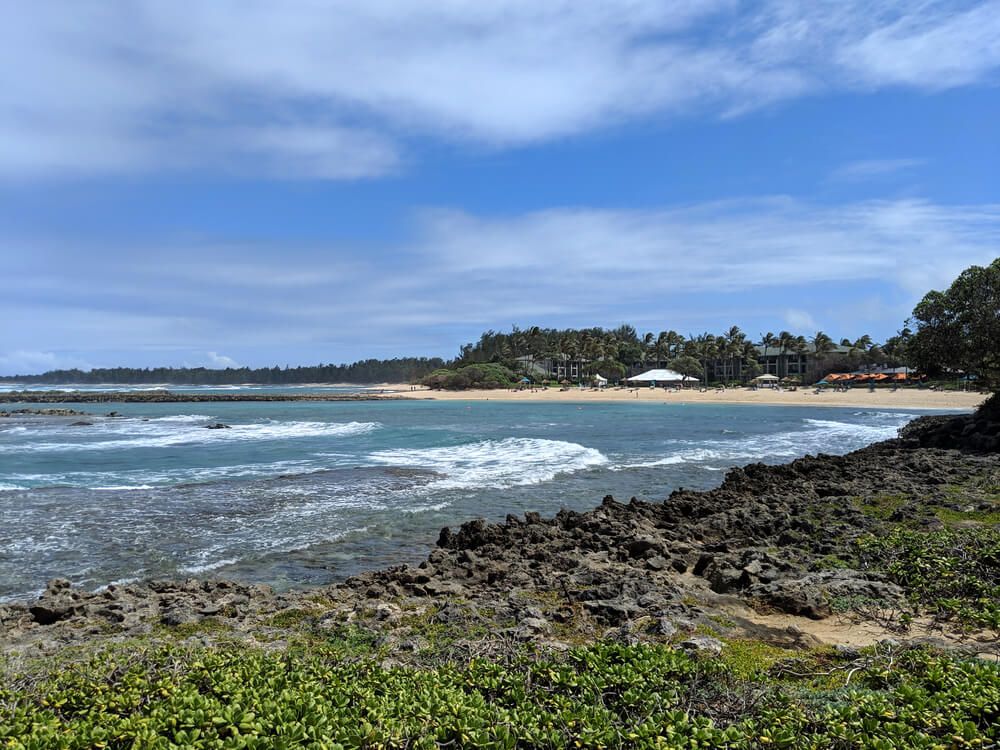
A natural rock barrier keeps the water protected here, so it’s shallow and calm, which makes it one of the better spots on the island for kids and beginner snorkelers.
It doesn’t get the crowds Laniakea does, and the protected water means visibility tends to hold up even when other North Shore spots get choppy from wind or swell.
Morning or late afternoon gives you the best odds of spotting one either resting on shore or grazing just offshore.
Waikiki Beach
You don’t even have to drive anywhere to see a turtle.
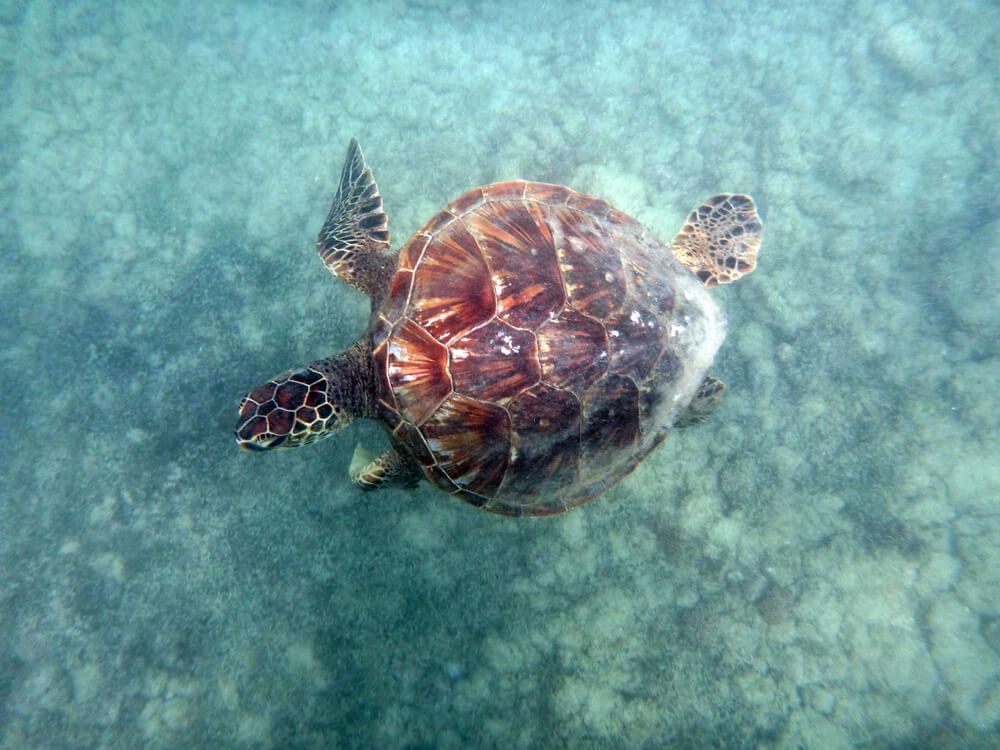
They show up near the Outrigger Reef Waikiki Beach Resort fairly often, usually early in the morning, sometimes sunbathing on the sand or picking at seaweed near the shoreline.
Waikiki is long, so walk a stretch of it instead of staking out one spot, and your odds go up.
Kaupo Bay (Cockroach Cove)
The nickname is unfortunate, but the tide pools at Kaupo Bay are a solid quick stop for turtles and light snorkeling, and it sits right next to the Halona Blowhole.
Worth folding in if you’re already heading that direction for the blowhole anyway.
Electric Beach (Kahe Point)
Electric Beach, officially Kahe Point, is on the West Side, named for the power plant next door rather than anything you’ll notice in the water.
The warm water discharge from the plant draws in an unusual amount of marine life, and this is one of the most fish-dense snorkeling spots I’ve been to on Oahu.
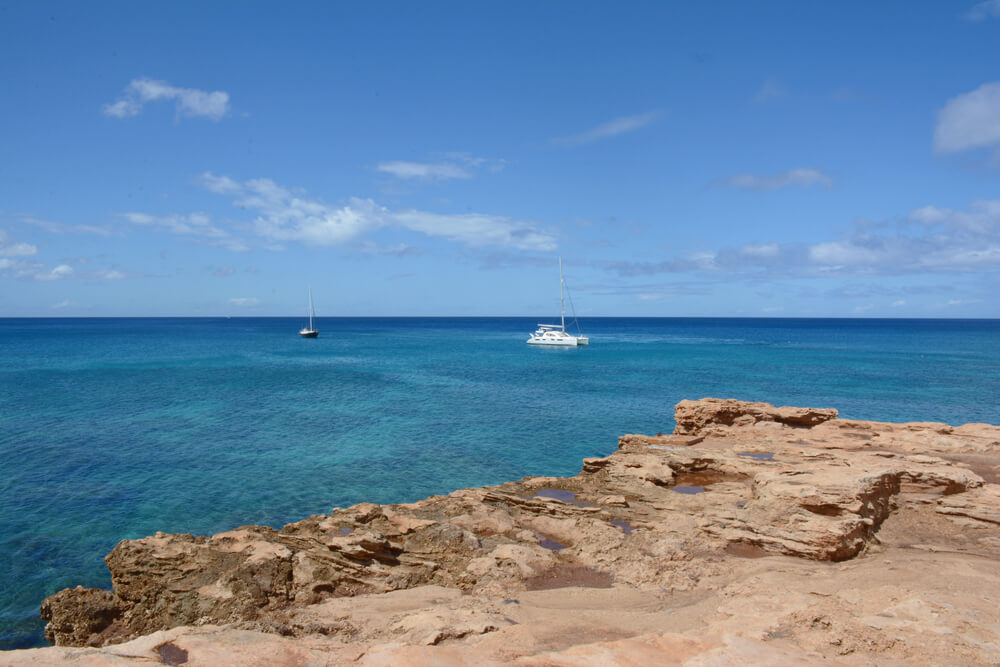
Turtles show up here regularly, along with the occasional spinner dolphin pod.
This isn’t a beach for casual swimming.
The entry is over rocky, barnacle-covered lava, there’s no real sandy stretch to wade in from, and the good marine life sits well offshore, somewhere between 50 and 200 yards out depending on which guide you ask.
The current along this stretch of coast runs strong, and it’s pulled more than one strong swimmer farther out than they meant to go.
Lifeguards are usually on duty during the day now, which is a real improvement from a few years ago, but the snorkel zone itself is too far out for them to reach quickly.
There have also been a handful of shark sightings near the discharge pipes this year, which isn’t unusual for the spot but is worth knowing before you go in.
If lifeguards post a warning sign, take it seriously and skip the water that day.
My take: skip this one if you’re traveling with young kids, you’re not a confident swimmer, or you don’t have fins and a buddy.
If you are an experienced snorkeler, it’s worth the trip, just go with someone else and check conditions with the lifeguard before you get in.
Makua Beach
Most visitors never make it this far out on the West Side, which is exactly the appeal.
Makua Beach sees a fraction of the crowd that Laniakea or Electric Beach pulls in, and the water stays clear.
The tradeoff is that it’s remote and undeveloped, no facilities, no lifeguard, so go with someone else and don’t expect any amenities.
If solitude matters more to you than convenience, this is the beach for that.
Hanauma Bay
Hanauma Bay is technically a nature preserve inside a volcanic crater, and it’s one of the best general snorkeling spots on the island, turtles or not.
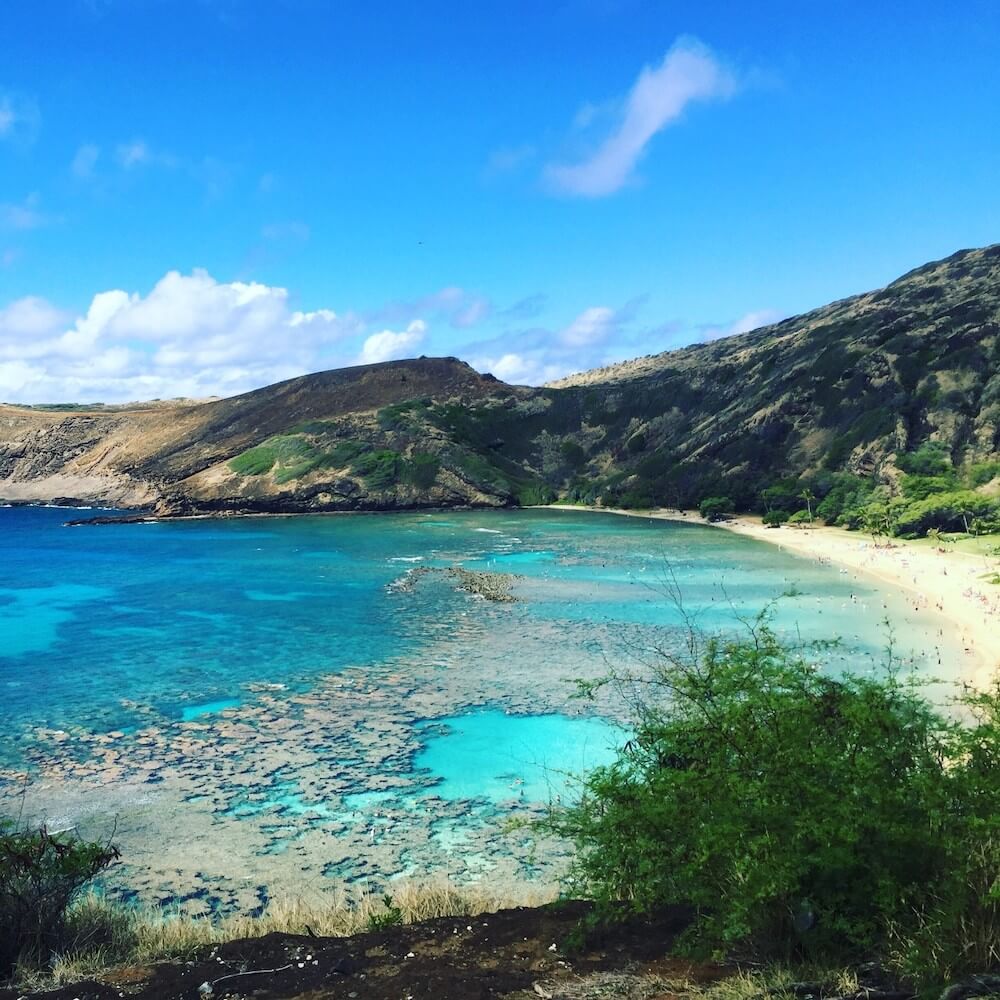
Because so many visitors pass through here, the resident honu are a bit more used to people, though the 10-foot rule still applies.
A few things have changed here that are worth knowing before you go: entry now requires an advance reservation, costs $25 for non-residents, and the park is closed Mondays and Tuesdays.
Reservations open at 7 a.m. Hawaii time, two days before your visit, so plan ahead rather than showing up and hoping for the best.
Haleiwa Beach Park
This one’s a family favorite of ours, and not only for the turtles.
Haleiwa Beach Park gives us an excuse to grab burgers from Seven Brothers and then walk over for shave ice at Matsumoto’s afterward, which might be half the reason my kids ask to go back every trip.
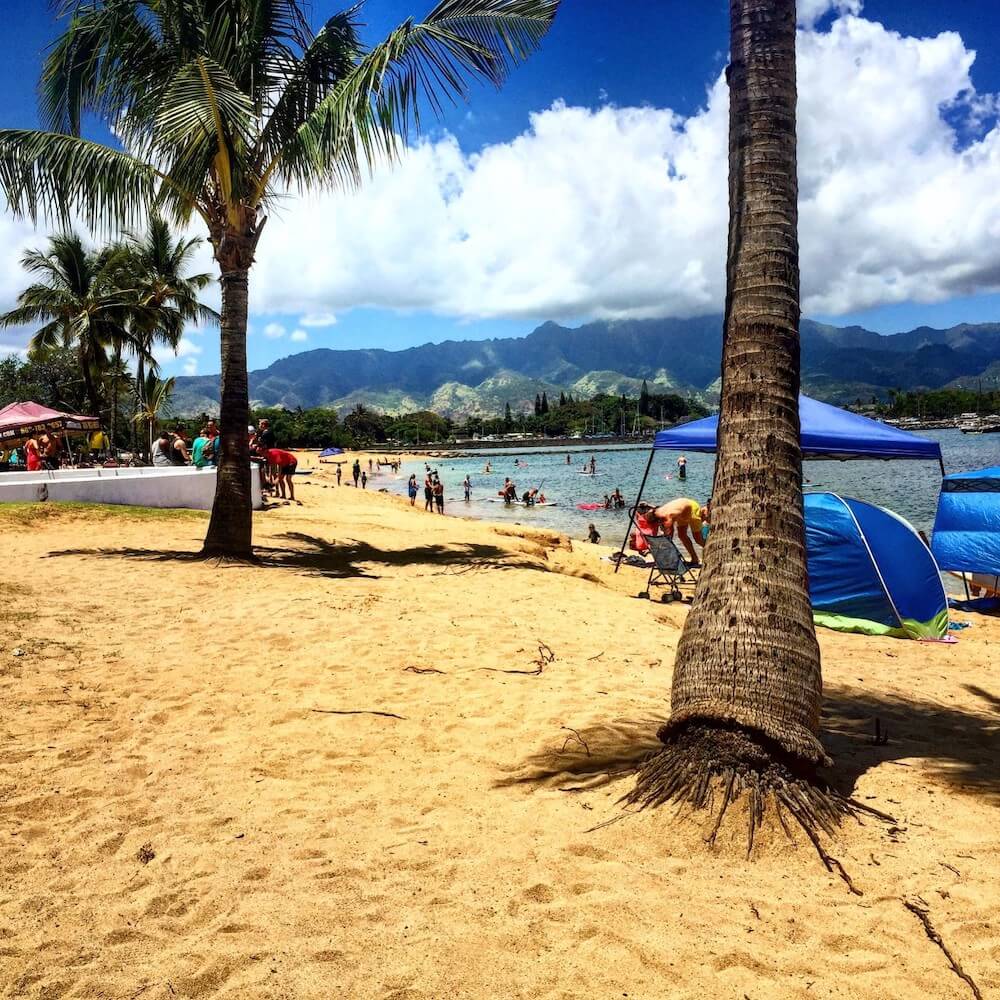
The water here is shallow and clear, the reef sits close to shore, and I’ve seen turtles both basking on the sand and feeding just off the beach.
If you’re already spending a North Shore day in Haleiwa town, this is the easiest stop to add without going out of your way.
Snorkeling With Turtles: The Tour Option
If you’d rather have someone else handle the boat, the gear, and the turtle-finding, a snorkel tour takes the guesswork out of it.
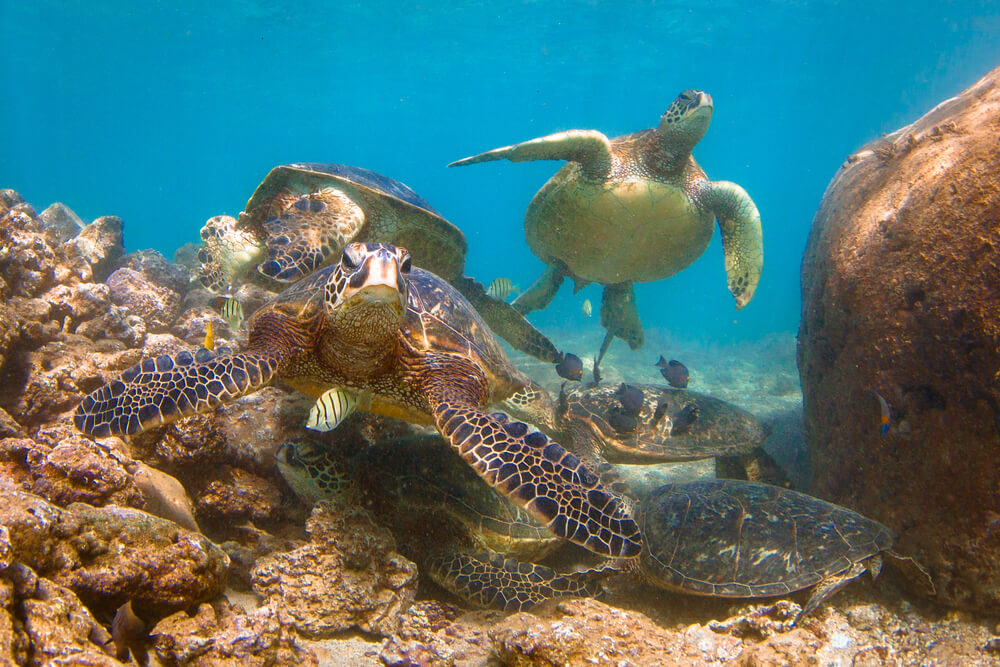
Here are the two I’d recommend, out of the dozen or so operators running similar trips out of Waikiki.
Turtle Canyon Snorkel Adventure from Waikiki is the most popular for a reason. It’s a two-hour catamaran trip to a stretch of water off Waikiki where turtles reliably gather to feed and get cleaned by reef fish.
Most tours offer a second trip free if you don’t see a turtle, though in my experience that’s rarely needed.
Oahu Small-Group Circle Island Tour with Turtle Snorkeling is the better choice if you want turtles plus a proper island overview in one day.
You’ll snorkel on the North Shore and also hit Diamond Head, the Halona Blowhole, and a few other highlights, so it’s a good fit if this is your only full day of sightseeing.
Both are bookable directly through Viator, and you can check current pricing and availability before you commit.
How to Act Around Sea Turtles
Honu are protected under federal and state law, and the rules aren’t just a suggestion.
Stay at least 10 feet away on land and in the water. Never touch, feed, or chase one, even if it swims close to you first. Skip the flash photography. If a turtle changes direction because of you, you’re already too close.
Violations can carry real fines, and more importantly, repeated stress from too many close encounters takes a toll on these animals. They’re wild creatures resting and feeding, not props for a photo.
One more thing while you’re packing for the beach: regular sunscreen washes off and damages coral reefs, which honu depend on for food and shelter.
Hawaii has banned the retail sale of sunscreens containing oxybenzone or octinoxate since 2021, so grab a reef-safe mineral sunscreen with zinc oxide or titanium dioxide before you go instead of hunting for one once you’re here.

FAQ
What beaches on Oahu have turtles?
Laniakea Beach, Kuilima Cove, and Electric Beach are the most reliable, but turtles also show up at Waikiki, Haleiwa Beach Park, and Hanauma Bay. Electric Beach is for experienced swimmers only.
Can you touch sea turtles in Hawaii?
No. Hawaiian green sea turtles are protected under both federal law (the Endangered Species Act) and Hawaii state law (Hawaii Revised Statutes 195D), and the two overlap rather than one replacing the other. Touching, feeding, chasing, or otherwise harassing a honu can trigger fines from either level of government, and federal penalties alone can run into the thousands of dollars. The rule covers turtles on the sand and in the water, whether you mean to disturb them or not.
What are sea turtles called in Hawaiian?
Honu. It’s the Hawaiian word for the green sea turtle, the species you’re most likely to encounter on Oahu’s beaches.
How close can I get to a sea turtle in Hawaii?
Keep a minimum of 10 feet of distance at all times, whether the turtle is on the sand or in the water with you.
Is it safe to swim at Electric Beach on Oahu?
Not for beginners. Electric Beach has a rocky entry, strong currents, and an offshore swim to reach the best marine life, and lifeguards consider it intermediate to advanced. Stick to Kuilima Cove or Hanauma Bay if you’re a casual swimmer or have kids with you.
A Few More Things Before You Go
If turtles are just one piece of your Oahu bucket list, my Oahu Travel Guide covers where to stay, how to get around, and what’s worth your time versus what you can skip.
I also talk through Oahu trip planning in more detail on my podcast, Hawaii Travel Made Easy, if you’d rather listen than read.
Traveling with kids and want a version of this turtle-spotting guide built around stroller access, nap schedules, and which beaches are easiest with little ones? My sister site has a dedicated Turtle Beach guide for families.
And if you’re feeling overwhelmed trying to map out an entire Oahu itinerary around beaches, hikes, and everything else the island offers, that’s exactly the kind of thing I help with in my one-on-one Hawaii travel consultations.
I’ll build you a realistic plan instead of a list you have to figure out on your own.
Either way you go, seeing a wild honu up close is one of those Hawaii moments that sticks with you. Just give them their space, and let them do their thing.
 | About the author: Marcie Cheung is a Hawaii travel expert who has visited Hawaii more than 40 times. She is the founder of Hawaii Travel Spot and host of Hawaii Travel Made Easy. She plans Hawaii vacations for couples, honeymooners, families, and other travelers. |