
Planning a Hawaii vacation and want to check out some Hawaii historical sites? Keep scrolling for a list of the coolest historical places in Hawaii worth checking out!
This list of historical places in Hawaii worth visiting was written by Marcie Cheung (a Hawaii travel expert) and contains affiliate links which means if you purchase something from one of my affiliate links, I may earn a small commission that goes back into maintaining this blog.
TL;DR: Hawaii’s history is as dramatic as its scenery — royal overthrows, volcanic creation stories, WWII battles, and ancient Polynesian navigation. These are the historical sites worth building your trip around, with honest notes on what’s actually worth your time (and what to skip).
Here’s something I’ve noticed after visiting Hawaii more than 40 times: the people who skip the history stuff almost always regret it.
Not in a guilt-trip way — in a “wait, I wish I’d known that before I spent a week there” way.
Hawaii isn’t just beaches and mai tais.
It’s a place where islands are still being actively built by volcanoes.
Where a queen was imprisoned in her own palace.
Where people with Hansen’s disease were forcibly exiled to a remote peninsula and couldn’t leave for the rest of their lives.
Where ancient Polynesian navigators crossed 2,000 miles of open ocean without instruments and built a civilization.
That history sits right underneath all the resort pools, and once you start paying attention to it, you can’t stop.
These are the historical sites I keep coming back to, across all four major islands, with honest notes on what’s worth your time and what needs a reality check first.
1. Hawaii Volcanoes National Park (Big Island)
There is nowhere else on Earth quite like this.
The park sits atop some of the most geologically active land on the planet, and the scale of it is hard to process until you’re standing in the middle of a lava field that stretches further than you can see.
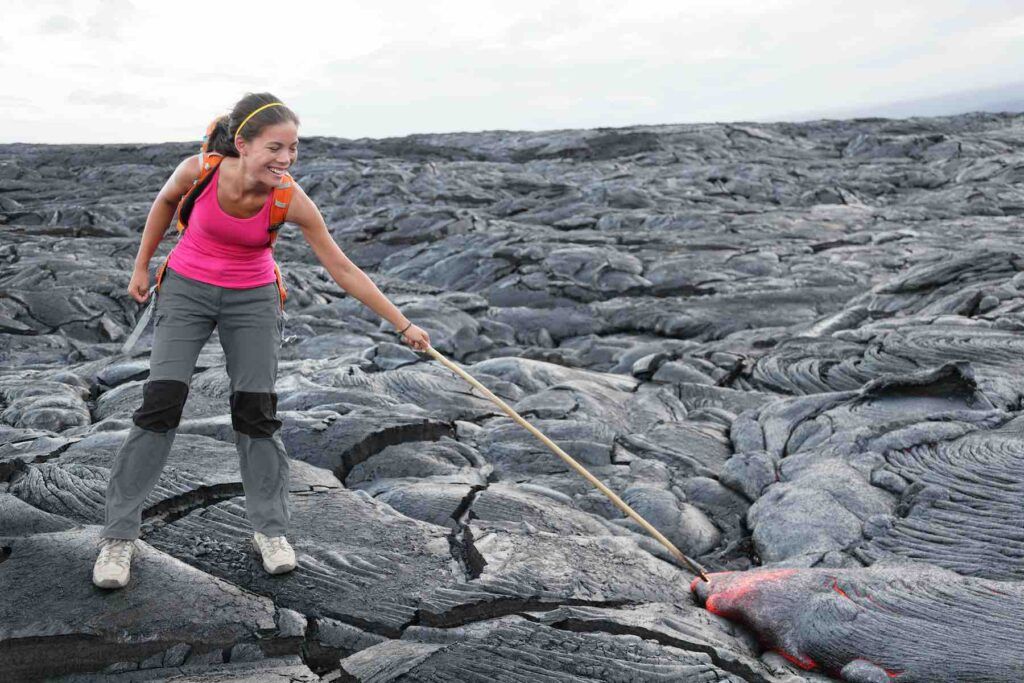
This is where the Hawaiian Islands were made — and that process is still happening.
Kilauea is the main draw, and lava activity varies, so check the USGS Hawaiian Volcano Observatory updates before you go.
When the crater is active, watching the glow after dark is one of the most surreal things I’ve ever experienced. But even on slower days, the lava tubes, steam vents, and otherworldly landscapes are stunning.
Worth knowing: Jaggar Museum is permanently closed after earthquake damage in 2018. A lot of older blog posts still mention it, so ignore that.
Entry is $35 per vehicle (valid for 7 days). You could genuinely spend two or three days here. Most people give it an afternoon. That’s not enough.
Good fit if: You’re on the Big Island for at least 3-4 days and want to understand where these islands actually came from.
For the full aerial perspective, a helicopter tour is extraordinary. Browse helicopter tours on Viator for options departing from Hilo and Kona.
Check out my Big Island travel guide for more on planning around the park.
2. Pearl Harbor (Oahu)
I’ve been to Pearl Harbor several times, and the experience varies a lot depending on how you approach it.
The USS Arizona Memorial is moving in a way that’s genuinely hard to describe. You’re on a floating structure above a sunken ship, and you can still see oil seeping up from the wreck more than 80 years later.
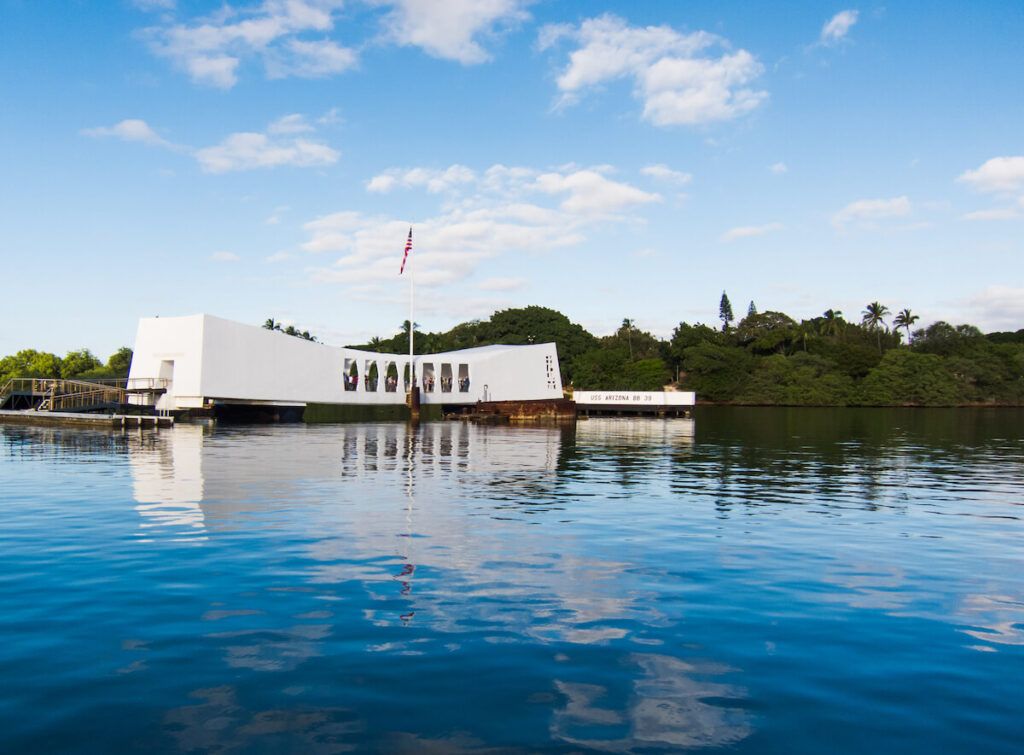
That detail (oil still rising) puts everything in a different register.
But the best visit I’ve had was the day my husband and I went to the Pearl Harbor Aviation Museum and did the docent-led tour.
Our guide walked us through Hangar 37 and Hangar 79 (both of which survived the actual attack on December 7, 1941) and told stories about what that morning looked like from inside the base.
He pointed out real bullet holes still visible in the hangar windows.
Standing in that building, hearing those stories in the exact place where it all happened, is something I still think about.
The Aviation Museum is often treated as an add-on to the “main” Pearl Harbor visit, but I’d argue it’s the most powerful part. If docent-led tours are available, do that instead of self-guided.
The full Pearl Harbor experience (Memorial, USS Missouri, Aviation Museum, and Bowfin Submarine) easily fills a whole day. Most people budget three hours. That’s not realistic.
Browse Pearl Harbor tour options on Viator and look for packages that include transportation from Waikiki if you don’t have a rental car.
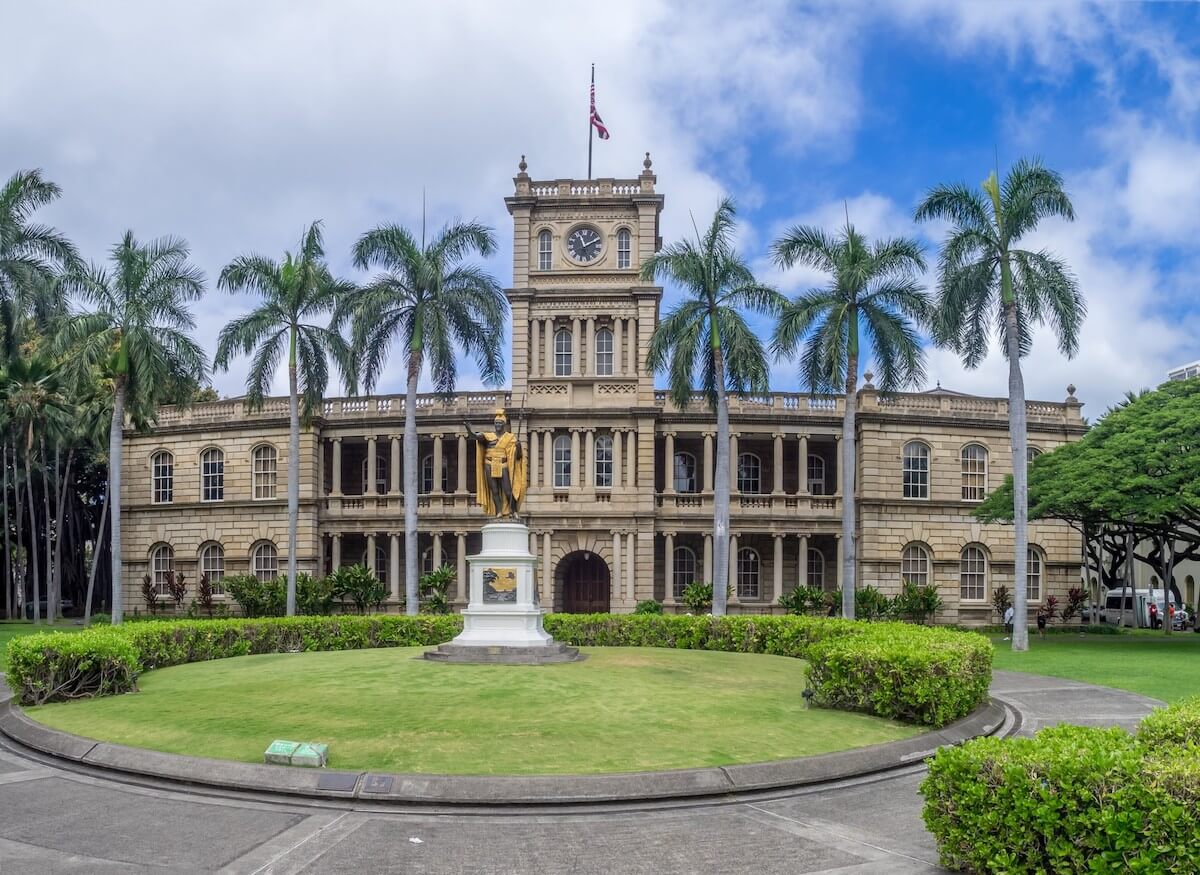
3. Iolani Palace (Oahu)
One of the most underrated stops in all of Honolulu, and also one of the most emotionally complicated.
King Kalakaua commissioned the palace in 1882. It had electricity before the White House did. It was the center of a functioning monarchy that was trying to hold its own against enormous colonial pressure.
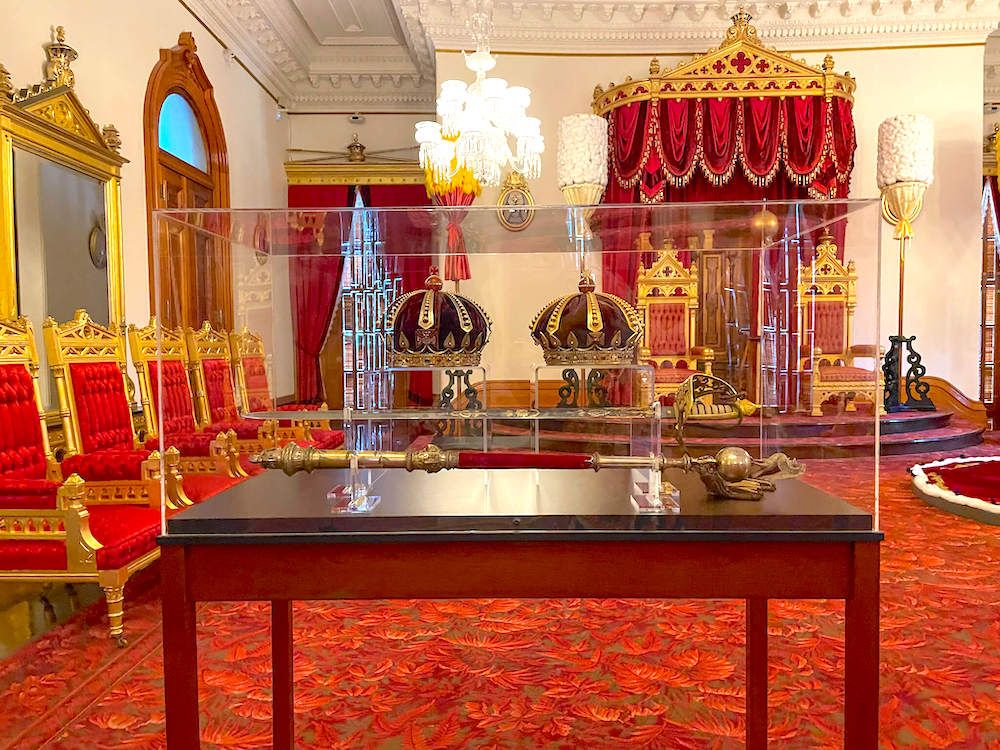
And then in 1893, American businessmen and U.S. military forces overthrew the Hawaiian government, and that same palace became the site of Queen Liliuokalani’s imprisonment.
Walking through the Throne Room and then the Imprisonment Room, in that order, is a lot to sit with.
Before you go, read Hawaii’s Story by Hawaii’s Queen, written by Liliuokalani herself. Even just the first few chapters before your visit will make everything you see land differently.
Current 2026 details worth knowing: the palace is open Tuesday through Saturday, 9 AM to 4 PM. Self-led audio tours run $28 for adults; docent-led tours are $34.
No walk-ups. Tickets must be booked online in advance.
The specialty tours (the Kalakaua Legacy Tour and Hawaii’s Royal Connection to Japan Tour) run on Wednesdays and are worth it if you want to go deeper than the standard visit.
One more thing: you’ll be asked to wear shoe coverings inside, which are provided. Don’t wear anything you’d be embarrassed to shuffle around a royal palace in.
See my full Oahu travel guide for how to fit this into a Honolulu day.
4. Polynesian Cultural Center (Oahu)
I want to be upfront here, because my feelings about this place have genuinely changed over the years.
As a teenager and through my early 20s, I thought it was incredible — the villages, the dancing, the food, all of it.
Now, having experienced cultural programs around the world, I see it differently.
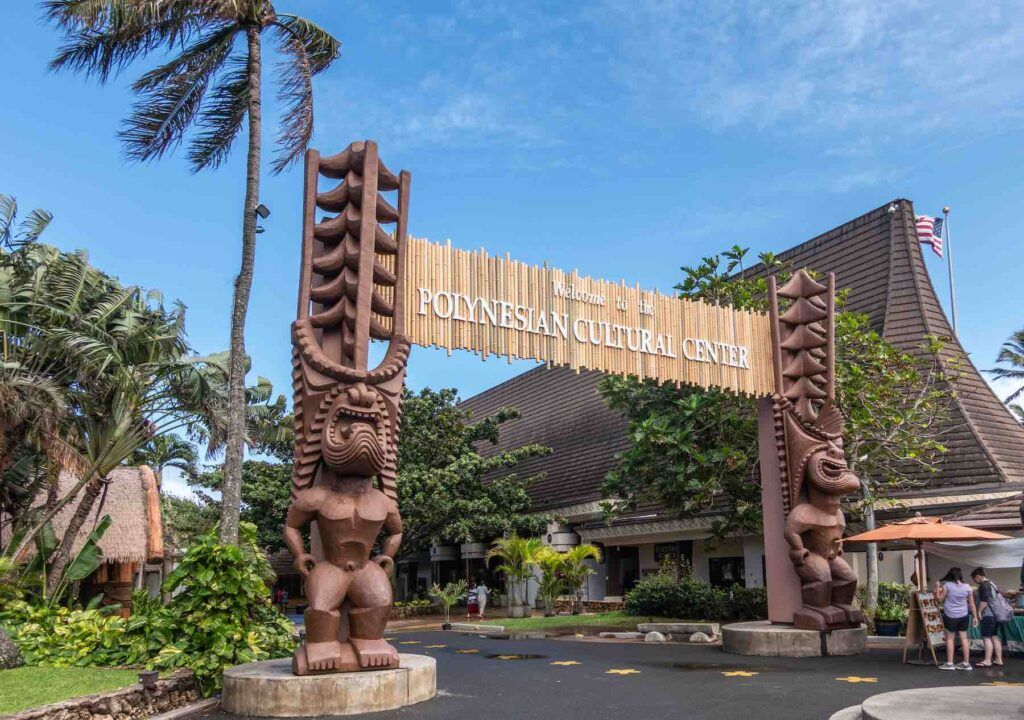
It is a very polished, very touristy, theme-park version of Polynesian culture. The jokes can be hokey. The whole production is extremely commercial.
That said — the Ha: Breath of Life evening show, featuring over 100 Polynesian performers, is legitimately spectacular. The Ali’i Luau food is good.
And if you’re bringing kids, or if this is a first trip and you want an accessible, everything-in-one-place introduction to Pacific cultures, it delivers on that.
Just go in knowing what it is. If you’re expecting an immersive, deeply authentic cultural experience, you’ll be disappointed.
If you’re expecting a well-run, entertaining overview with good food and a great show, you’ll enjoy it.
The Ali’i Luau package starts at $119.95 and includes village access, the luau buffet, and the evening show. The center is open Monday, Tuesday, Thursday, Friday, and Saturday (closed Wednesday and Sunday).
Book Polynesian Cultural Center tickets here.
5. Bishop Museum (Oahu)
The Bishop Museum is where you go when you want to actually understand what you’ve been looking at all week.
It was founded in 1889 to honor Bernice Pauahi Bishop, the last descendant of the Kamehameha line.
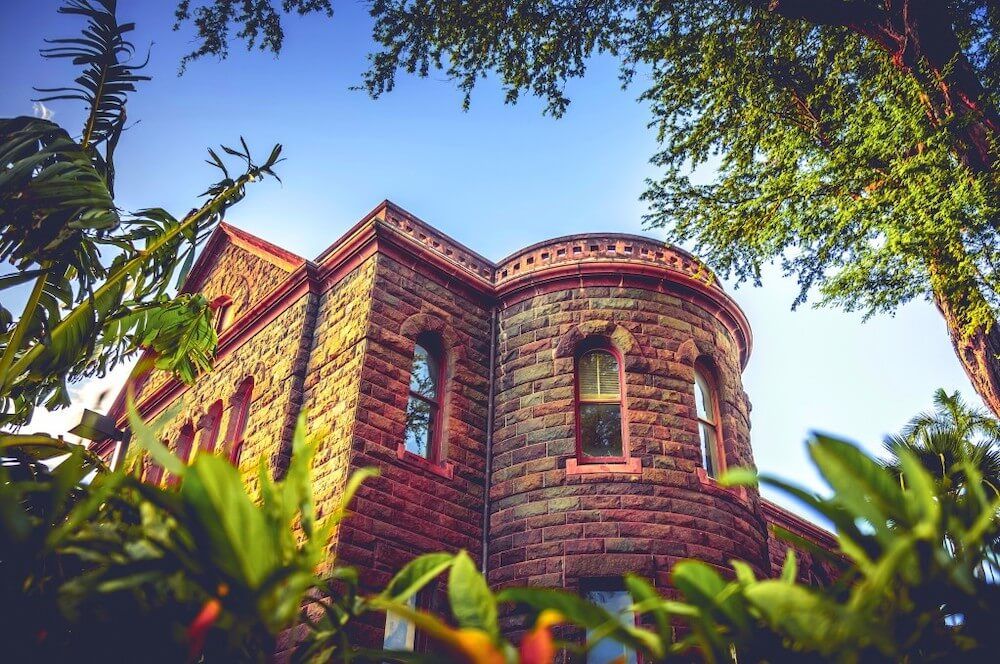
The collection has grown to over 24 million artifacts and specimens like Hawaiian featherwork, royal objects, voyaging canoes, biological specimens from across the Pacific.
The Hawaiian Hall alone will take you a couple of hours if you’re paying attention.
The J. Watumull Planetarium is worth the extra $3, especially if you’re visiting with kids. Special exhibitions rotate, so check the schedule in advance.
My honest take: it’s not as visually exciting as some of the sites on this list. There’s no sweeping landscape or dramatic backdrop.
But as background knowledge for everything else you’ll see in Hawaii, it’s invaluable. I’d go early in a trip rather than at the end because it reframes things.
The museum is open daily 9 AM to 5 PM. General admission is around $34 for adults, $31 for children ages 4-17. Parking on-site runs $15 per vehicle.
Book Bishop Museum tickets through Viator for discounted options.
6. Hanauma Bay Nature Preserve (Oahu)
Hanauma Bay is technically a marine preserve, but its history matters. It was formed inside a volcanic cone, and it’s one of the best examples of what Hawaii’s reef ecosystem looked like before mass tourism changed things.
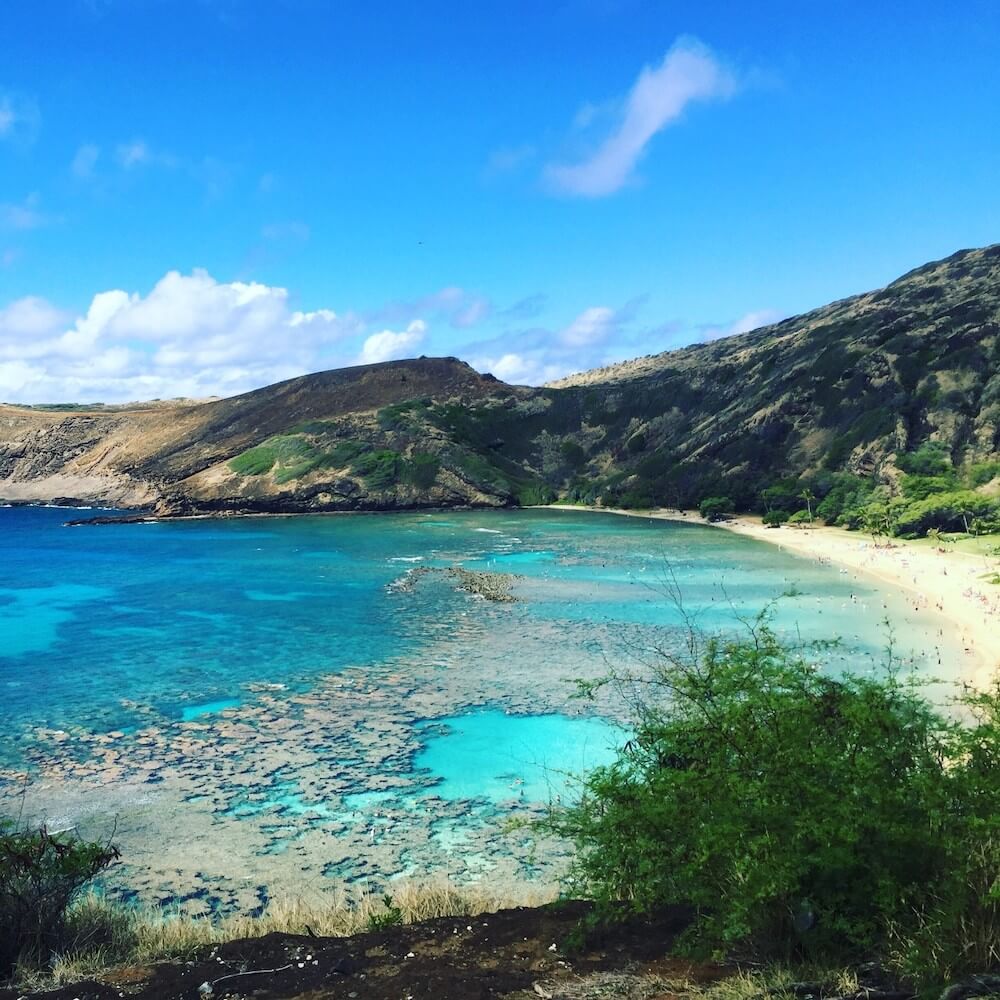
The conservation education you get here is seriously interesting.
Fair warning: the reservation system has become essential. Reservations open exactly 48 hours in advance at 7:00 AM Hawaii time through the City & County of Honolulu system, and popular slots disappear fast.
Entry is $25 per person for non-residents (kids 12 and under free). The bay is open Wednesday through Sunday, 6:45 AM to 4 PM (last entry 1:30 PM).
I was there this past February and can confirm — book early, go at opening, and bring your own snorkel gear if you can. Rentals are available on-site but a well-fitting mask makes an enormous difference.
For the full breakdown on how to actually get a reservation, see my post on Hanauma Bay reservations.
7. Nu’uanu Pali Lookout (Oahu)
Most people stop here for the view and leave. Which, to be fair — the view is genuinely stunning.
You’re looking out over the Windward Coast and the Ko’olau Cliffs from a mountain pass, and on a clear day it’s the kind of panorama that makes you understand why people fall in love with Oahu.
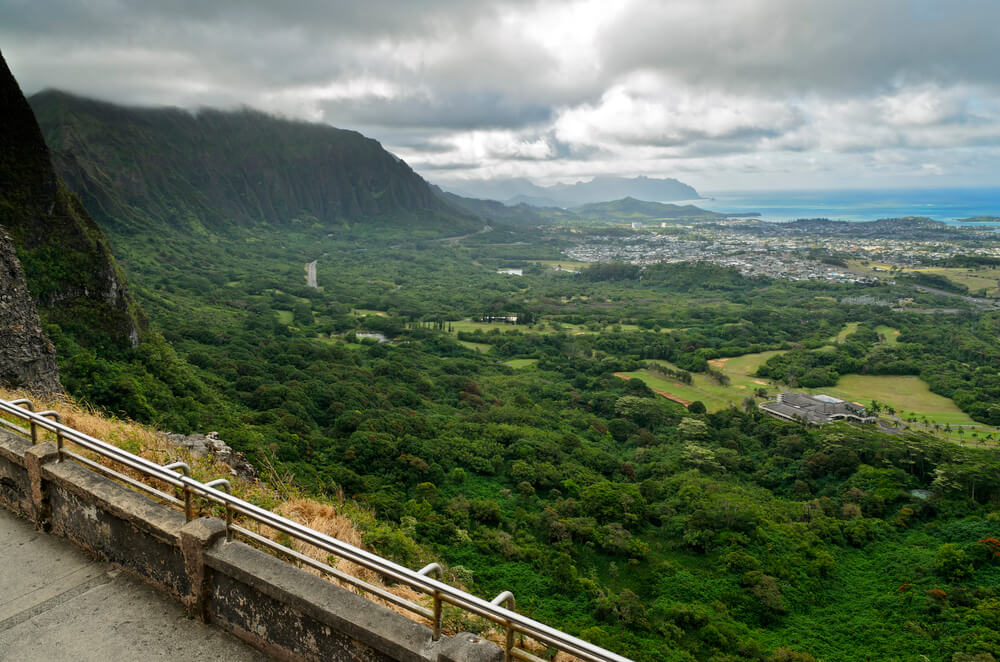
But the history is what makes it worth stopping for, not just the scenery.
In 1795, King Kamehameha I fought the Battle of Nu’uanu here. It was the decisive engagement that let him conquer Oahu and complete his unification of the Hawaiian Islands.
Hundreds of warriors were driven off the edge of those cliffs. Standing at the lookout knowing that history makes the whole place feel different.
Come early if you can. This is a popular tour bus stop, and by late morning it can get crowded.
Also, I’m not exaggerating when I say it is outrageously windy up there. Secure anything that can blow away before you get out of the car.
Small parking fee applies. It’s an easy stop to combine with a drive over the Pali Highway to the Windward side.
8. Puukohola Heiau National Historic Site (Big Island)
This one doesn’t make most tourist itineraries, and that’s a shame.
Puukohola Heiau was built by King Kamehameha around 1790, during his campaign to unite the Hawaiian Islands.

His advisor (kahuna) told him that if he dedicated this heiau to the war god Kukailimoku, he would succeed.
The heiau was constructed using a remarkable human chain system: stones passed hand-by-hand from Pololu Valley miles away.
It worked. Kamehameha went on to unify all the islands.
The park also has Hale o Kapuni, a partially submerged heiau offshore that was dedicated to the shark gods. You can occasionally see sharks swimming over the ruins, which is an interesting coincidence.
The visitor center has exhibits and videos worth 20-30 minutes before you walk the site. Free to enter.
It’s not a full-day stop, but the shark story alone is worth the detour if you’re already on the Kohala Coast.
9. Kealakekua Bay State Historical Park (Big Island)
Kealakekua Bay is where Captain James Cook made first contact with Native Hawaiians in 1778. He was welcomed.
He came back a year later under tenser circumstances, a fight broke out over a stolen boat, and Cook was killed on the beach. It’s a story that gets more complicated the more you read about it.

There’s a white obelisk monument to Cook on the far side of the bay that you can reach by kayak or by taking a boat tour.
The snorkeling around the monument area is some of the best on the Big Island, with remarkably clear water and a healthy reef.
If you’re curious about the history of European contact with Hawaii and how it unfolded, Sarah Vowell’s Unfamiliar Fishes is worth reading. It’s funny, sharp, and covers the period better than most textbooks.
The beach at Na’po’opo’o has big boulders and a historic wharf. Kayak and snorkel tours depart regularly — book through Viator for options.
10. Kona Coffee Living History Farm (Big Island)
This one doesn’t look like much on a map, and that’s part of why I love recommending it.
It’s the only living history coffee farm in the United States, and the focus is specifically on the experience of Japanese immigrants who came to Hawaii in the early 1900s to work the coffee industry.
As you walk through the grounds, farmers demonstrate how to process coffee using traditional methods (the kuriba for pulping, the hoshidana for drying) and the whole thing moves at a pace that feels genuinely unhurried.
There’s also a free-roaming donkey called a “Kona Nightingale” (named for the sound they make at dawn, which the early workers were not thrilled about). Kids love this. Adults also love this.
What I appreciate most is that it fills in a gap that most Hawaii tourism completely ignoresL the story of the immigrant communities who built a lot of this economy.
The Hawaiian monarchy and WWII history get plenty of attention. This doesn’t, and it should.
Self-guided is the default, but guided tours are available if you want the context explained as you go. Browse Kona coffee farm tours on Viator.
11. Road to Hana (Maui)
Most people treat Road to Hana as a scenic drive. It is — but it’s also 65 miles of Hawaiian cultural history, with sacred heiau, mythology-laced valleys, and places that Native Hawaiians have considered spiritually significant for centuries.
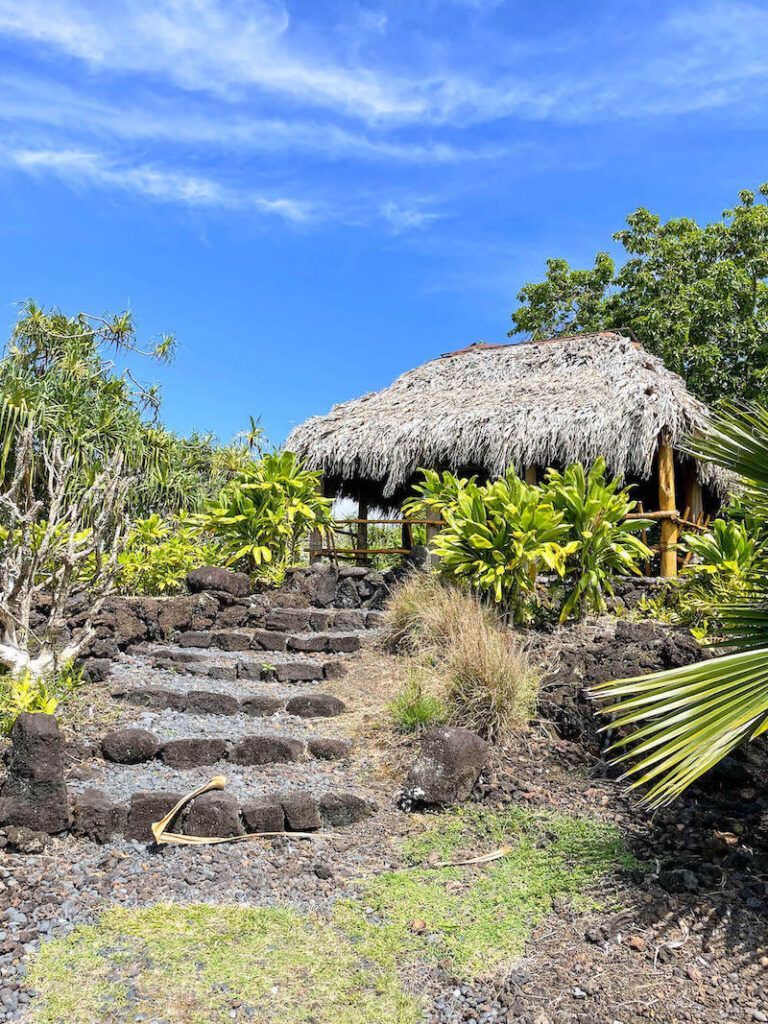
The landscape and the stories are inseparable here, which is why going with some context makes such a difference.
I’ve driven it more times than I can count, and it still surprises me. I have a full guide covering what to stop for, what to skip, and how to actually plan the day without it turning into a traffic nightmare — read it here.
12. Wailua Heiaus (Kauai)
The Wailua River valley on Kauai’s east side is one of the most sacred areas in all of Hawaii, and most visitors drive straight through it on the way to somewhere else. That’s a mistake.
There are four ancient heiaus (Hawaiian temples) clustered in this valley, all accessible and all free.
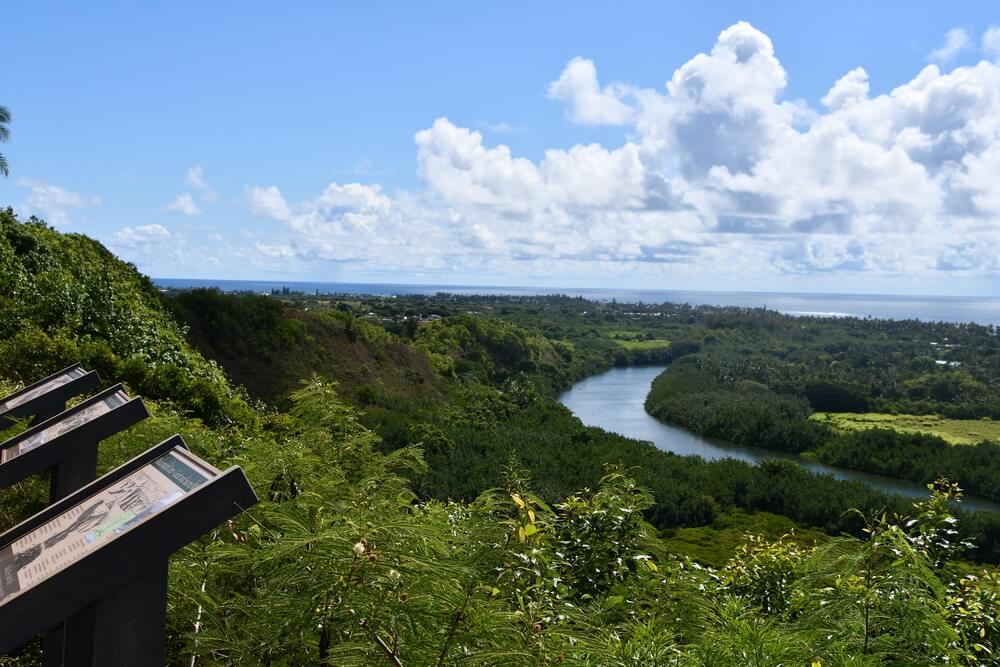
A heiau isn’t a ruin in the way most Western visitors think of ruins. These are considered living sacred sites. You walk around them, not through them.
Hikinaakala Heiau sits near the river mouth and was built to honor the rising sun. Petroglyphs are carved into rocks on the north side, though the river often swallows them at high water.
Malae Heiau is the largest on the island. Legend attributes it to the Menehune — the mythological “little people” of Hawaiian folklore who supposedly built things overnight.
Holoholoku Heiau is one of the oldest and most sacred sites on Kauai. Royal babies were born here. Only the stone foundation remains, but the significance hasn’t faded.
Poliahu Heiau sits just across from Opaeka’a Falls with views that make it feel like the most dramatic of the four. Also attributed to the Menehune. The overlook here is worth a few quiet minutes.
None of these take long individually, but together they make for a meaningful couple of hours that most Kauai itineraries completely skip.
See my Kauai travel guide for how to route this into your time on the island.
13. Na Pali Coast State Wilderness Park (Kauai)
I’ve seen the Na Pali Coast by boat, by helicopter, and partially on foot, and every single time it stops me cold.
There are places in Hawaii that are beautiful, and then there’s Na Pali, which is something else entirely.
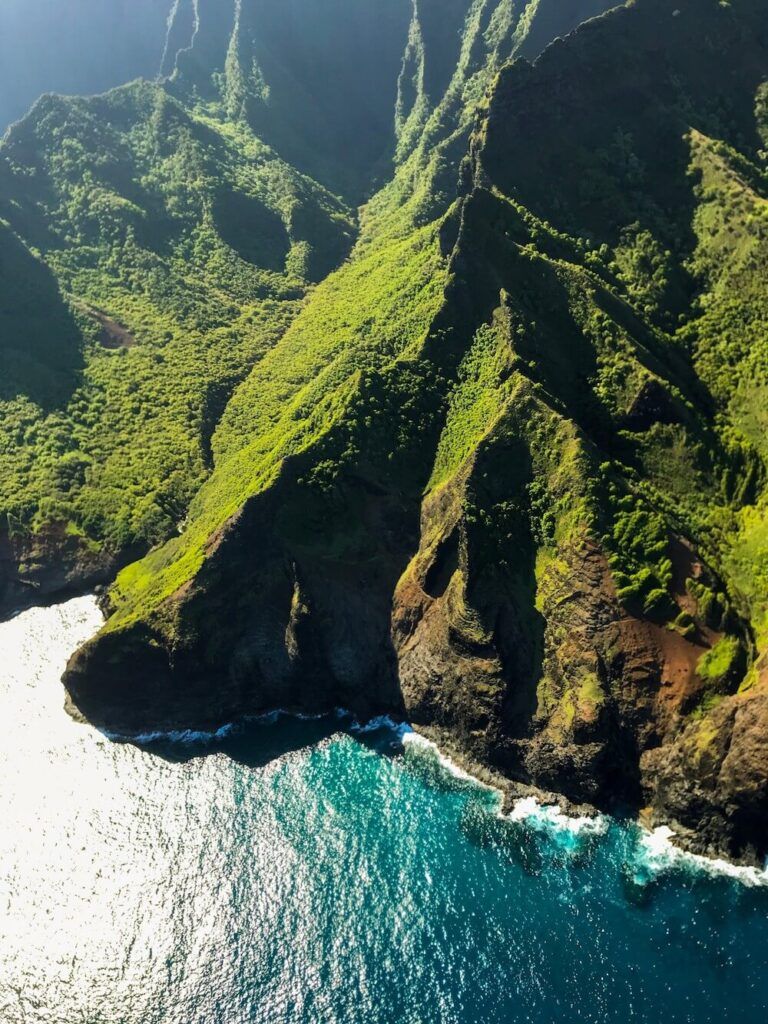
It’s 16 miles of fluted green cliffs dropping straight into water so blue it looks fake, with waterfalls you can only reach by sea.
What most visitors don’t realize is that those valleys were home to Hawaiian communities for centuries. The Kalalau Valley alone supported a large settlement. Archaeological sites are scattered throughout the wilderness park.
The remoteness that makes it so dramatic is the same thing that kept those communities isolated from the rest of the islands.
You can see Na Pali by helicopter departing from Lihue, by boat from Port Allen or Hanalei Bay, or by hiking the Kalalau Trail (11 miles one-way — not a casual undertaking, and a permit is required for overnight camping).
If budget allows, the helicopter is extraordinary. Browse Na Pali Coast tours on Viator.
My Kauai travel guide covers how to decide which approach makes sense for your trip.
14. Kalaupapa National Historical Park (Molokai)
Kalaupapa is unlike anywhere else on this list. The history here is almost unbearably human.
Starting in the 1860s, anyone in Hawaii diagnosed with leprosy (Hansen’s disease) was forcibly exiled to this remote peninsula on Molokai’s north shore and could not leave for the rest of their lives.

Over a century, more than 8,000 people were sent here.
Father Damien, a Belgian priest who chose to live among them and eventually died of the disease himself in 1889, became one of the most recognized figures in the park’s history. The park holds 2,000 unmarked graves.
Access is really complicated right now, and I want to be straight with you about that.
The mule tours are gone. The park was also completely closed to general visitors from March 2020 through late 2025.
Tours reopened in late 2025 under a new operator, Kalaupapa Saints Tours, run by a current patient-resident — which is actually a beautiful thing.
But tour dates are extremely limited, spots sell out fast, and the cost runs around $625 per person because of the small-plane-only access from Oahu (nine seats per flight).
The 2026 schedule is still being expanded, so check seawindtours.com and nps.gov/kala for the latest. Children under 16 are not permitted to visit.
I include it on this list not because it’s easy to get to, but because it’s one of the most moving places I’ve ever read about in Hawaii. For the right traveler, it would be worth building a trip around.
If you want to understand what this place was before you go, Alan Brennert’s novel Moloka’i is beautifully written historical fiction set entirely in Kalaupapa. Read it first.
15. Honokohau Settlement — Kaloko-Honokohau National Historic Park (Big Island)
Honokohau is one of those places that almost nobody puts on their Big Island list, and I genuinely don’t understand why.
While everywhere else on this list is about battles, royalty, or catastrophic history, Honokohau is about something quieter: how ordinary Native Hawaiians actually lived.
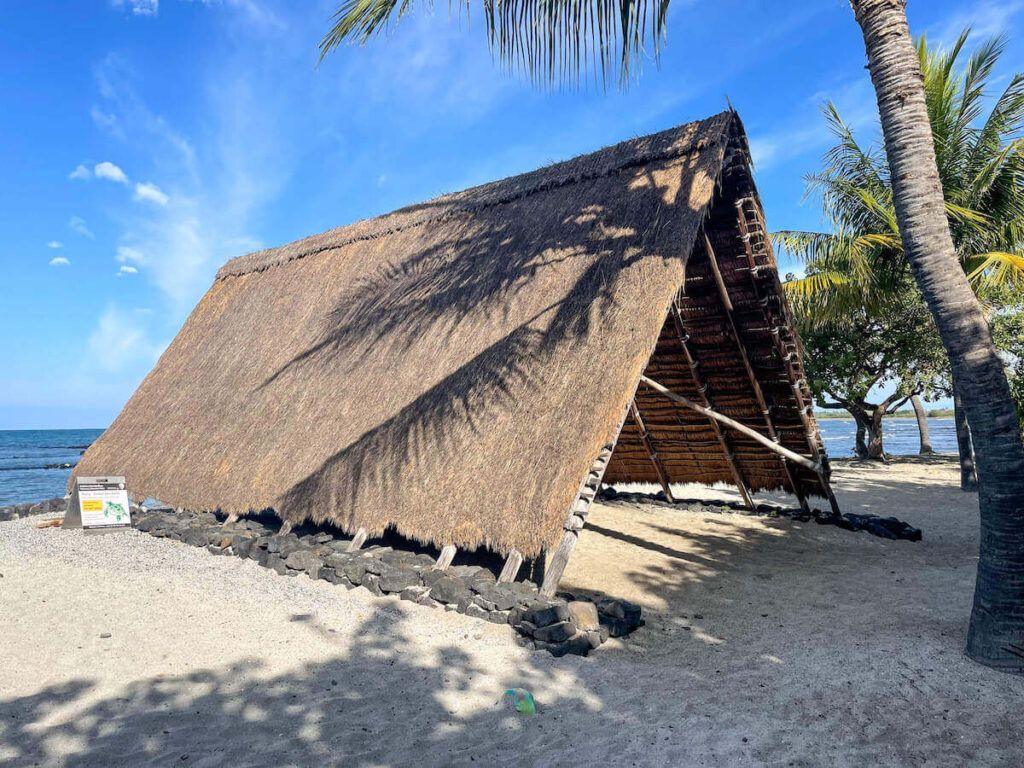
The park sits on an old coastal settlement and the focus is on daily life (fishing, farming, fresh water, community). It makes the other sites feel more grounded somehow.
Walking the trails, you’ll pass ancient fishponds, petroglyphs (ki’i pohaku) carved into lava, heiau, and the ‘Ai’opio Fishtrap. That’s a stone enclosure used to catch fish that is one of the most ingenious pieces of low-tech engineering I’ve seen anywhere in Hawaii.
If you go in the morning, green sea turtles (honu) often haul out on the beach nearby. Stay 20 feet back and just watch.
Free to enter. Usually quiet. Takes about 90 minutes if you walk the full trail. It’s the kind of stop that doesn’t photograph dramatically but stays with you.
A Few Practical Notes
If you’re hitting multiple national park sites in one trip (Hawaii Volcanoes, Puukohola, Kaloko-Honokohau, Kalaupapa) the America the Beautiful annual pass ($80) pays for itself quickly. Buy it before you leave home at nps.gov.
Hawaii has banned oxybenzone and octinoxate sunscreens since 2021, and marine sites like Hanauma Bay take that seriously. Grab reef-safe sunscreen on Amazon before you travel rather than hunting for it when you land.
And if you want real photos from any of these places (not just phone shots), I’ve used Flytographer several times in Hawaii and they’re consistently great. You can save $20 with that link. The Na Pali Coast and Iolani Palace are especially worth it.
If you’re still in the planning stages and want help figuring out which of these sites actually fit your specific trip, that’s exactly what I do in my one-on-one Hawaii travel consultations.
Having made this trip 40+ times, I can usually help you avoid the most expensive mistakes in a single conversation.
My podcast Hawaii Travel Made Easy covers island logistics, itinerary building, and the stuff travel guides tend to leave out, worth queuing up for the flight over.
More by island:
The beaches will take care of themselves. The history takes a little intention. It’s worth it.
 | About the author: Marcie Cheung is a Hawaii travel expert who has visited Hawaii more than 40 times. She is the founder of Hawaii Travel Spot and host of Hawaii Travel Made Easy. She plans Hawaii vacations for couples, honeymooners, families, and other travelers. |
