Are you wondering when is the best time to see whales in Maui? Keep scrolling to find out everything you need to know about Maui whale season, including the best Maui whale-watching tours.
This Maui whale season post was written by Marcie Cheung (a Hawaii travel expert) and contains affiliate links which means if you purchase something from one of my affiliate links, I may earn a small commission that goes back into maintaining this blog.
I was standing on my balcony at the Hyatt Regency Maui in February when I spotted my first whale of that trip.
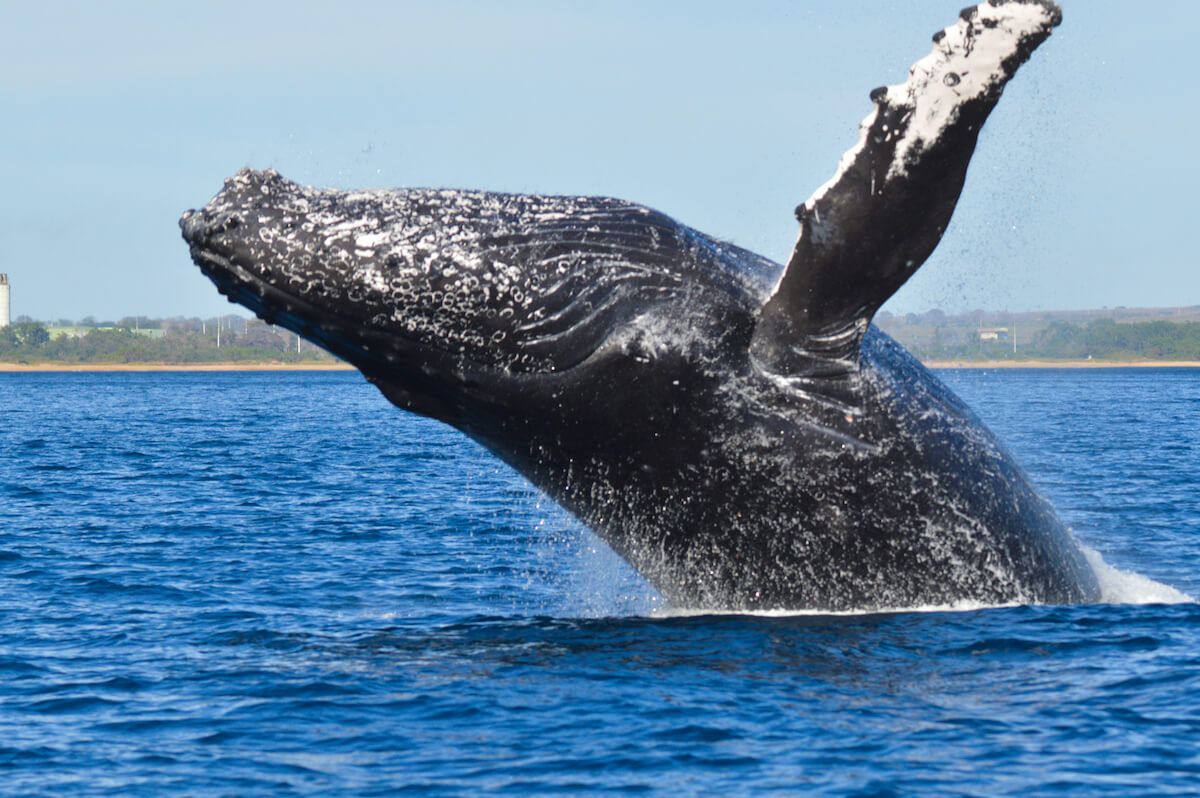
No tour boat, no binoculars, just a flash of white water way out past the reef, then a full breach.
I nearly dropped my coffee.
Here’s what surprised me when I started looking into this more seriously: you don’t need to book anything to see whales in Maui.
But if you want to understand what you’re looking at, get close enough to hear them, or guarantee a sighting instead of hoping you get lucky from a hotel balcony, a tour is worth the money.
Quick answers:
- Best time to see whales in Maui: December through April, with January through March as peak season
- Best time of day: Morning tours tend to have calmer water and more consistent sightings
- Where: South and west Maui (Maalaea, Lahaina, and Kihei) see the most whale traffic
- Should you book a tour? Only if you want a guaranteed sighting, an expert guide, or to get closer than shore-watching allows
Maui Whale Season: When It Happens
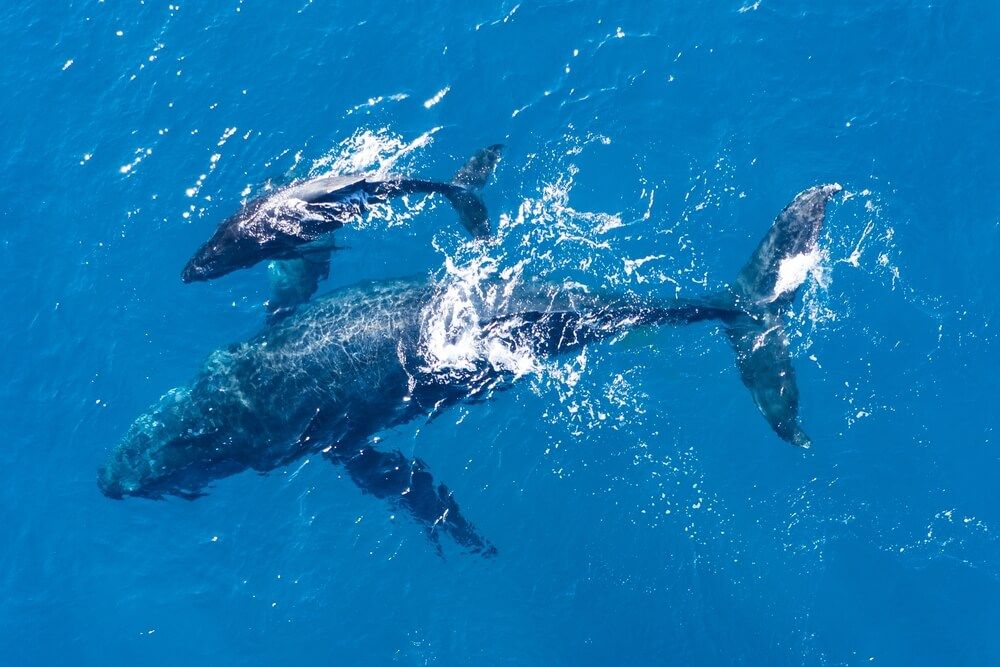
North Pacific humpback whales spend their summers feeding in Alaska, then swim roughly 3,500 miles to Hawaii every winter to mate, give birth, and raise their calves in our warm, shallow water.
They start trickling in as early as October, but the real action runs from December through April.
January through March is peak season. That’s when you’ll see the most whales, the most calves, and the most of those wild head-slapping competitions between males trying to win over a female.
If you’re trying to time a Hawaii trip around whales specifically, February is usually your best bet.
I’ve personally seen whales from a Maui balcony in February, and it wasn’t a fluke.
That month tends to have the highest concentration of whales in the channel between Maui, Lanai, and Molokai, an area called the Maui Nui Basin that’s now part of the Hawaiian Islands Humpback Whale National Marine Sanctuary.
Do You Need a Tour, or Can You Just Watch From Shore?
You can absolutely see whales without paying for anything.
During peak season, people spot them from beaches, restaurant patios, moving cars, and hotel balconies all over south and west Maui.
I’m proof of that.
But a shore sighting is usually a quick glimpse: a spout, a tail, maybe a distant breach.
A tour gets you closer, gives you a naturalist who can explain what the whale is doing, and in most cases guarantees you’ll see something or you go again for free.
If this is your first time in Hawaii during whale season, I’d lean toward booking something.
You don’t know yet what you’re looking at half the time when you spot something from shore, and a good naturalist turns a blurry shape on the horizon into an actual story.
If you’ve been to Maui in winter before, or you’re already going to be out on the water snorkeling or sailing anyway, you can probably skip a dedicated tour and just keep your eyes open.
I’ve talked to plenty of repeat visitors who never booked a single whale tour and still saw plenty.
Best Maui Whale Watching Tours for 2026
A quick note before I get into specific companies: I haven’t personally taken any of these tours.
What follows is from digging through current pricing, schedules, and reviews, not my own boat trip.
I’m telling you that upfront because plenty of “best whale watching tours” posts online act like firsthand reviews when they’re really just summarized listings, and that’s not how I want to do this.
Prices below are what I found checking each company directly. They shift, sometimes mid-season, so treat these as a solid starting point rather than gospel.
Pride of Maui
Pride of Maui is the one I’d point a family toward first.
It’s a 3.5-hour tour out of Maalaea Harbor with a snorkel stop, a BBQ lunch, and an open bar once everyone’s out of the water, and the boat has enough deck space that kids aren’t climbing over each other.
Adults run $136.38, kids 4 to 12 are $113.64, and infants ride free. The whale guarantee only applies January through March.
If a big family boat sounds like too much, they also run a smaller ‘Elua Luxury Whale Watch without the snorkeling, for couples who want a calmer ride. Check the latest rates and availability.
Blue Water Rafting
Blue Water Rafting is the budget pick, and it’s not close.
Their 1.5-hour guaranteed whale watch out of the Kihei Boat Ramp runs $80 for adults and $70 for kids before tax and fees, which lands around $92 and $81 out the door.
It’s the lowest-priced option on this list by a wide margin, and because the rafts sit so low to the water, a surfacing whale nearby feels a lot closer than it does from a tall catamaran deck.
No bathroom on board, so plan accordingly, and skip it if you get seasick easily since the rafts move more than the bigger boats. Check the latest rates and availability.
Sail Maui
Sail Maui is one of the few whale watch operators still running directly out of Lahaina Harbor itself, which is reason enough to mention it on its own.
Their Alihilani Golden Hour Whale Watch sails on a 64-foot catamaran from 3:30 to 5:30pm and runs $90 for adults, $63 for kids, plus Hawaii’s roughly 8% sales and harbor tax.
Since it’s a real sailboat, the crew cuts the engine and raises the sails when conditions allow, so the ride is quieter than a motor catamaran.
It’s also one of the only tours on this list happening during golden hour, so you get sunset light with your whales. Check the latest rates and availability.
Quicksilver Maui
Quicksilver Maui runs a straightforward two-hour whale watch, regular priced at $65.95 for adults and $54.95 for kids, though specials often knock it down closer to $53 and $43.
One thing worth knowing before you book: Quicksilver used to depart from Lahaina too, and it’s currently operating out of Maalaea on what the company describes as a temporary basis, with no confirmed timeline yet for returning to Lahaina Harbor.
They also offer a Turtle Town combo if you want whales and green sea turtles in one outing instead of booking two separate tours. Check the latest rates and availability.
PacWhale Eco-Adventures
PacWhale Eco-Adventures, which used to go by Pacific Whale Foundation, is worth knowing about for one reason in particular: it’s run by a nonprofit, and all profits go back into the foundation’s whale research and conservation work rather than into shareholder pockets.
They’ve also made a deliberate choice not to resume Lahaina Harbor departures yet, out of respect for the community’s ongoing recovery, so all their whale watches currently run out of Maalaea.
Their Classic Whale Watch is $129.95 for adults, though specials sometimes bring it down to around $90, with certified marine naturalists narrating instead of general crew. Check the latest rates and availability.
See current Maui whale watching tour options on Viator
A Few Things I’d Tell a Friend Before They Book
Bring a light jacket or windbreaker even if it’s hot on land. The wind on the water, especially in the morning, catches almost everyone off guard.
Reef-safe sunscreen isn’t optional on most of these tours anymore, and several operators won’t let you bring spray sunscreen onboard at all. Pack the rub-on kind.
If you get seasick easily, choose a bigger boat (Pride of Maui, PacWhale, Quicksilver) over a raft tour. The smaller, faster boats are more fun if your stomach can handle it, but they move a lot more than a stable catamaran.
Morning tours tend to have calmer water and more consistent sightings than afternoon ones, with the exception of the golden-hour sails, which trade a slightly higher chance of choppier water for spectacular light.
What You’re Looking At Out There
Whale watching can be confusing the first time, because most of what you’ll see isn’t a full breach.
Usually it starts with a spout, that quick burst of mist as a whale surfaces to breathe, which is honestly the easiest thing to spot from a distance and the reason most shore sightings happen at all.
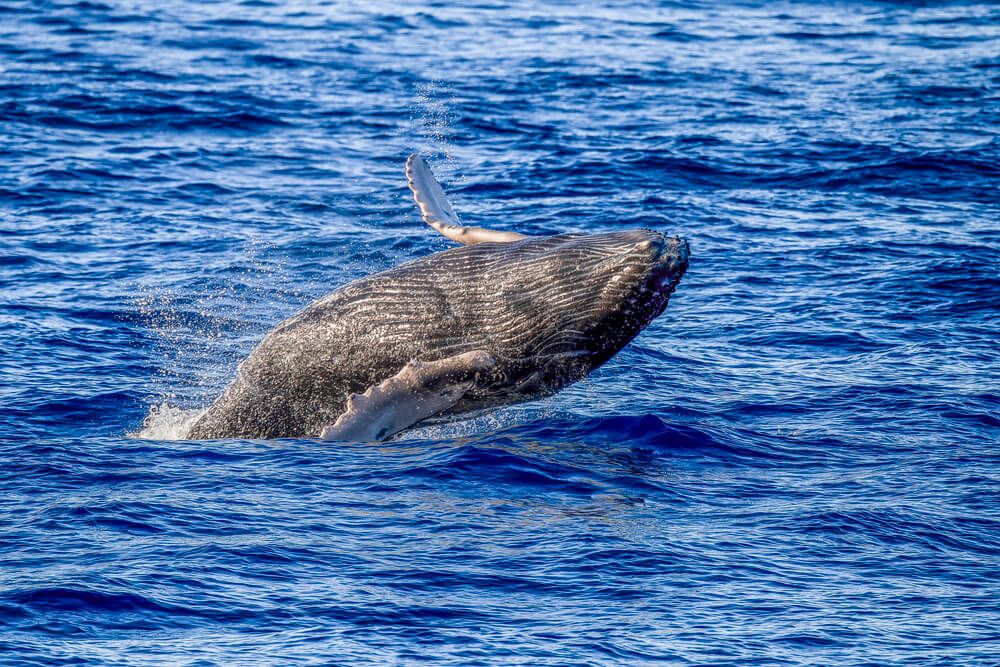
If you’re lucky, you’ll catch a breach, where the whale launches most of its body straight out of the water and crashes back down.
That’s the one everyone’s phone is out for, and it’s also the hardest to predict, since whales don’t exactly announce it.
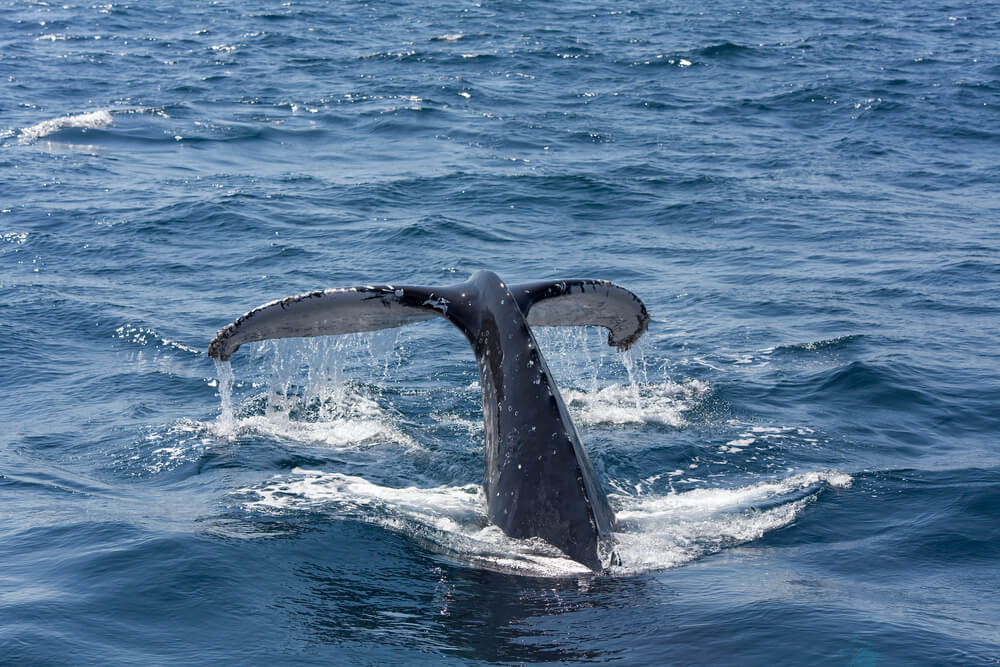
You’ll also see tail slaps and pectoral slaps, where a whale smacks its tail or fin against the surface repeatedly.
Researchers think this is partly communication and partly just competition between males trying to get a female’s attention.
And every so often you’ll spot a spy-hop, where the whale rises up vertically and pokes its head above the waterline, almost like it’s checking out the boats checking it out.
FAQ: Maui Whale Watching
When is the best time to see whales in Maui?
December through April, with January through March as the peak.
What kind of whales will I see in Maui?
The vast majority are North Pacific humpback whales. Occasionally you’ll hear about rarer sightings of false killer whales or pilot whales, but humpbacks are what you’re booking a tour to see.
Can I see whales without a tour?
Yes. During peak season, whales are visible from many beaches, resorts, and roads on south and west Maui. A tour just gets you closer and adds a guarantee.
How close can boats legally get to whales?
Federal law requires vessels to stay at least 100 yards away. Whales sometimes approach boats on their own, which is allowed, but operators can’t pursue them closer than that.
One Last Thing
You don’t need a tour to see a whale in Maui. I’m living proof of that. But a hotel balcony won’t let you hear one sing through a hydrophone or tell you why two males are slapping the water at each other.
For that, a couple hours on a boat is worth carving out of your trip.
If you’re still piecing together your Maui itinerary and want help figuring out where whale watching fits, I do one-on-one Hawaii travel consultations where we map out the logistics together so you’re not guessing.
And if you’d rather listen than read, my podcast Hawaii Travel Made Easy covers a lot of this same ground, including an episode on planning a Maui trip from scratch.
Whale season doesn’t cost a thing if you don’t want it to. Pack a coffee, find a spot facing south or west, and give it twenty minutes. You might catch one too.
 | About the author: Marcie Cheung is a Hawaii travel expert who has visited Hawaii more than 40 times. She is the founder of Hawaii Travel Spot and host of Hawaii Travel Made Easy. She plans Hawaii vacations for couples, honeymooners, families, and other travelers. |