
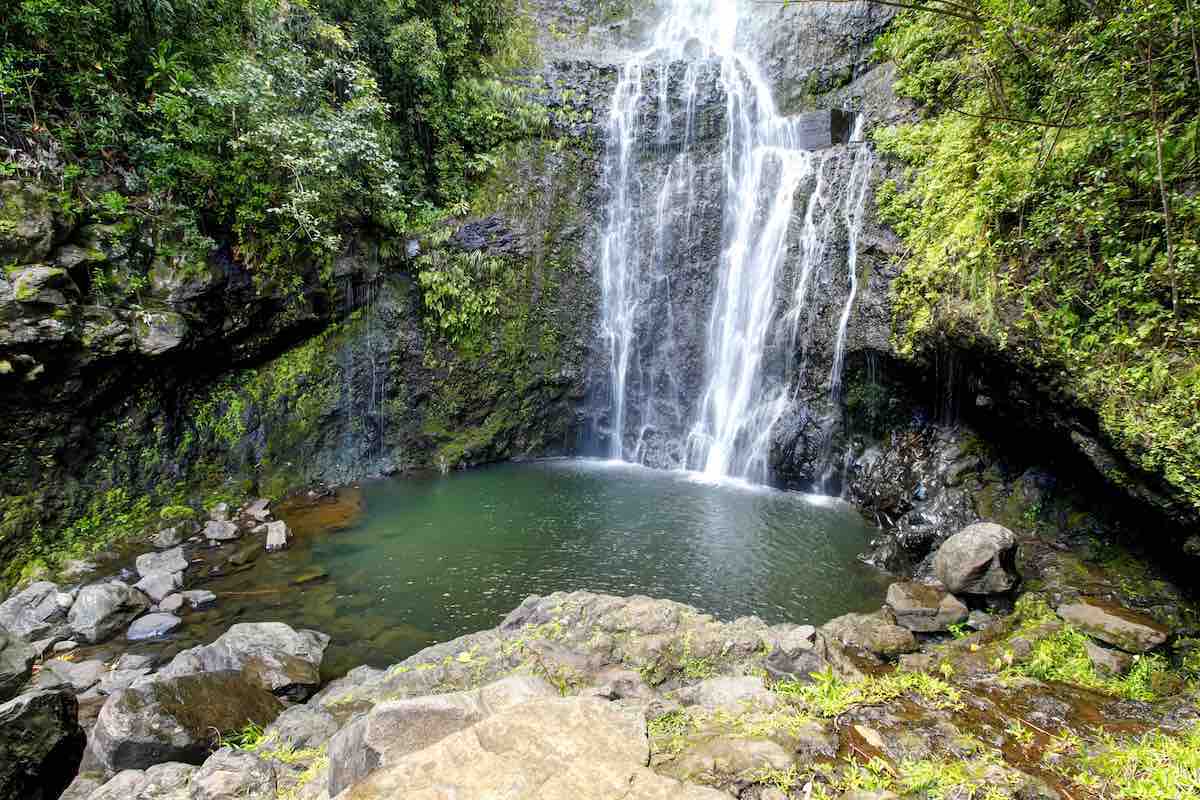
Want to see Maui waterfalls on your next trip to Hawaii? Check out the best Maui waterfalls that are stunning. Keep scrolling down for all the info!
This list of Maui waterfalls was written by Marcie Cheung (a Hawaii travel expert) and contains affiliate links which means if you purchase something from one of my affiliate links, I may earn a small commission that goes back into maintaining this blog.
The first time I drove the Road to Hana, I pulled over for every single waterfall sign I saw.
By the third stop, my husband was checking his watch and I still hadn’t eaten lunch. I
‘ve since done that drive enough times with Shaka Guide narrating in the background to know which waterfalls are worth the tires-off-the-road moment and which ones you can wave at from the car.
That’s what this guide is for.
Not a list of every waterfall on Maui, but the ones that earn a spot in your day, plus the current fees, parking situation, and whether you can still swim once you get there.
A few of these have changed in ways that matter if you’re picturing a swim.
Quick take: If you only have time for two stops, make them Twin Falls near the start of the drive and the Pipiwai Trail to Waimoku Falls near Kipahulu. Bring cash or a card for parking and entrance fees (a park pass runs $30 per vehicle and covers both Haleakala districts for three days), and rent your car through Discount Hawaii Car Rental before you go, since the Road to Hana isn’t the drive to do in a car you’re not comfortable taking on narrow, one-lane bridges.
Twin Falls: the easy first stop everyone makes
Twin Falls sits right at the start of the Road to Hana on Wailele Farm property, and it’s usually the first big pull-off people make.
There are only 55 parking spots and they fill up fast, so plan on getting there before mid-morning if you want a spot without circling.
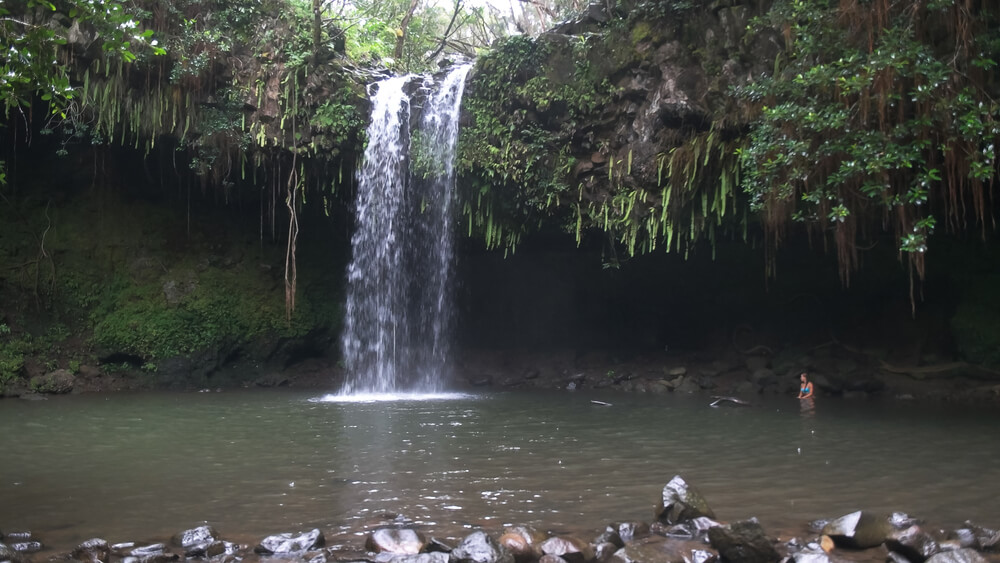
Parking runs about $10 per car, and that money goes straight to the farm for trail upkeep.
From the parking area, it’s a short walk to the falls and pools, and swimming is generally allowed unless the farm closes a pool for high water, which happens after heavy rain.
Recent visitors say the farm stand by the entrance is a good stop too, with fresh juice and banana bread.
It’s one of the better roadside snack options on the whole drive, based on what people keep saying about it.
One heads up: this stretch of Hoʻolawa Valley is closed to non-residents on the first Saturday of every month, so double check your calendar before you build your itinerary around it.
Pua’a Ka’a Falls: a stretch-your-legs stop with real payoff
I’ve stopped here myself more than once, and it’s one of my favorite quick breaks on the drive.
My mom and I pulled off here on one trip mainly for photos, and neither of us got in the water.
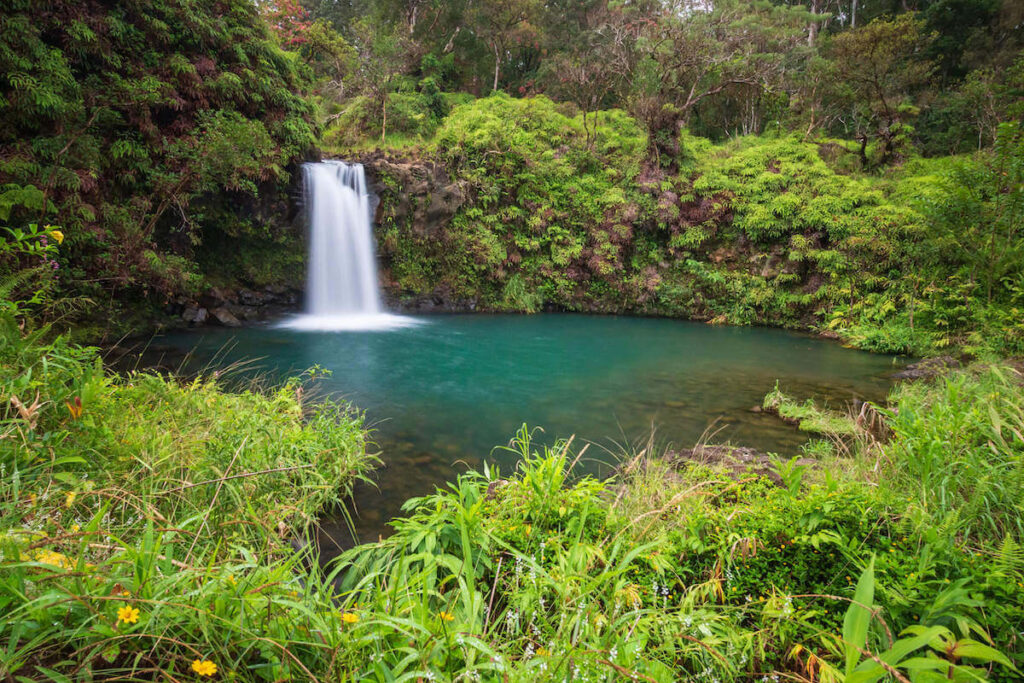
Looking back, if my kids had been in the car instead, I have a feeling they wouldn’t have made it past the parking lot before wading in.
Pua’a Ka’a State Wayside sits around mile marker 22, and there’s no entrance fee at all.
A short paved path gets you to a lower waterfall and pool, and if you’re up for a slightly muddier dirt trail, there’s a second, larger falls upstream.
It closed for a few weeks in 2025 for restroom and pavilion repairs, but it’s back open and running normally now.
Restrooms here also deserve a mention, since clean ones are rare along this drive.
Wailua Falls: a roadside stop that depends on the weather
Wailua Falls is visible right from the road near Maalo Road, so this is a stop you can make without breaking your rhythm.
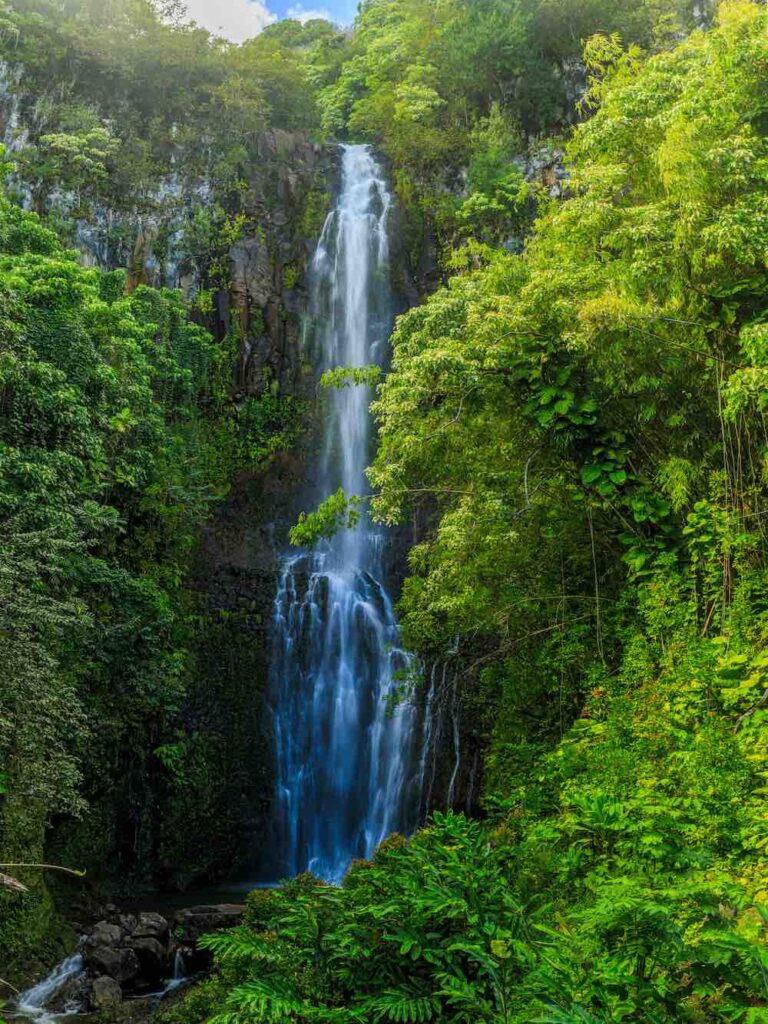
The last time I stopped here, it had been dry for a while and the falls were more of a trickle than the dramatic curtain you see in photos. If it’s rained recently, you’ll get a much better show.
There’s no fee and no real hike involved here, which makes it an easy add if you’re already driving past. Just keep your expectations realistic if it’s been a dry stretch.
Waimoku Falls and the Pipiwai Trail: the trail that earns its four miles
If you only do one hike on this whole drive, make it this one. The Pipiwai Trail is a four mile round trip through a stunning bamboo forest, and it ends at the 400 foot Waimoku Falls.
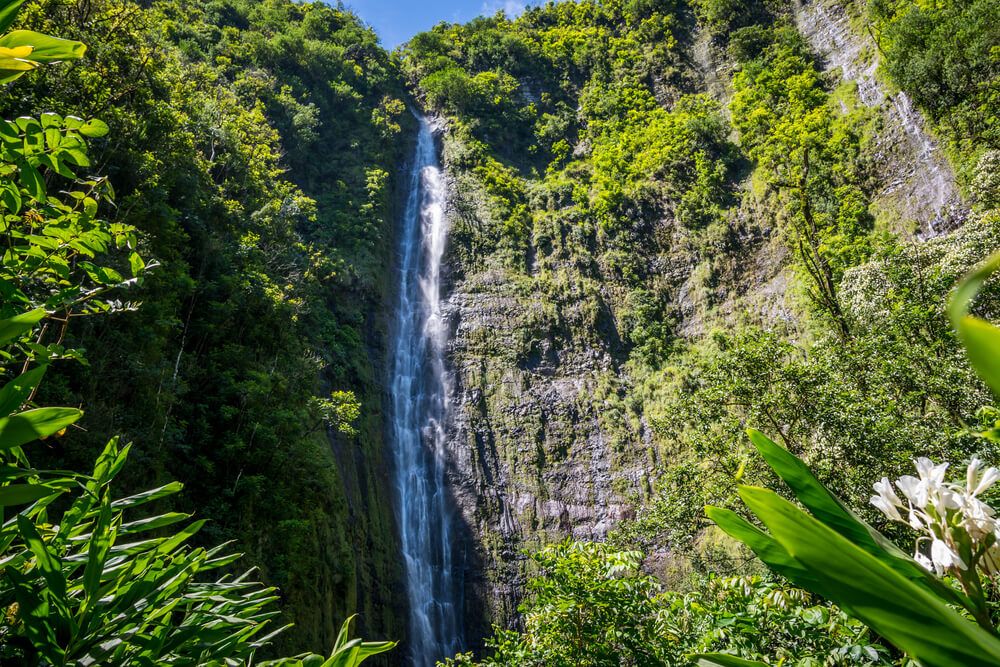
This trail is part of the Kipahulu district of Haleakala National Park, so the same $30 vehicle entrance fee that gets you into the main Haleakala summit district covers this too, and it’s good for three days.
Plan on two and a half to three hours for the full round trip. Real hiking shoes make a big difference here, not sandals, since there are stream crossings and the trail gets muddy in places.
This is also one of the more popular AllTrails entries for Maui, and current reviews there consistently mention the stream crossings and note permit and parking info right in the app, so it’s a good idea to check before you go.
Pools of Oheo (Seven Sacred Pools): the swimming situation has changed
This is a correction that matters, since it’s still floating around on a lot of older Maui blog posts, mine included in the past.
The Pools of Oheo used to be a swimming destination, and for a long time that was the whole draw.
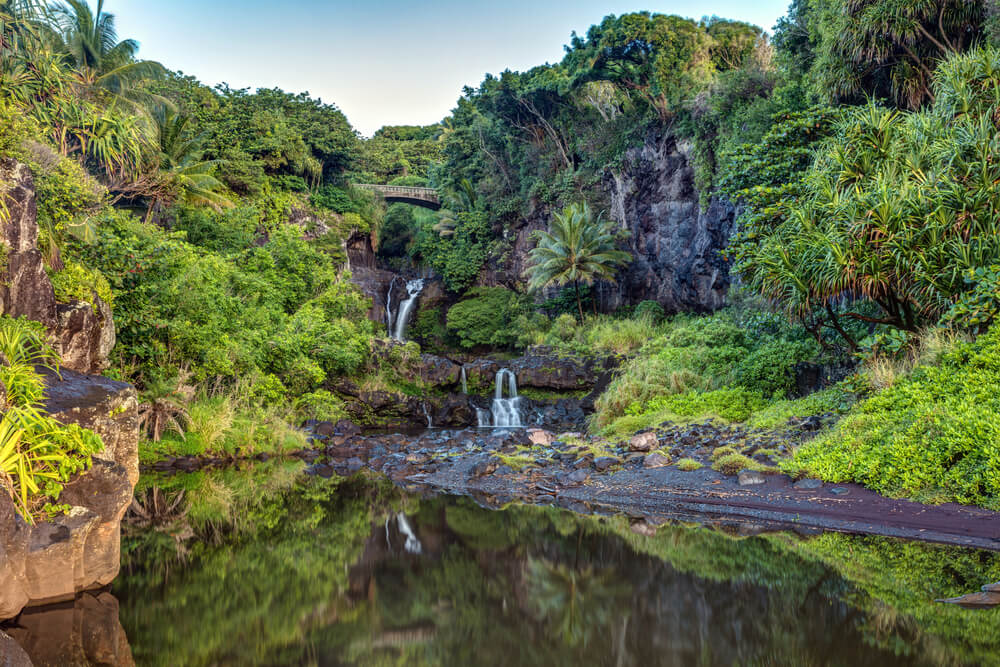
That’s changed.
Swimming is now closed or heavily restricted in most of the pools, and it’s been that way for a while due to flash flood risk and a few serious incidents.
Current visitor reports describe the short Kuloa Point Trail as still a nice walk for the view of the tiered pools from above, just don’t plan your day around getting in the water here.
This stop is included in your Kipahulu park entrance fee, so if you’re already doing Waimoku Falls, there’s no reason to skip it.
Garden of Eden: not technically a waterfall stop, but I stop here every time
This one is a paid arboretum rather than a free waterfall stop, and it’s my personal favorite pull off on the entire Road to Hana.
Admission runs $20 for adults and $10 for kids, and it earns its keep for the ocean lookout alone, which is the exact spot where the opening scene of Jurassic Park was filmed.
There are a couple of small waterfalls inside the property too.
I’ll always make time for this stop, even on a trip where I’m trying to move quickly.
It’s one of those places where the entrance fee buys you a slower morning, and sometimes that’s exactly what a long drive needs.
A couple you can skip if you’re short on time
Not every waterfall along this route earns a special detour. Alelele Falls requires stream crossings that only work in a narrow weather window, and Honokohau Falls is really only viewable by helicopter, which is a big spend for one waterfall.
If your day is already packed with the stops above, I’d let these two go rather than stretching your schedule too thin.
FAQ: Maui waterfalls
Do I need a permit to see Maui waterfalls on the Road to Hana?
No permit is required for the roadside waterfalls like Twin Falls, Pua’a Ka’a, or Wailua Falls. The only fee you’ll pay is the $30 Haleakala National Park vehicle entrance fee if you’re doing Waimoku Falls or the Pools of Oheo, and that same pass is valid for three days at both park districts.
Can I still swim at the Pools of Oheo?
In most cases, no. Swimming has been closed or heavily restricted at the Seven Sacred Pools for a while now due to flash flood danger, and enforcement has gotten stricter. Twin Falls and Pua’a Ka’a are your better bets if swimming is the priority.
How long does it take to see all the best Maui waterfalls?
If you’re doing the full Road to Hana with stops at Twin Falls, Pua’a Ka’a, Wailua Falls, Garden of Eden, and the Pipiwai Trail, plan on a full day, ideally ten to twelve hours door to door. Trying to cram it into less usually means rushing the one hike that matters most.
Is it better to drive myself or take a tour?
Both work, and it depends on what kind of day you want. Driving yourself means you control the pace, but you’re also the one navigating one-lane bridges all day. If you’d rather sit back and let someone else handle the driving, Road to Hana waterfall tours through Viator are a solid option, especially if this is your first visit to Maui.
Before you go
The Road to Hana rewards people who plan ahead and don’t try to see everything. Pick two or three stops from this list, build in real time for the Pipiwai Trail if you’re doing it, and rent a car you trust for the drive through Discount Hawaii Car Rental.
If you want the full rundown on timing this drive, where to eat, and what to skip entirely, I go through all of it in What You Need to Know About the Road to Hana on Maui on my podcast, Hawaii Travel Made Easy.
And if you’d rather skip the trial and error altogether, that’s exactly the kind of thing I help with in one-on-one Hawaii travel consultations.
After more than 40 trips to Hawaii and a lot of dry-season waterfall disappointments of my own, I can help you build a Maui itinerary that matches the season you’re visiting in.
For more on planning the rest of your Maui trip, check out my Maui travel guide, or if you’re trying to decide how to split time between islands, my Hawaii island hopping guide can help you figure out if Maui deserves more than a few days.
 | About the author: Marcie Cheung is a Hawaii travel expert who has visited Hawaii more than 40 times. She is the founder of Hawaii Travel Spot and host of Hawaii Travel Made Easy. She plans Hawaii vacations for couples, honeymooners, families, and other travelers. |
